
Flashcards often make kids groan. You can replace that frustration by turning abstract numbers into hands-on art. When children cut, glue, paint, and build, their brains wire mathematical patterns much faster than they do during repetitive worksheet drills.
Kinesthetic learning helps kids connect simple memorization to real understanding. Research shared by Edutopia shows that tactile projects improve focus and spatial reasoning. You can use these practical projects to practice basic counting or tackle fractions. Pair them with our favorite creative school crafts for kids to keep your kids curious all year long.
1. Paper Plate Fraction Pizzas
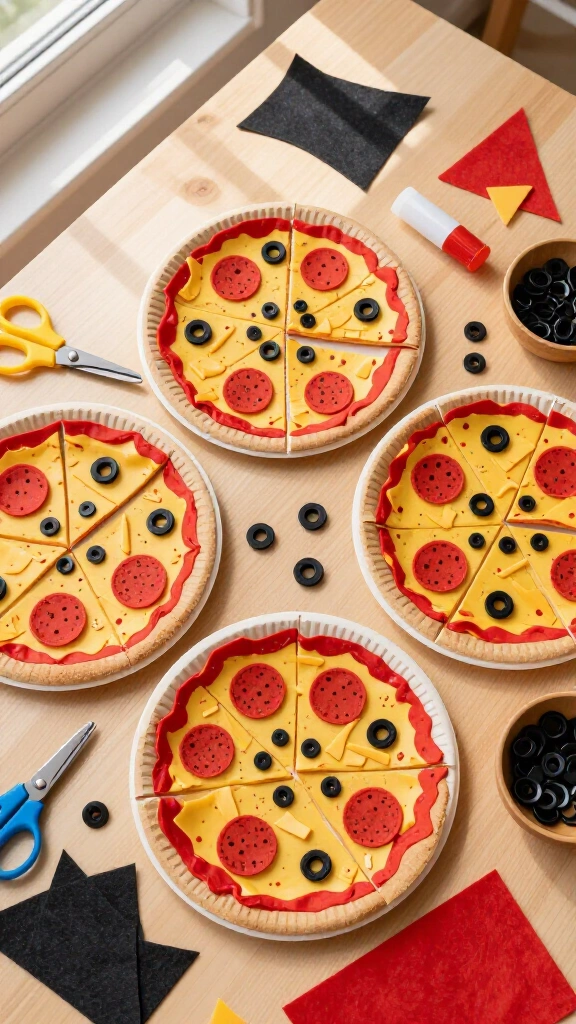
Turn plain paper plates into fraction slices. Kids color sauce and cheese onto the paper circles, then cut them into halves, quarters, and eighths. They glue felt pepperonis and button olives onto each slice to see how equal parts make a whole circle. This simple activity turns denominator practice into a visual game.
2. Symmetry Butterfly Prints
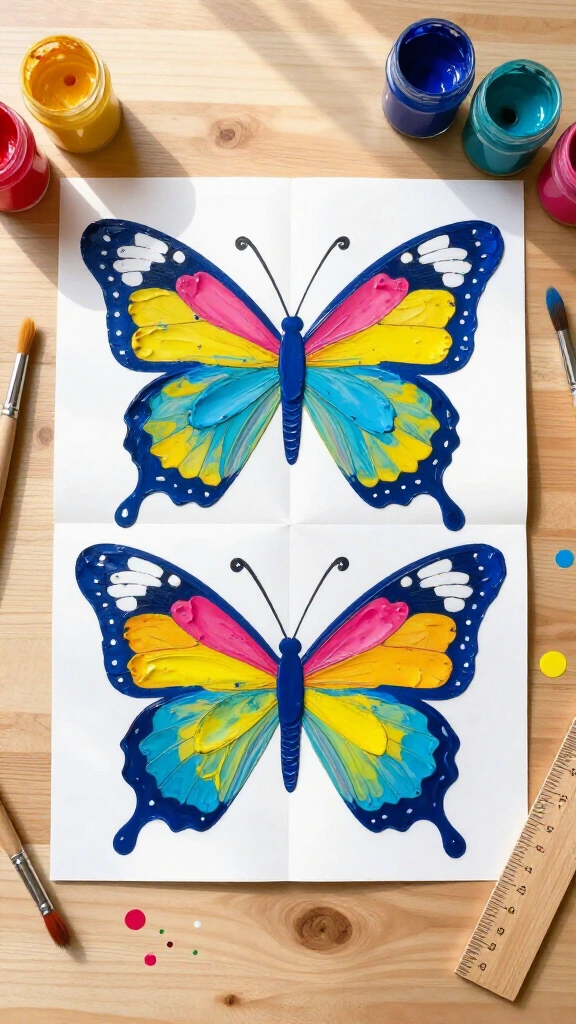
Teach bilateral symmetry with simple paint folding. Fold a sheet of cardstock in half, drop tempera paint onto one side, and press both sides together firmly. When kids open the paper, they see a matching reflection across the center fold. Tip: Draw antennae along the crease to mark the exact line of symmetry.
3. Place Value Stacking Cups
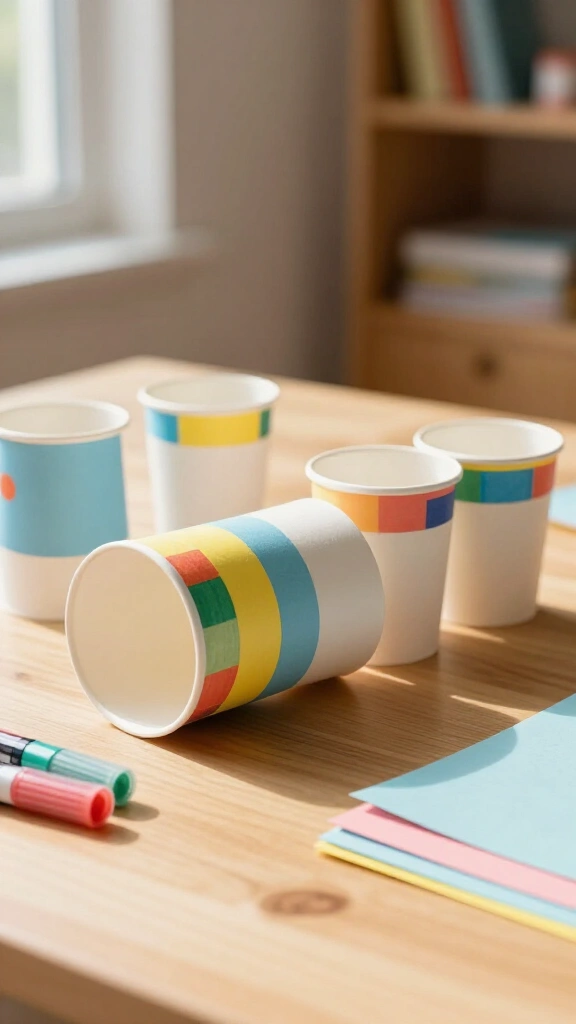
Take cheap paper cups and write the digits 0 through 9 along their rims. Nest the cups together sideways to build columns for ones, tens, hundreds, and thousands. As your child twists each cup, they watch regular numbers expand into place values on the spot. This hands-on tool replaces dry workbook exercises with immediate feedback.
4. Multiplication Flower Wheels
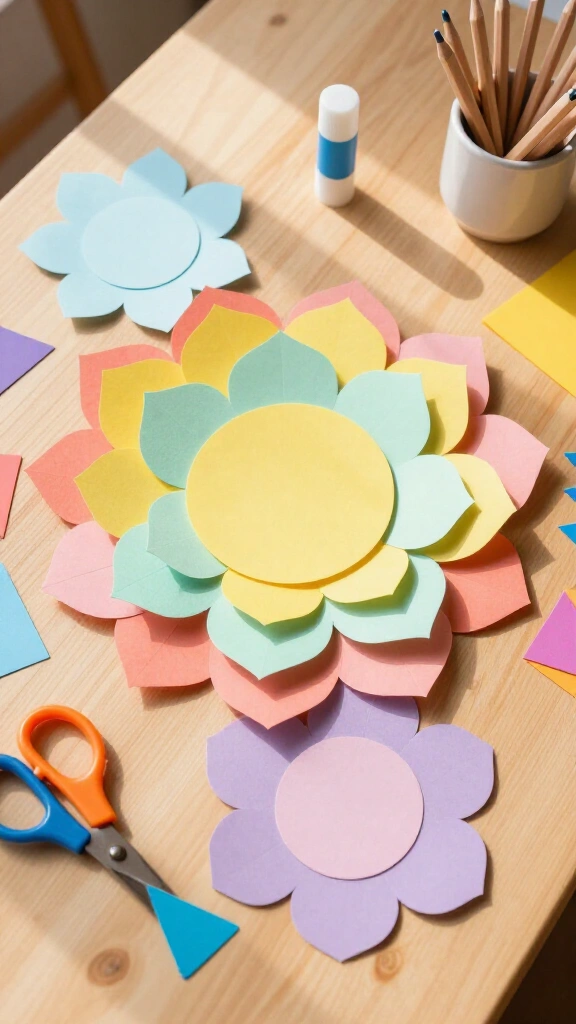
Practice multiplication tables with paper flowers. Draw a center circle for the base number, such as 7, then draw 12 petals around it numbered 1 through 12. Add a second layer of outer petals that fold up to reveal the correct product underneath. These paper wheels make daily math practice fast and memorable.
5. DIY Constellation Geoboards
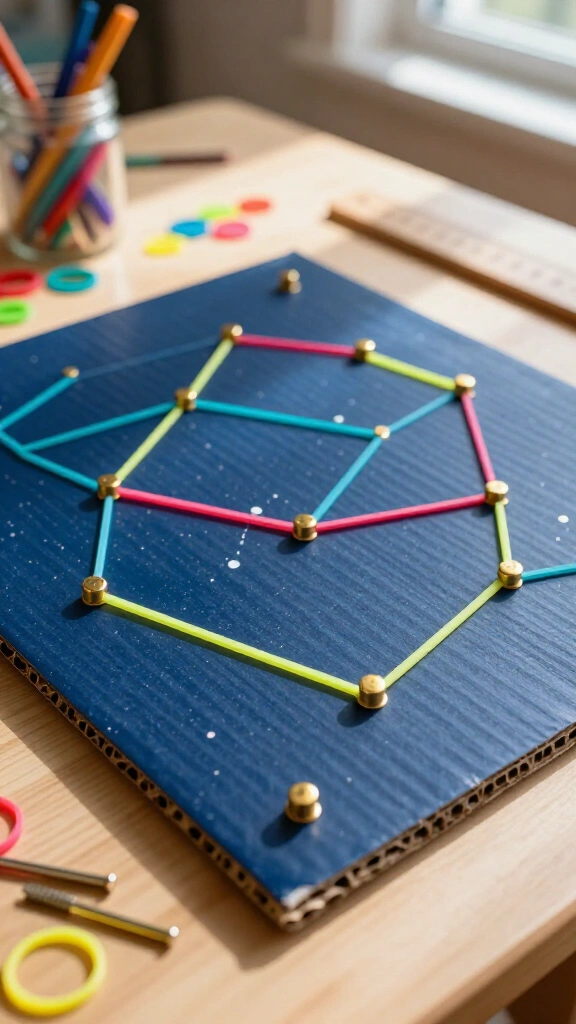
Push brass fasteners into sturdy cardboard to make your own pegboards. Children wrap rubber bands around the pins to form polygons, acute angles, and constellation patterns. This project builds finger strength and spatial awareness. Check out Khan Academy for coordinate lessons if your older kids want a deeper challenge.
6. Counting Caterpillar Egg Cartons

Turn an empty cardboard egg carton into a counting caterpillar. Cut the carton lengthwise, paint the cups green, and write numbers from 1 to 10 inside each slot. Give your child pom-poms or dried beans to drop into each cup until the contents match the numeral. This physical sorting establishes one-to-one correspondence quickly.
7. 3D Geometric Marshmallow Towers
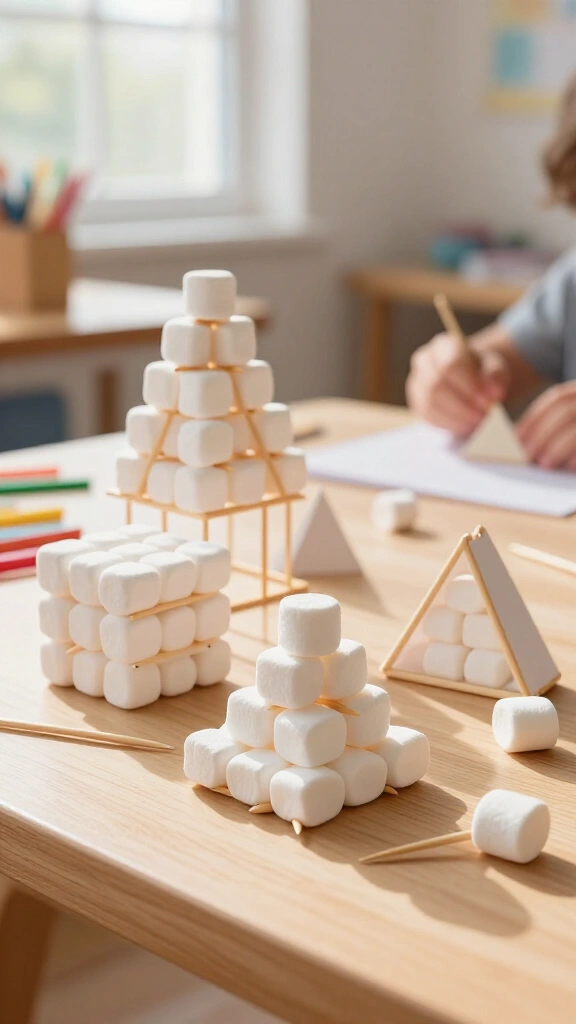
Challenge your kids to build cubes, pyramids, and triangular prisms using mini marshmallows and toothpicks. They count vertices, faces, and edges while testing how well each structure stands upright. Kids learn why triangles provide more stability than squares when building tall towers.
8. Paper Plate Analog Clocks

Make an interactive clock using two stacked paper plates. Cut 12 flaps around the rim of the top plate for the hours (1 to 12) and write the corresponding minute numbers (00 to 55) directly beneath them on the bottom plate. Attach cardstock hands in the middle with a metal split pin. Kids lift each hour tab to see exactly how minutes match up with the clock face.
9. Rainbow Bead Abacus Sticks

Slide plastic pony beads onto craft wire or pipe cleaners attached across popsicle sticks to make pocket-sized abacuses. Group the beads in sets of five or ten so kids can identify quantities without counting one by one. This simple tool helps young learners solve basic addition and subtraction facts by sliding beads across the wire.
10. Math Fact Agamographs
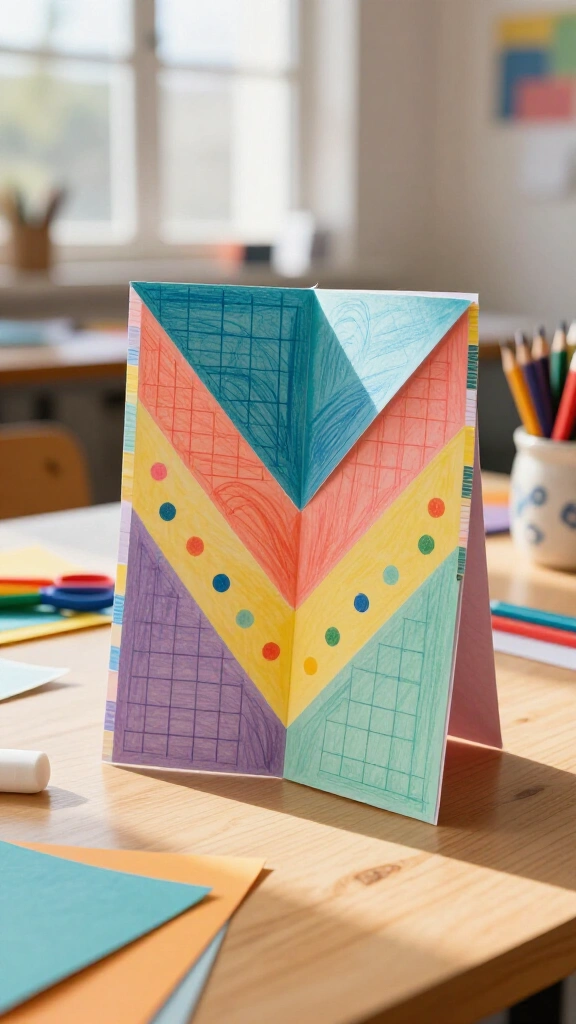
Combine folding art with arithmetic practice. Kids draw an addition problem on one set of paper strips and the matching subtraction fact on another, then glue them in an alternating pattern on accordion-folded paper. When you walk past the paper, the visible image switches based on where you stand. The moving visual effect gives students an engaging way to connect inverse operations.
11. LEGO Graphing Towers
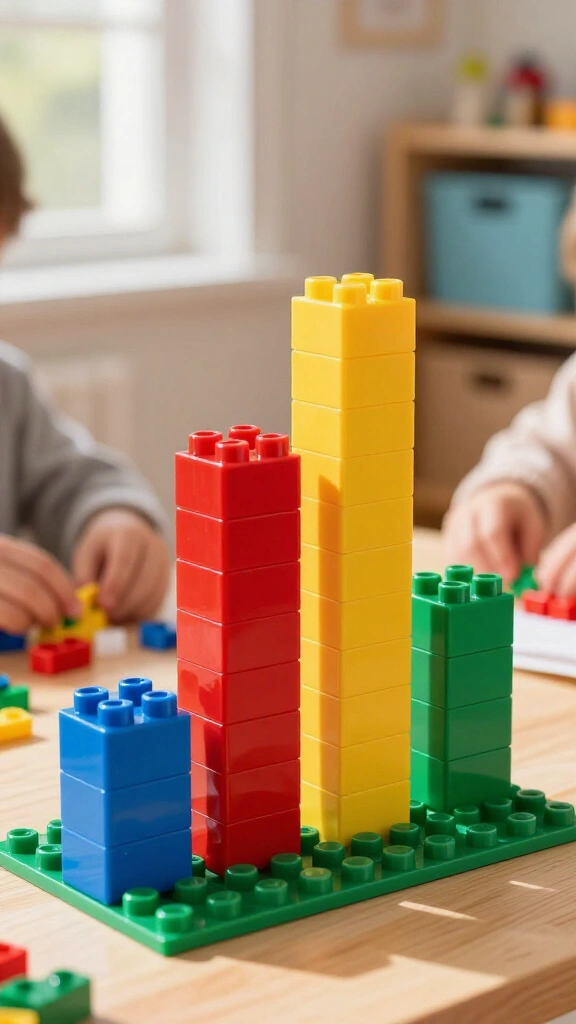
Turn everyday building bricks into bar graphs. Assign specific brick colors to household data, like family pet preferences, fruit choices, or daily weather. Kids stack the bricks into vertical columns to compare quantities without needing a pencil. For more creative classroom ideas, explore our collection of spring art projects for elementary kids.
12. Hungry Angle Monster Chompers
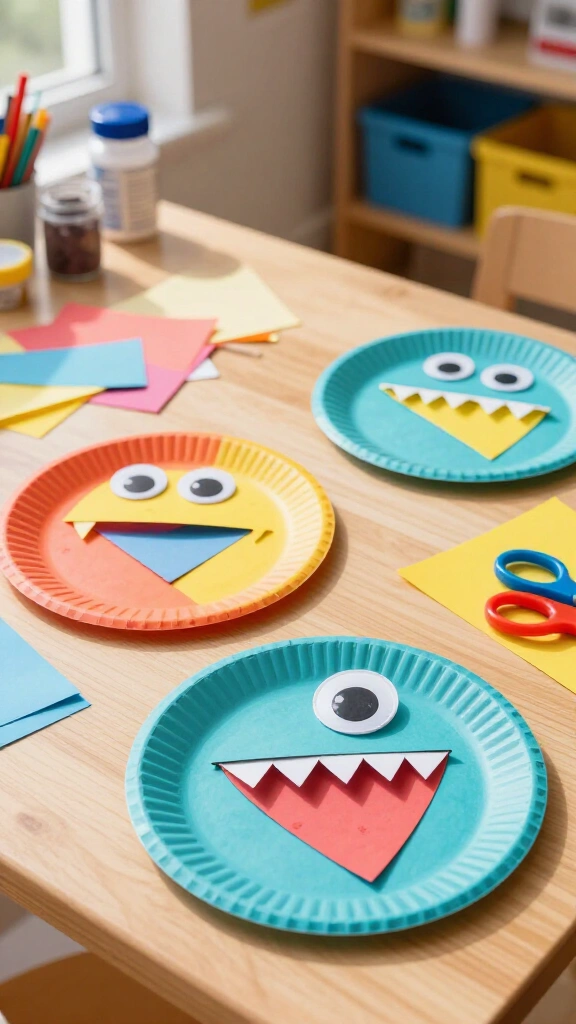
Turn paper plates into angle monsters to practice geometry terms. Cut mouth wedges of different sizes to show acute, right, and obtuse angles. Write the corresponding degree measurements inside the jaws so kids connect angle names with their numerical degree ranges.
13. Tessellation Mosaic Tiles
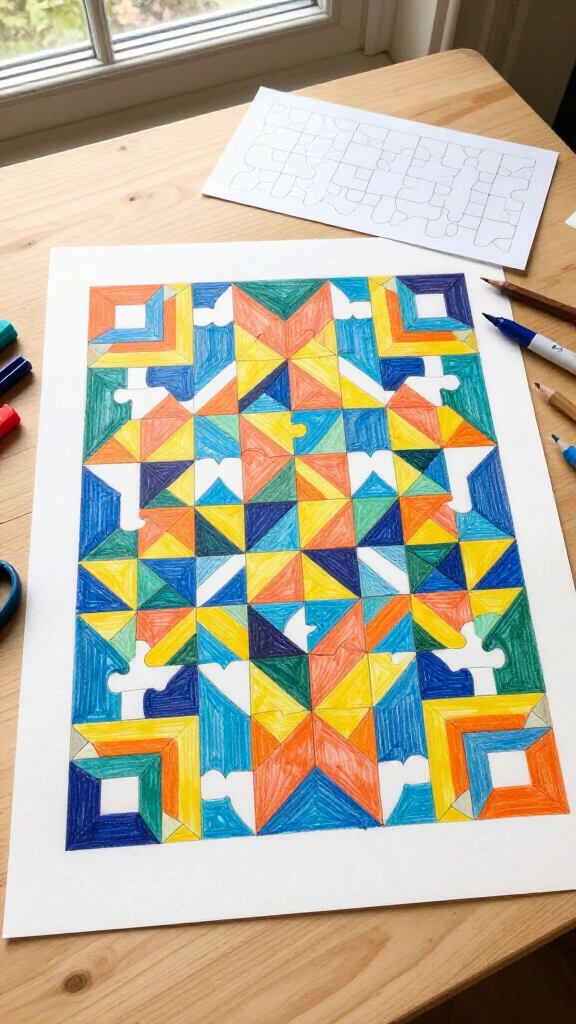
Introduce geometric repeating patterns inspired by M.C. Escher. Cut an irregular interlocking template from index cards, then trace it repeatedly across poster board without leaving empty gaps. Kids fill in the repeating shapes with contrasting colors to produce continuous geometric patterns across the entire sheet.
14. Bubble Wrap Multiplication Arrays
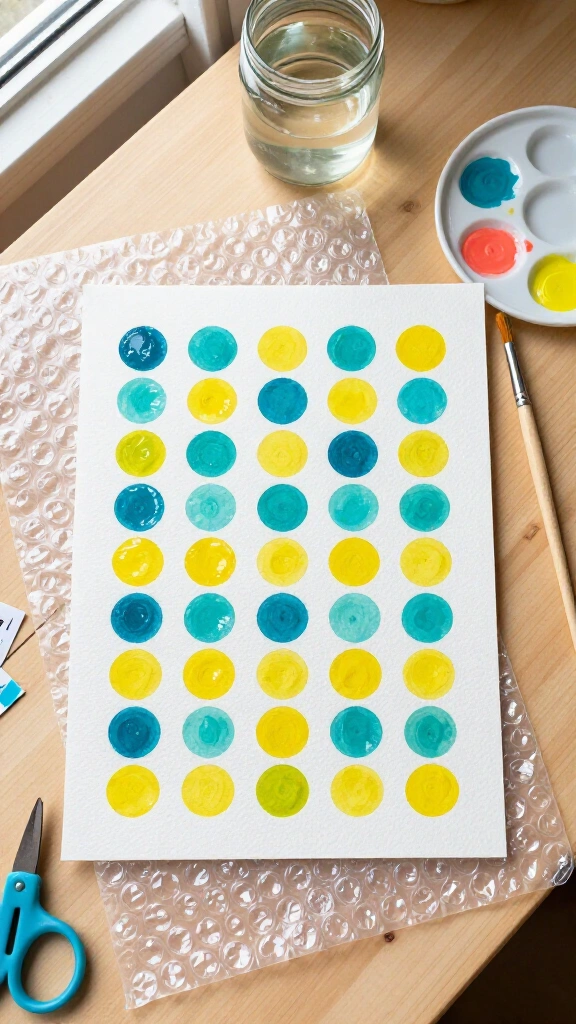
Save your delivery packaging for array practice. Cut bubble wrap into rectangular grids, brush washable paint over the bubbles, and stamp them onto paper. Kids clearly see how 4 rows of 5 bubbles produce 20 total printed dots. This tactile stamp turns abstract area multiplication into an obvious visual pattern.
15. Shape Monster Paper Bag Puppets

Convert standard paper lunch bags into geometry puppets with cut paper shapes. Children glue trapezoids for bodies, circles for eyes, rhombuses for noses, and hexagons for teeth. As they play with the puppets, they identify each polygon by its sides and angles during simple puppet shows.
16. Footprint Measurement Rockets

Trace your child’s feet on cardstock to create fins for paper towel tube rockets. Use a ruler to measure the footprint in inches and centimeters, then use that cut-out shape to measure objects around the room. Kids can record how many footprints wide the sofa is or how tall the door stands. This introduces standard and non-standard measurement units through movement.
17. Domino Math Snakes

Draw a winding snake outline on poster board and have your child place dominoes along its body. To connect the line, touching domino ends must produce the same sum or difference. Kids calculate equations on every turn before locking each domino tile in place.
18. Pop-It Addition Fact Boards

Use silicone bubble toys to model addition sentences. Place numbered paper strips under each row to set up basic addition problems. Kids press down the bubbles to physically count totals and identify number bonds up to 20. Discover more early learning resources at PBS KIDS for Parents.
19. Fibonacci Spiral Snail Shells
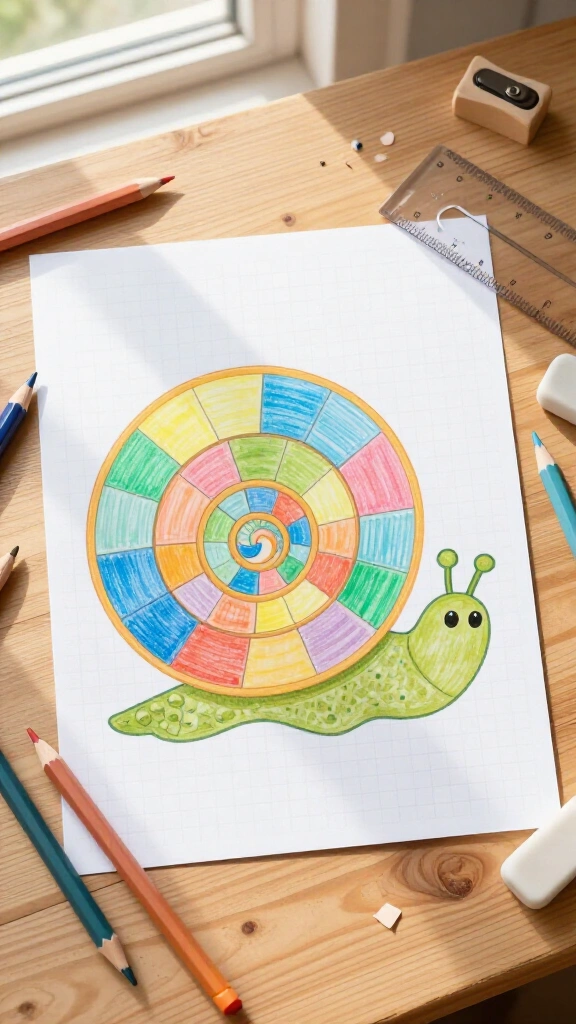
Introduce the Golden Ratio through simple grid drawings. Kids trace squares with dimensions following the Fibonacci sequence (1, 1, 2, 3, 5, and 8) on graph paper, then draw a continuous curve connecting opposite corners. Add a snail body beneath the spiral to show how mathematical sequences appear in the natural world.
20. Ten-Frame Egg Carton Bean Toss
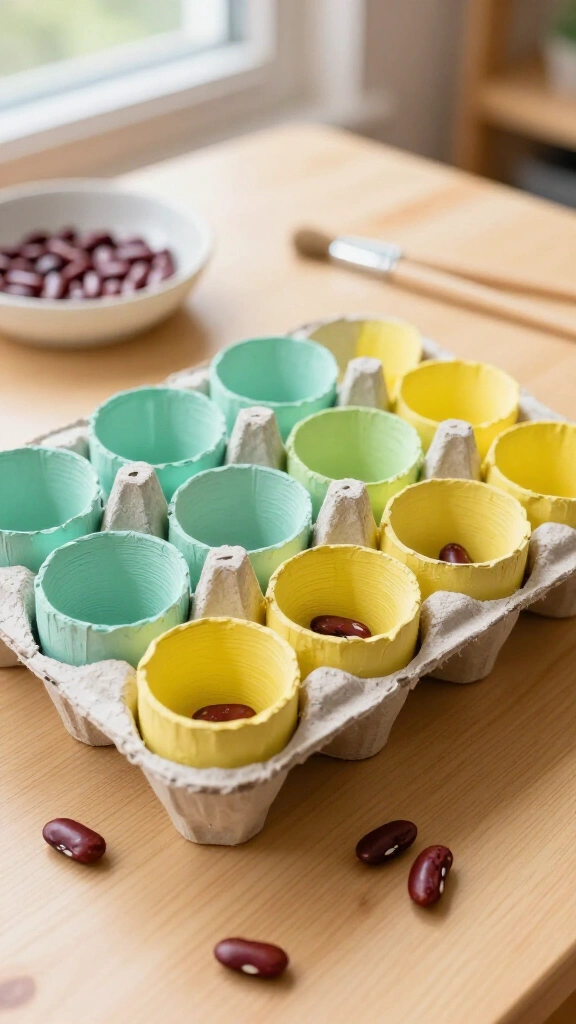
Cut two cups off a standard egg carton to create a ten-frame tray. Paint the inside cups with two alternating colors and toss dried beans into the carton from a step away. Kids count the occupied cups against the empty ones to practice combinations that add up to ten.
21. Pirate Coordinate Grid Treasure Maps
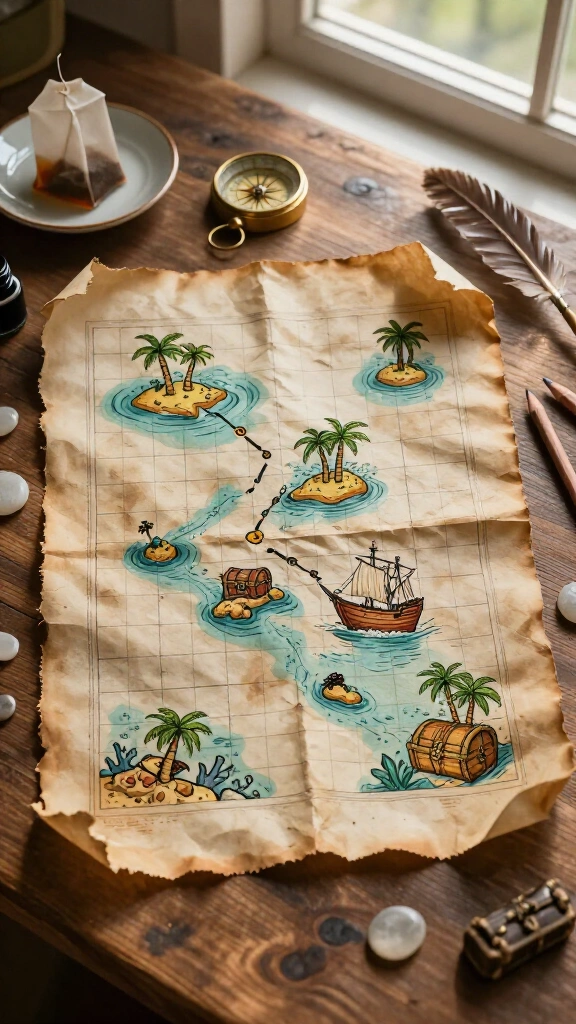
Age a sheet of butcher paper with damp tea bags and draw an X and Y axis across the center. Kids plot islands, reefs, and treasure chests at specific ordered pairs. They write out their list of coordinates and trade maps with a friend to locate every marked coordinate point.
22. Cardboard Fraction Strips

Make custom fraction bars from recycled cardboard cereal boxes. Cut several strips to the exact same length, then divide each strip into different unit fractions such as halves, thirds, fourths, sixths, and eighths. Kids place the colored strips next to each other to spot equivalent fractions without relying on memorized formulas.
23. Waldorf Multiplication Star Wheels
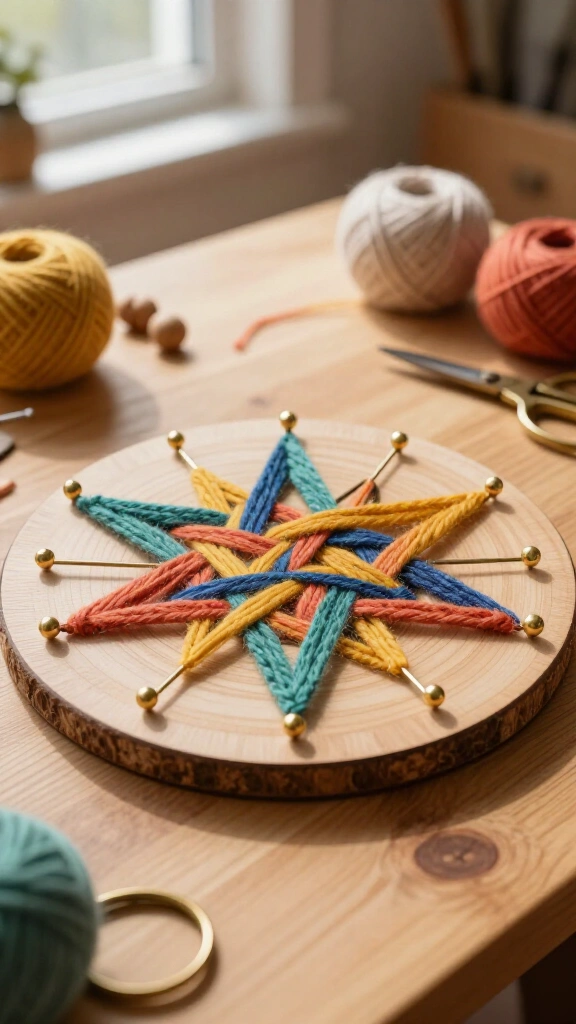
Place 10 small pins in a circle numbered 0 through 9 on a wooden plaque or heavy cardboard disc. Wind yarn around the pins following multiplication skip-counting patterns (such as counting by fours: 4, 8, 2, 6, 0). The yarn paths form geometric stars that show how number sequences generate repeating geometric forms.
24. Even & Odd Monster Sorting Boxes
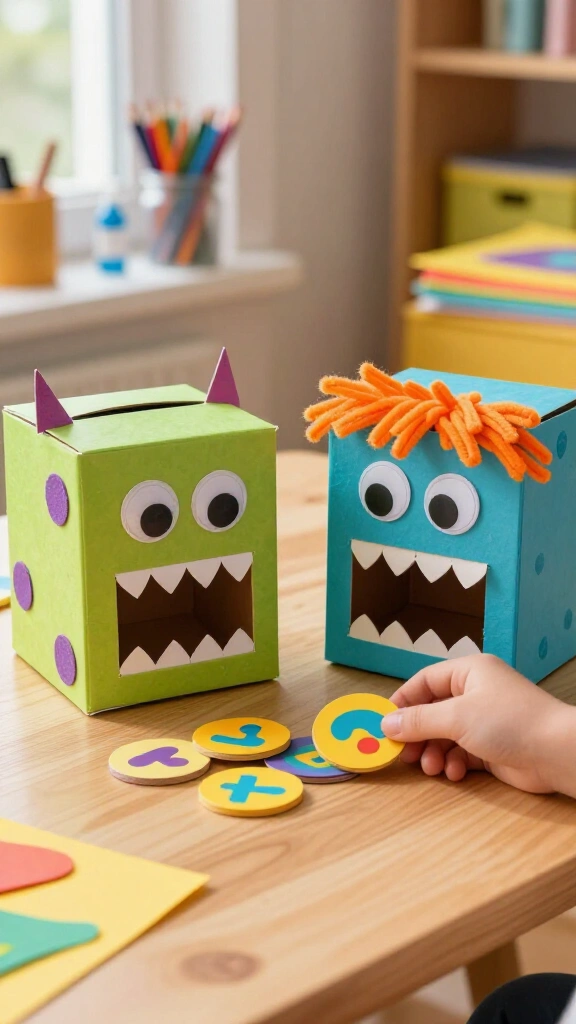
Label two empty tissue boxes as Even and Odd monsters. Children write random numbers on cardboard tokens and drop each token into the correct monster box based on the last digit. This tactile sorting game reinforces divisibility rules and single-digit parity.
25. Origami Currency Wallets

Fold heavy paper into multi-pocket origami wallets to teach both geometric symmetry and basic money management. Kids label the different compartments for spending, saving, and donating, then organize play bills and coins into each pocket. The project pairs geometric folding instructions with practical budgeting habits.
26. Tangram Animal Collages
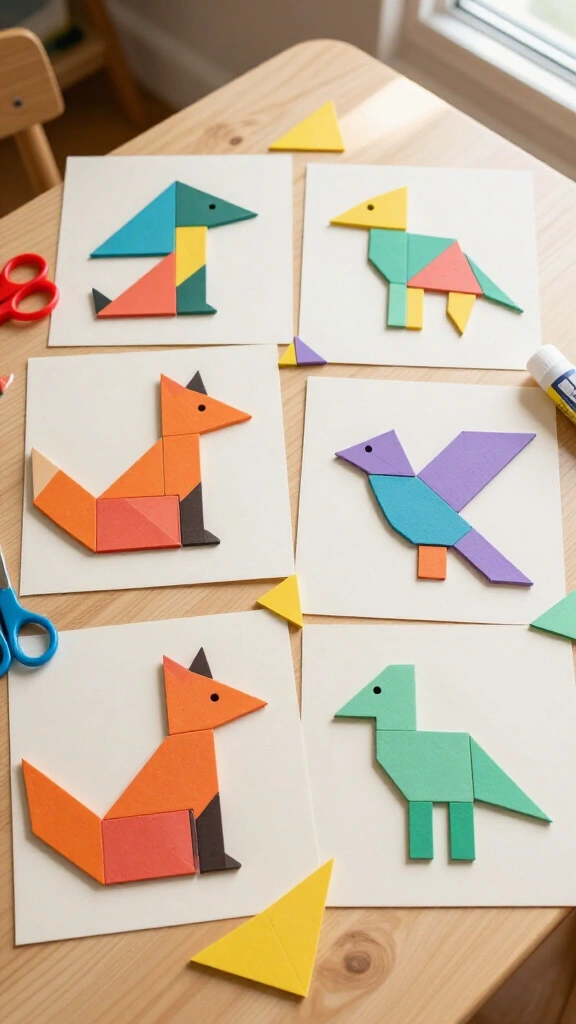
Cut standard seven-piece tangram sets out of craft foam or cardstock. Challenge your kids to arrange the triangles, square, and parallelogram into shapes like foxes, birds, and boats without overlapping any pieces. They can glue the finished puzzles onto paper sheets. For more boredom busters, check out these fun summer crafts for kids.
27. Probability Spinner Pinwheels

Make simple paper pinwheel spinners divided into unequal color sections. Kids predict which color will land most often, then spin the pinwheel 50 times while recording the actual results on a tally chart. This physical test demonstrates how theoretical odds compare to real sample data.
28. Equal Sharing Bird Nests
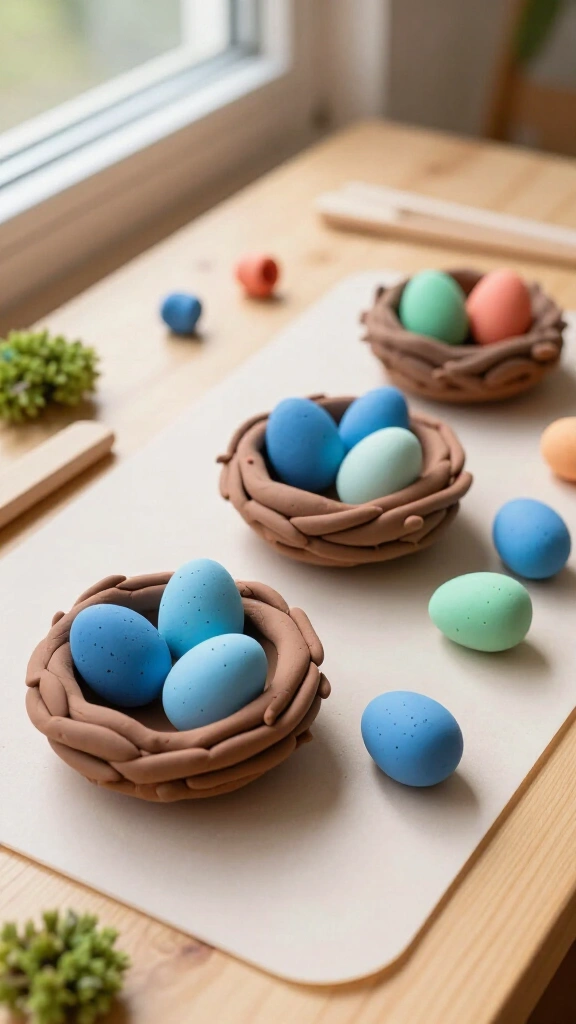
Model division by sculpting small clay bird nests and clay eggs. Give your child word problems like distributing 14 eggs evenly across 3 nests. Moving the physical clay eggs helps kids understand quotients and leftover remainders without confusion.
29. 3D Polyhedron Straw Nets
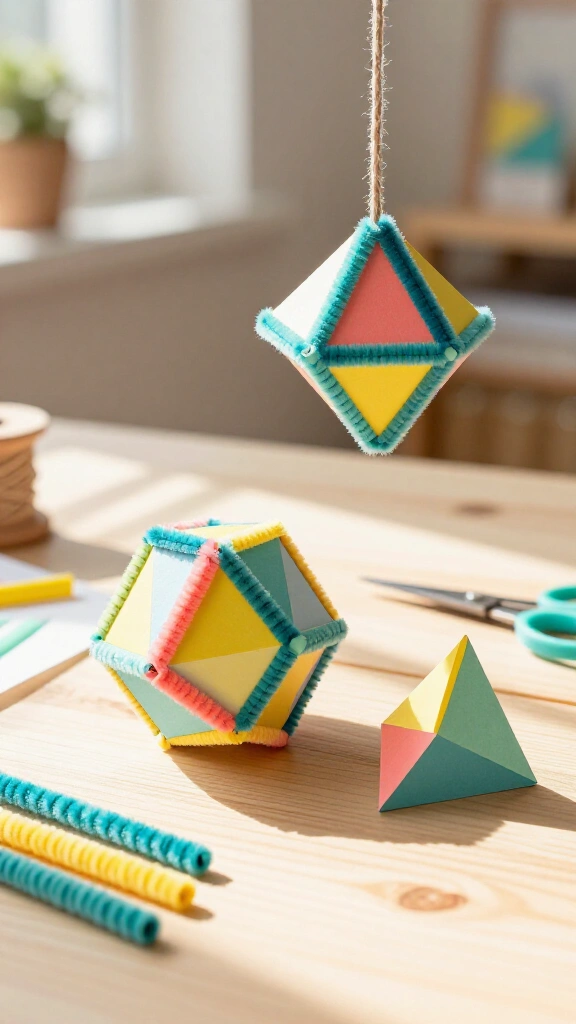
Thread pipe cleaners through cut paper straws to build 3D shapes like octahedrons and icosahedrons. Kids see how flat sets of connected triangles pull together into solid, rigid geometric shapes. You can tie string to the finished shapes to hang them up as geometric models.
Making numbers click with hands-on crafts
Math does not need to stay trapped on black-and-white worksheets. When you add physical craft projects to your math routine, children understand tricky concepts much faster. Hands-on building strengthens number sense, visual thinking, and problem-solving skills without the stress of repetitive drills.
Pick a project from this list to try with your kids this week. Grab some paper, scissors, and glue, and help them explore math in a practical way right at the kitchen table.