
Kids often tune out the second you open a textbook. Turning abstract concepts into hands-on projects transforms daily lessons into moments where ideas click. Whether you manage a classroom or teach at the kitchen table, these 27 creative school crafts for kids that make learning fun keep children engaged while showing them that schoolwork can feel like play.
1. Paper Plate Solar System

Turn plain paper plates into a working space map. Kids paint a central sun and paste construction paper planets in orbital order around it. To expand the lesson, visit NASA’s Climate Kids portal to study planetary facts while the paint dries.
2. Alphabet Pipe Cleaner Sculptures
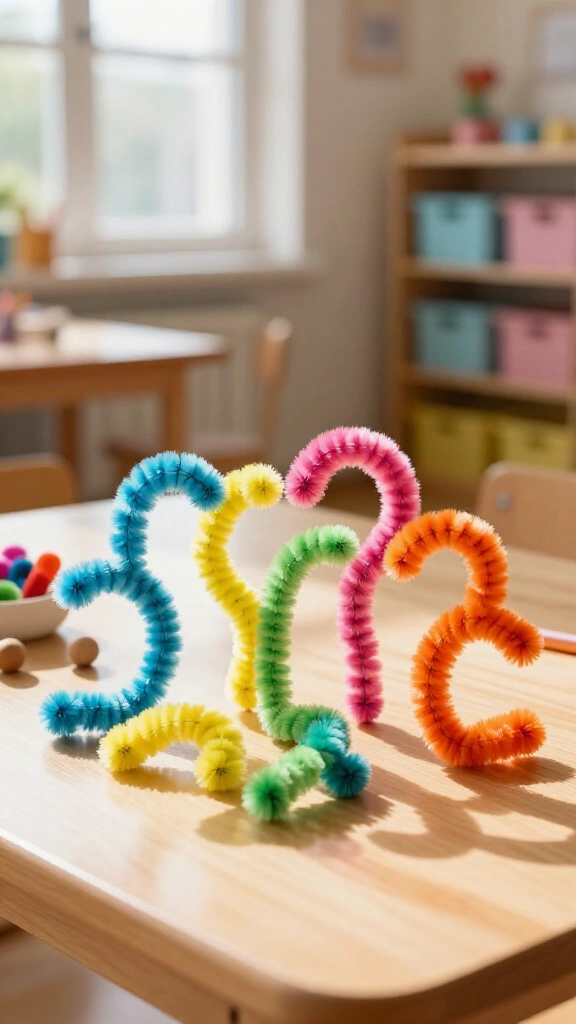
Bending colorful craft stems into alphabet letters builds muscle memory and sharpens letter recognition. Young learners connect phonics with tactile shapes while strengthening their hand muscles. If you have extra supplies, browse our collection of pipe cleaner crafts for kids for more project ideas.
3. Fraction Pizza Paper Craft
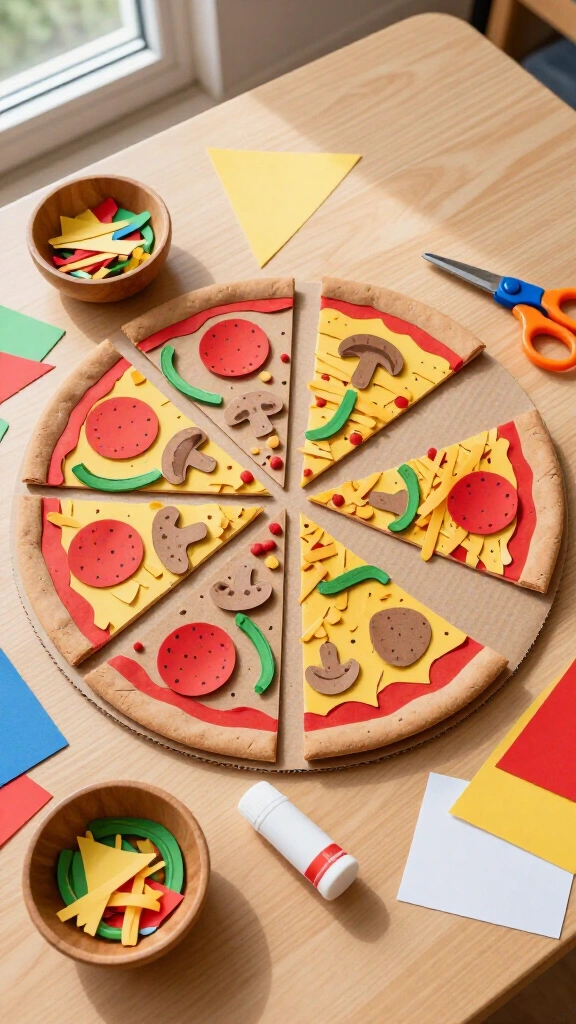
Fractions make much more sense when kids picture them as pizza slices. Children cut a cardboard circle into equal halves, quarters, and eighths, then glue paper toppings across the sections to match specific fraction prompts. Working through equivalent fractions feels like running a real kitchen order counter.
4. Egg Carton Butterfly Life Cycle
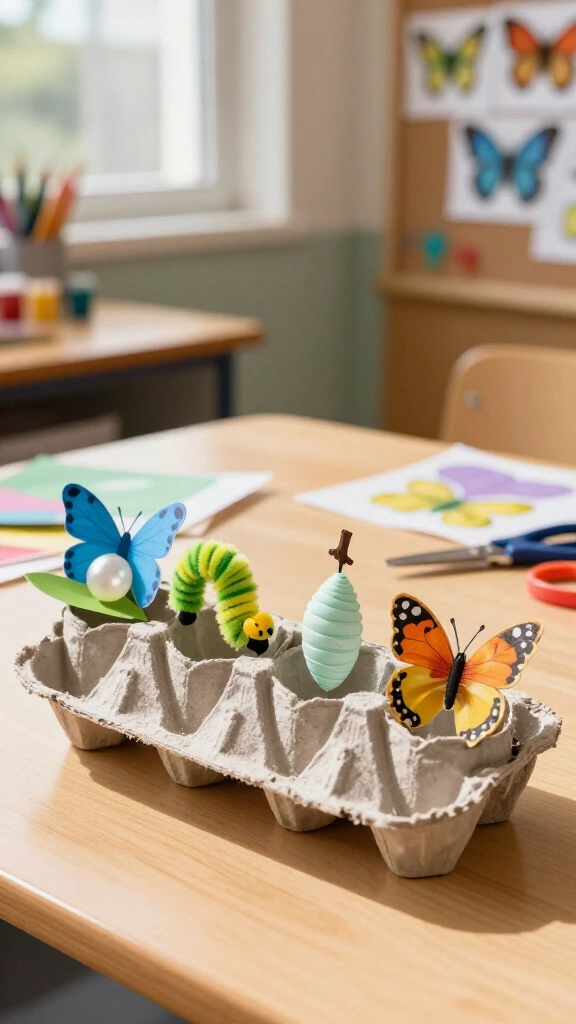
Cut a four-cup strip from an egg carton to build a three-dimensional metamorphosis model. Kids glue a bead egg, a pipe cleaner caterpillar, a tissue paper chrysalis, and a painted bow-tie pasta butterfly into separate cups. Pair this biology project with our butterfly art for kids to create a full spring display.
5. Popsicle Stick Catapults
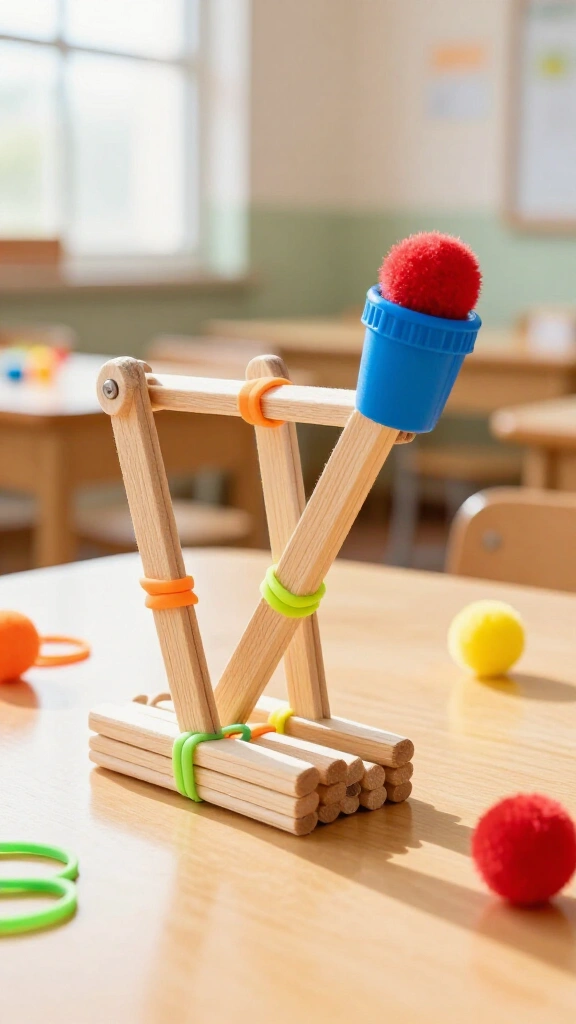
Demonstrate basic physics and Newton’s laws of motion with wooden sticks, rubber bands, and a plastic bottle cap. Students stack and bind the sticks to create leverage, then launch craft pom-poms across the room. The exercise offers a clear look at potential and kinetic energy in action.
6. DIY Cardboard Loom Weaving
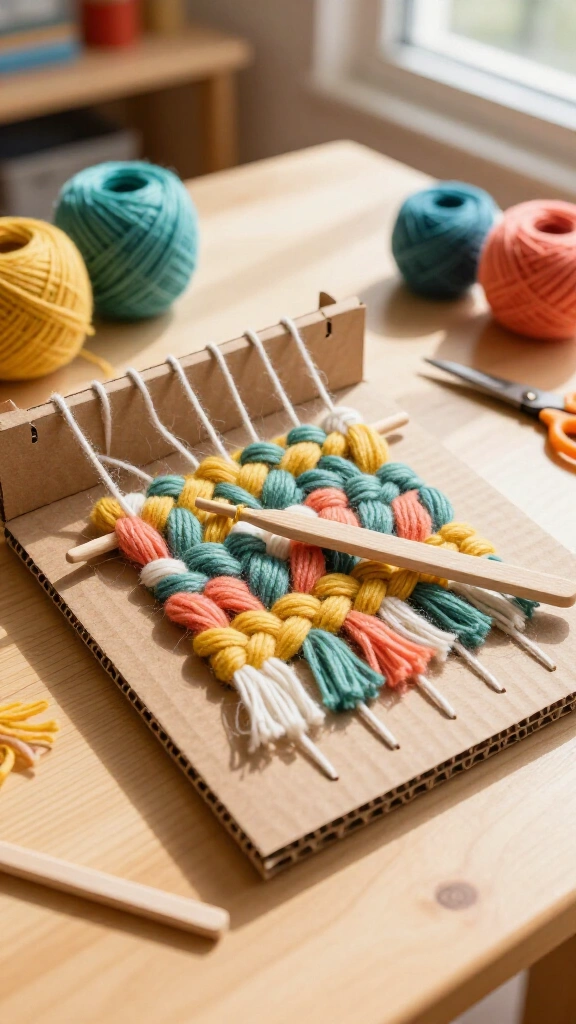
Cut notches along the edges of scrap cardboard to introduce historic weaving techniques. Children pull yarn back and forth through the slots, practicing an over-and-under pattern that develops hand-eye coordination. The activity ties practical art skills directly to early social studies lessons.
7. Clothespin Number Line Caterpillars
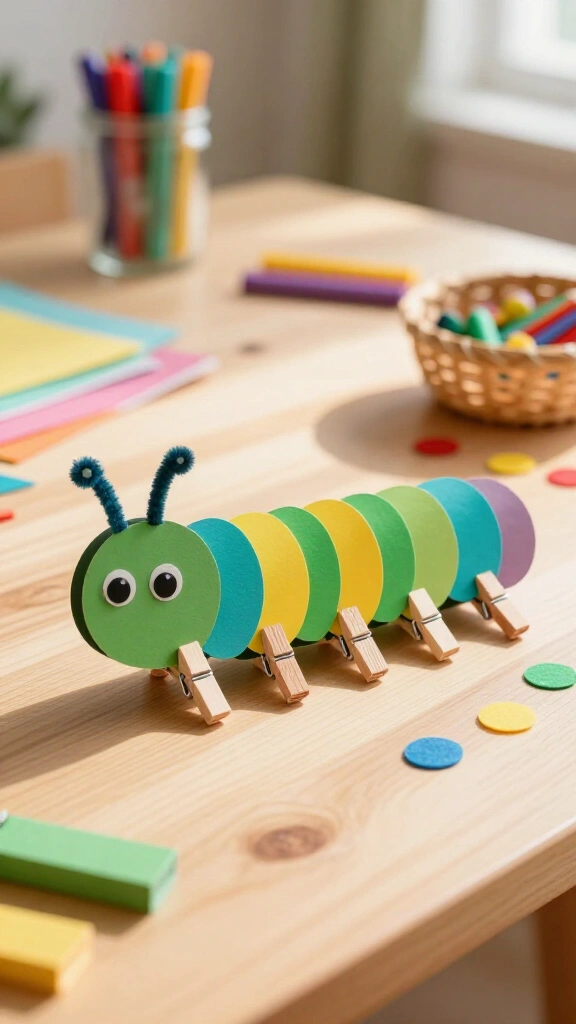
Turn wooden clothespins into mobile counting tools. Write single digits on each clip and ask preschoolers to clamp them onto numbered cardboard caterpillars in numerical order. The pinching motion develops the finger grip kids need for writing with pencils.
8. Coffee Filter Plant Cell Model

Explore cellular biology without an expensive microscope. Kids color paper coffee filters with washable markers, spray them with water to blend the pigments, and label the cell parts with permanent markers once dry. The spreading ink mimics cytoplasm inside a cell wall.
9. Paper Bag Historical Puppets

Replace written book reports with quick classroom presentations. Kids transform brown paper lunch bags into historical figures using construction paper, yarn, and scrap felt. Each student puts on their puppet and delivers a short monologue describing their character’s life.
10. Straw Rocket Launchers
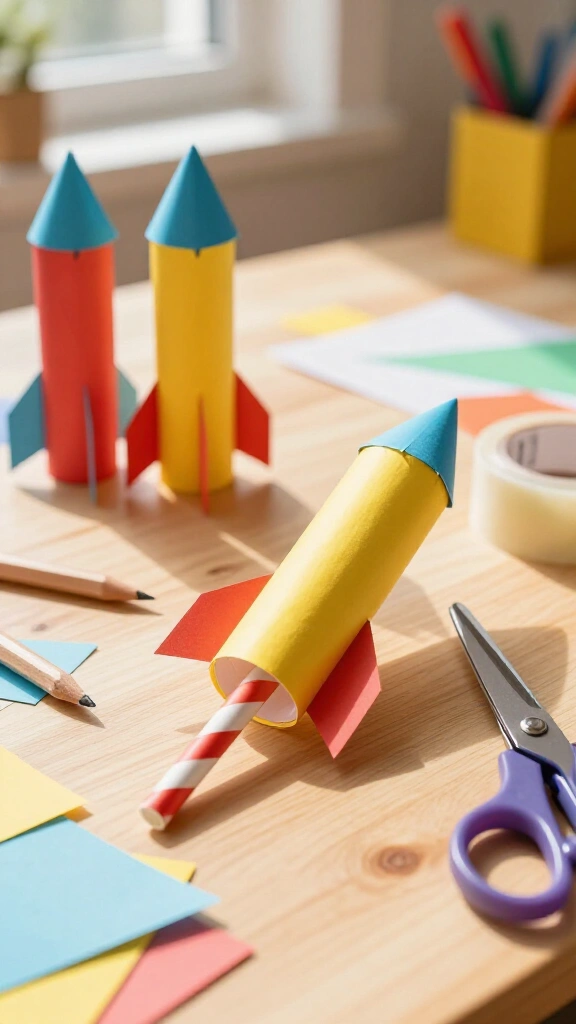
Introduce aerodynamics with paper rocket cones and reusable drinking straws. Kids wrap scrap paper tightly around a pencil, tape the top closed, and slide the paper tube onto a straw. A quick blast of breath launches the rocket across the room, showing how air pressure moves objects.
11. Weather Wheel Meteorologist Craft
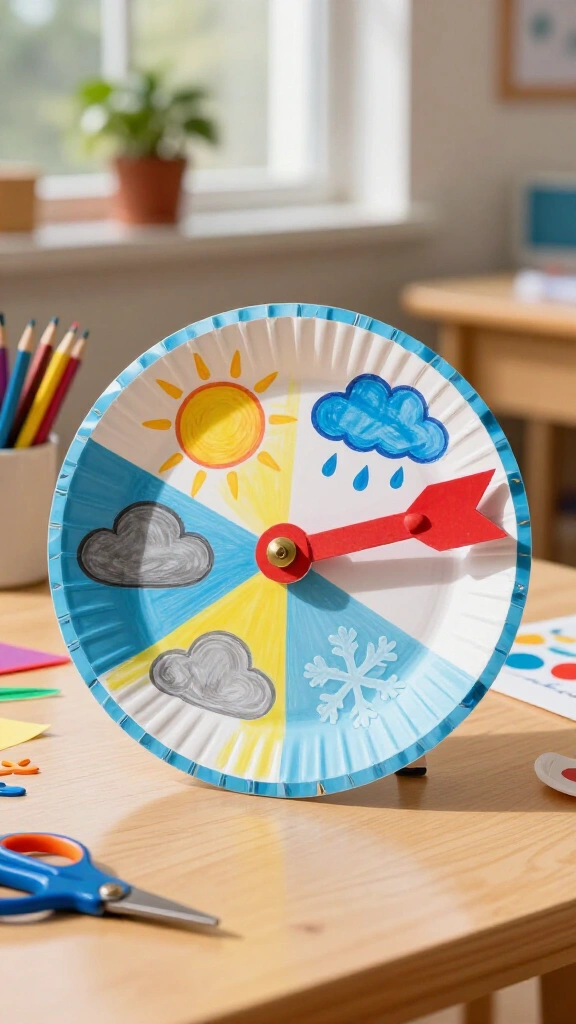
Help young learners track daily conditions with a handmade dial. Students divide a paper plate into sunny, rainy, cloudy, and snowy sections, then attach a cardstock pointer using a brass fastener. Checking and adjusting the wheel each morning introduces basic science observation routines.
12. Chromatography Flower Bouquets

Teach chemistry principles through simple paper flowers. Draw thick rings of washable marker ink on round filter papers, then place the center of each paper into a shallow cup of water. As water moves through the fibers, it separates the ink into distinct pigment bands through capillary action.
13. Tell-the-Time Clock Plates

Teach analog time using two stacked paper plates. Cut small flaps along the top rim so kids can lift each hour number to see the matching minute count underneath. Movable cardstock clock hands help students practice terms like quarter past and half past without confusion.
14. Nature Suncatcher Collages
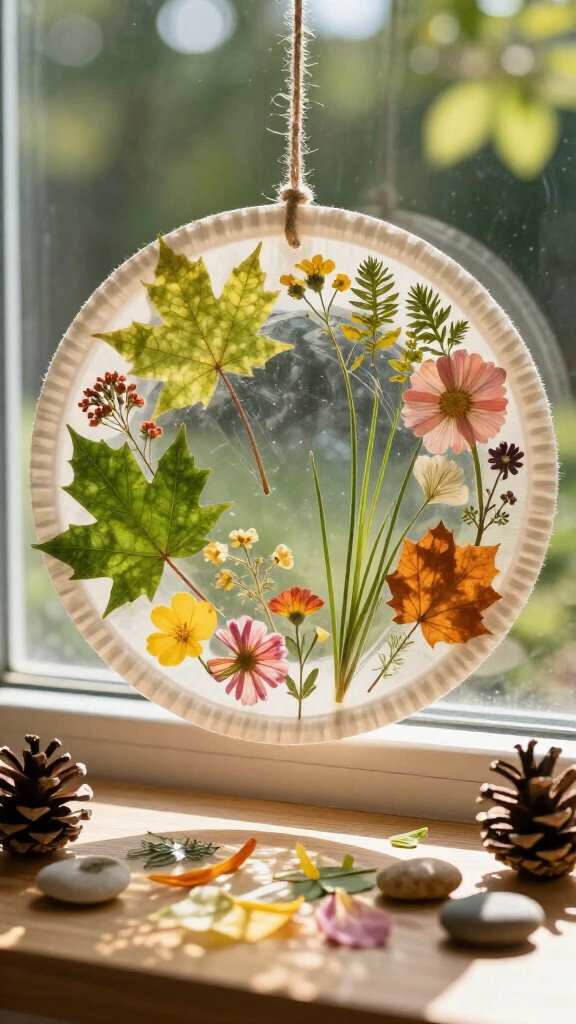
Send students outside to gather fallen leaves, flower petals, and blades of grass. Press the plant cuttings between sheets of clear contact paper inside an open paper plate frame to view vein patterns against the sun. For similar activities, check out our guide to March crafts for kids.
15. Paper Cup Telephones

Demonstrate how sound waves travel using two paper cups and cotton string. Poke a hole in the bottom of each cup, knot the string on both ends, and pull the line tight between two partners. When one person whispers into a cup, acoustic vibrations travel through the taut string to the other cup.
16. Clay Topographic Landform Island
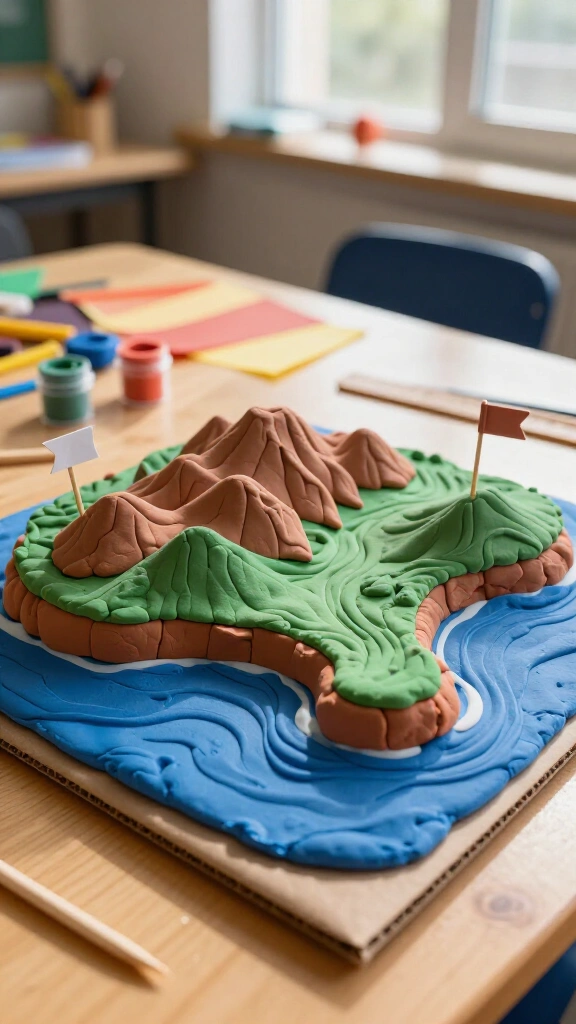
Translate flat geography maps into three-dimensional models. Children press blue, green, and brown modeling clay onto cardboard bases to shape peninsulas, plateaus, valleys, and mountain peaks. Toothpick paper flags identify each feature and reinforce geography vocabulary.
17. Sight Word Sensory Squish Bags
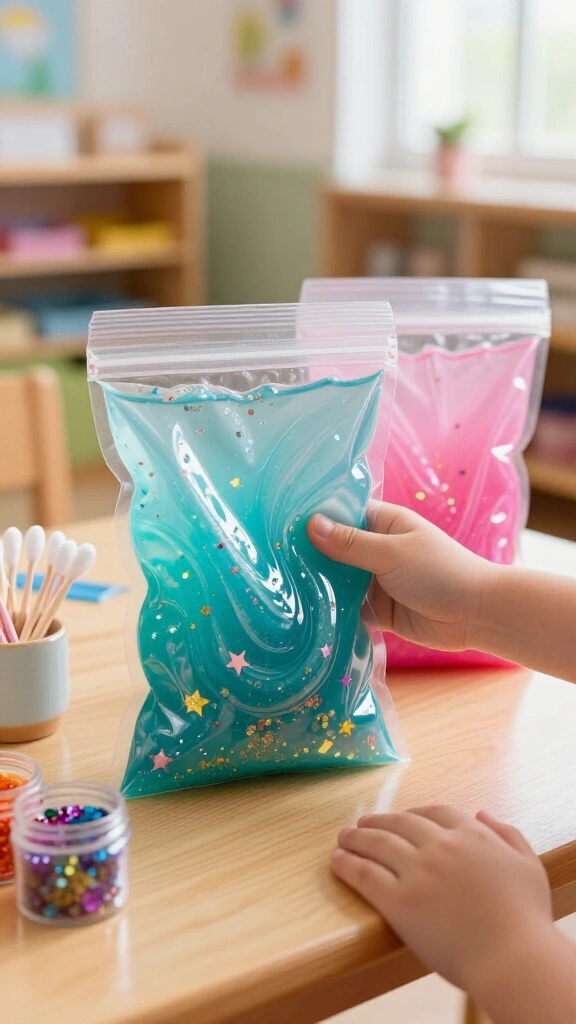
Fill sealable plastic bags with clear hair gel, food coloring, and craft glitter to practice spelling without pencil marks. Children trace letters and whole words across the surface with their finger or a cotton swab. The tactile feedback helps children remember letter patterns quickly.
18. Origami Tessellation Tiles
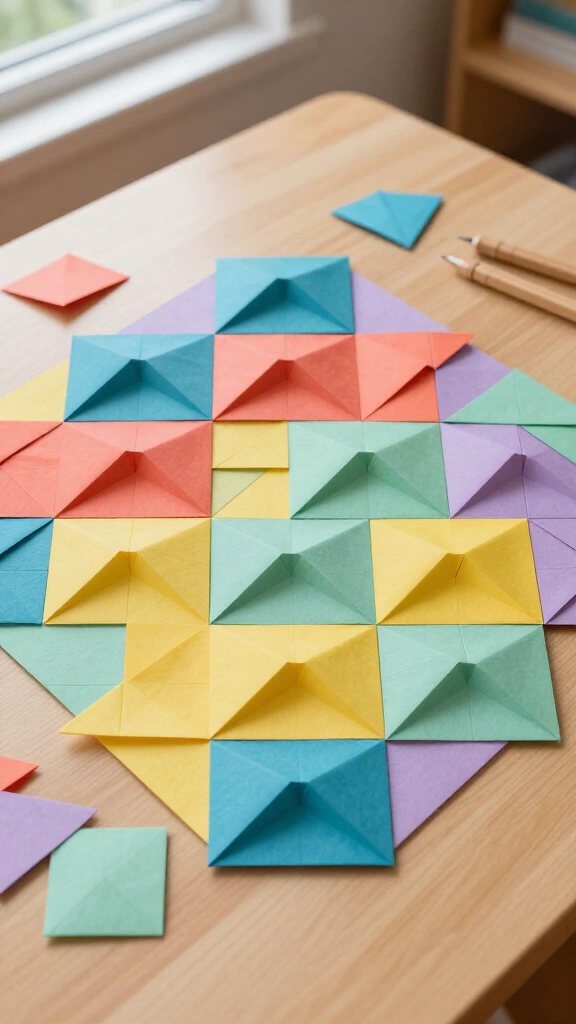
Introduce geometric symmetry and pattern repetition with square origami paper. Students fold matching shapes and connect them edge to edge without leaving open spaces. You can also explore interactive spatial activities on PBS KIDS to build on these geometric concepts.
19. Balloon-Powered Spool Racers
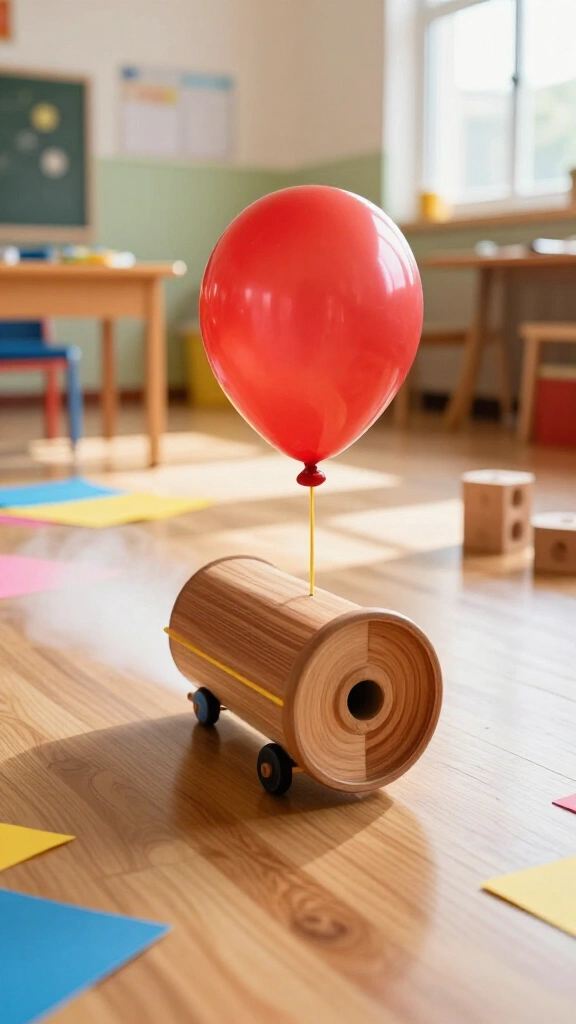
Feed a rubber balloon through an empty thread spool, secure the neck with a rubber band, and blow it up. When released on a smooth floor, the escaping air pushes the spool forward across the room. The craft gives children a clear example of Newton’s third law of motion.
20. Popsicle Stick Word Family Ladders

Glue craft sticks into small ladders where each step displays a different initial letter before a common ending like -at or -ing. Sliding a paper marker down the rungs helps beginning readers sound out rhyming word groups quickly.
21. DIY Rain Cloud in a Jar

Demonstrate weather patterns inside a standard glass jar. Fill the jar with clean water, spray a thick layer of shaving cream on top, and drop blue food coloring onto the foam with a dropper. Once the foam holds too much liquid, drops of blue dye fall through the water below to model rainfall.
22. Cardboard Constellation Projectors

Use recycled paper towel rolls to view star patterns inside a dark room. Students punch constellation layouts into circles of black cardstock, tape the paper over one end of the roll, and shine a flashlight into the other opening. Clear star groupings appear on the ceiling.
23. Playdough Continent Globe
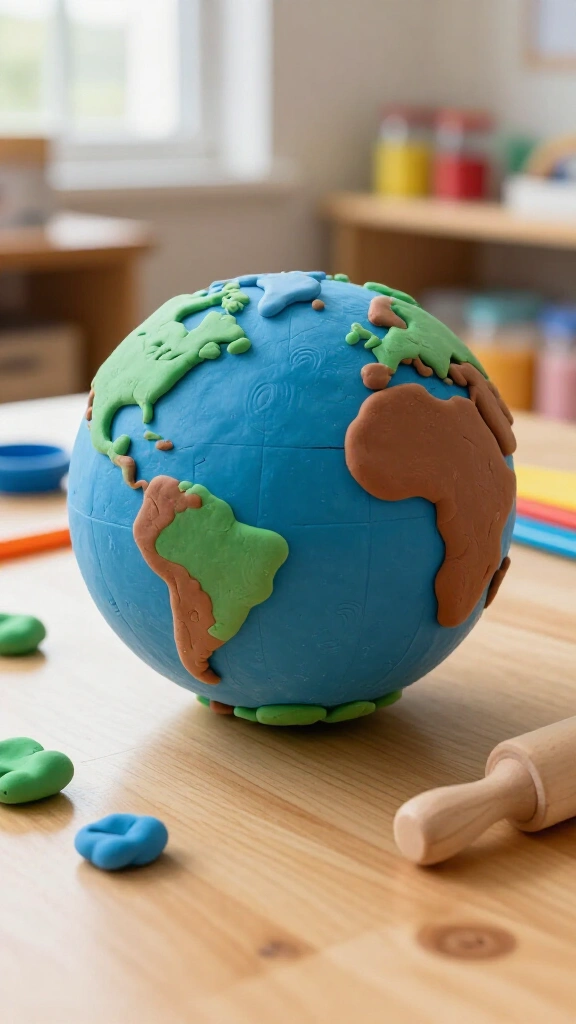
Roll blue modeling dough into a ball to create an ocean base, then press flat green and brown dough shapes onto the surface to mark the continents. Making the continents by hand helps children understand relative size and spatial orientation better than looking at flat maps.
24. Marshmallow & Toothpick Geodesic Structures

Challenge students to build free-standing towers and domes using mini marshmallows for joints and wooden toothpicks for framing. Children quickly discover why triangular frames support weight better than square frames during construction.
25. Emotion Mask Paper Cutouts
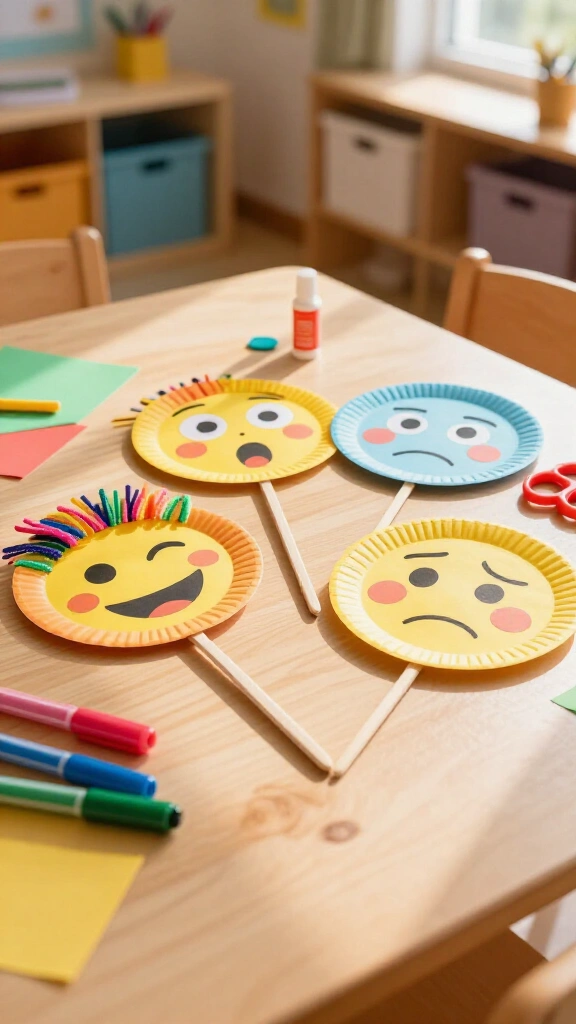
Help children discuss feelings by making paper plate face paddles attached to craft sticks. Students draw facial expressions showing joy, surprise, frustration, or calm, then hold up the plates during group discussions to share how they feel without social pressure.
26. Secret Code Cipher Wheels
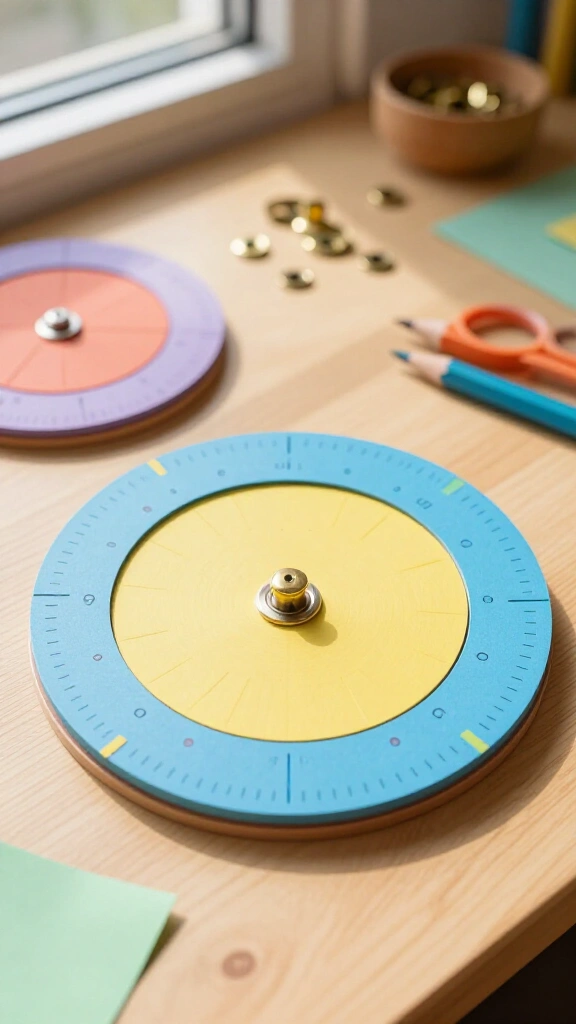
Introduce early cryptography by joining two concentric cardstock circles with a metal split pin. Write the alphabet around both edges to produce a working cipher wheel. Children encode and decode spelling lists, turning standard vocabulary practice into a code-breaking exercise.
27. Recycled Plastic Bottle Greenhouse

Cut a clean two-liter plastic bottle in half to create a mini greenhouse. Place potting soil and bean seeds inside the bottom section, then set the top half over the base to trap moisture and warmth. Students track sprout progress daily while studying how plants cycle water. Find more plant activities on National Geographic Kids.
Wrapping up: Making learning stick
Craft projects give abstract theories a physical shape that children can touch, test, and understand. When students build models and handle materials directly, math and science concepts take hold far faster than through rote memorization.
Pick two or three projects from this list to match your lesson plans this week. You will quickly see how creative building keeps students attentive and eager to learn.