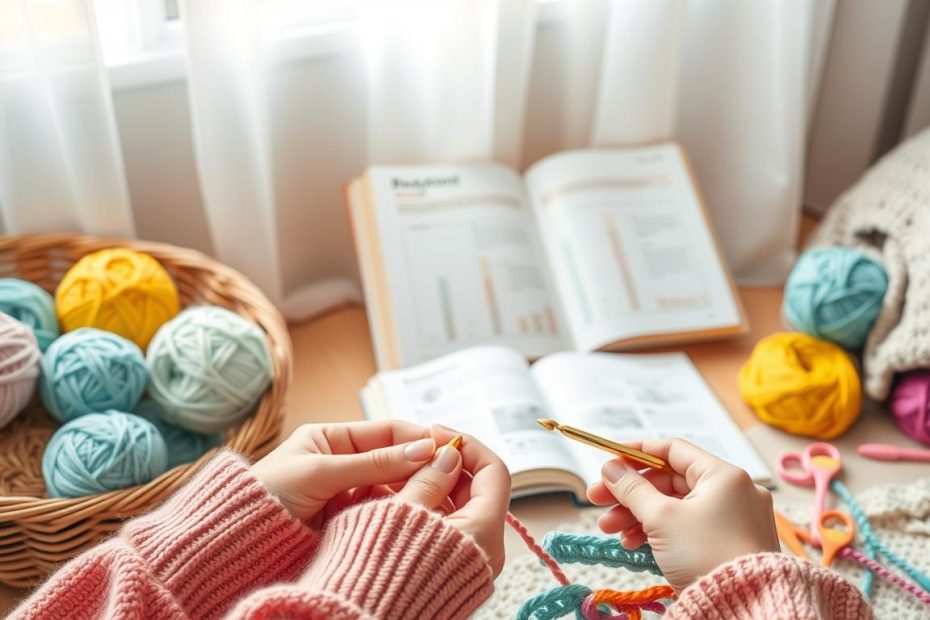
Ever thought about making something beautiful with just a hook and yarn? Learning to crochet is fun and opens up a world of creativity. This guide will show you how to start this amazing craft.
Crochet is more than a hobby. It’s a calming art that lets you make cozy blankets and fancy accessories. You don’t need special skills or expensive tools to start. With basic tools and patience, you can make amazing things.
If you want to make special gifts, relax, or try something new, this guide is for you. You’ll learn how to turn simple yarn into something amazing!
Key Takeaways
- Crochet is an accessible craft for people of all skill levels
- You only need a few basic materials to get started
- Practice and patience are key to mastering crochet techniques
- Crocheting can be a relaxing and rewarding hobby
- There are countless project options for beginners
Understanding the Basics of Crochet
Starting with crochet basics for newbies is fun and exciting. It’s a great way to relax or make special handmade things. Crochet is special for everyone.
What is Crochet?
Crochet is a cool craft that turns yarn into beautiful fabric. You use one hooked needle, unlike knitting which needs two. This makes it easy to make things like doilies and blankets.
- Uses a single hooked needle
- Creates fabric by interlocking yarn loops
- Versatile craft for making various items
History of Crochet
The start of crochet is a bit of a mystery. Archaeological evidence suggests it might have started in Arabia, South America, or China. By the 1800s, it was loved in Europe by all kinds of people.
The Benefits of Crocheting
Crochet is more than just making things. It helps you relax, gets better at using your hands, and is calming. It’s a great way to unwind.
- Reduces stress and anxiety
- Enhances fine motor skills
- Creates opportunities for social connection
- Allows for personal creativity
When you start crocheting, you’ll find many new things to do. You can make gifts or just enjoy the skill. Crochet is special for anyone who wants to learn.
Essential Materials You’ll Need
Starting your crochet journey is exciting. You don’t need to spend a lot to begin. Just a few basic tools will get you started on making beautiful projects.
Crochet Hooks Explained
Crochet hooks are key for your projects. They come in different materials and sizes. Each has its own special features:
- Aluminum hooks: Smooth, making yarn slide easily
- Plastic hooks: Light, and won’t break the bank
- Wooden hooks: Feel nice in your hands
- Ergonomic hooks: Have soft grips to ease hand strain
Types of Yarn to Choose
Choosing the right yarn is important for beginners. Medium-weight yarn (size 4) is best for starters. Here are some yarn options:
- Acrylic: Cheap and easy to clean
- Cotton: Lasts long, good for many projects
- Wool: Keeps you warm, shows stitches well
Pro tip: Start with light-colored yarn. It makes your stitches easier to see!
Additional Necessary Supplies
Get these tools to complete your crochet kit:
- Sharp scissors for clean cuts
- Yarn needles for weaving ends
- Stitch markers to keep track
- Measuring tape for size checks
With these tools, you’re ready to start crocheting. Each one is important for making your projects beautiful.
Learning the Fundamental Stitches
Starting with easy crochet tutorials means learning the basic stitches. These stitches are the building blocks of every crochet project. They help you create beautiful designs.
The Chain Stitch: Your Crochet Starting Point
The chain stitch is the first thing you learn in crochet. It’s like the foundation of your project. Here’s how to make a chain stitch:
- Hold the slip knot with your thumb and middle finger
- Bring the yarn over your hook from back to front
- Pull the hooked yarn through the slip knot
- Repeat until you reach your desired chain length
Tip: Make your chains loose. This makes your work flexible.
Single Crochet Stitch: Building a Solid Foundation
The single crochet is a basic and useful stitch. Here’s how to do it:
- Skip the first chain from your hook
- Insert your hook into the center of the next chain
- Yarn over and pull through the chain
- Yarn over again and pull through both loops
Double Crochet Stitch: Creating Height and Texture
The double crochet stitch is fast to make. It makes a fabric that’s open. Here’s how to do it:
- Yarn over before inserting your hook
- Insert hook into the desired stitch
- Yarn over and pull through the stitch
- Yarn over and pull through two loops twice
Slip Stitch: The Subtle Connector
Slip stitches are great for joining rounds. They make smooth transitions. Just insert your hook, yarn over, and pull through both the stitch and the loop on your hook.
Practice these basic stitches to get better at crochet. Remember, every expert started where you are now!
Reading Crochet Patterns
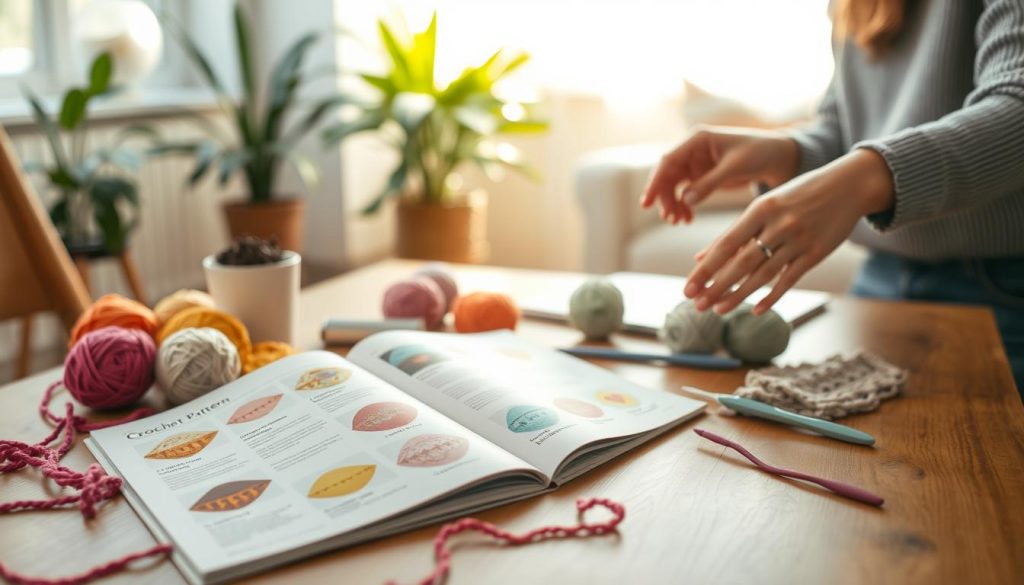
Starting with crochet can seem hard, with lots of symbols and short words. But don’t worry! This guide will help you understand crochet patterns. It will make you feel more confident.
Understanding Symbols and Abbreviations
Crochet patterns have their own short way of writing. Here are some key words every beginner should know:
- ch: Chain stitch
- sc: Single crochet
- dc: Double crochet
- sl st: Slip stitch
- yo: Yarn over
Mastering Gauge Instructions
Gauge is very important in crochet. It shows how many stitches and rows are in one inch. To check your gauge:
- Make a sample swatch with your yarn and hook
- Count the stitches across and down
- See if your swatch matches the pattern’s gauge
Finding Patterns for Beginners
When you’re new, look for patterns that are easy. They should have:
- Simple stitch patterns
- Clear, step-by-step instructions
- Beginner-friendly projects like dishcloths or scarves
- Helpful photo or video tutorials
Good places to find beginner patterns are Ravelry, YouTube, and crochet blogs. Remember, every expert was once a beginner. So, be patient and enjoy learning!
How to Hold Your Yarn and Hook
Learning to hold your crochet hook and yarn is key for beginners. Tips for newbies stress the need for a comfy grip. This helps you work smoothly and avoid tired hands.
Starting with crochet, holding tools can feel odd. But, it’s normal for beginners!
Grip Techniques for Comfort
There are two main ways to hold your crochet hook:
- Knife Hold: Hold the hook with your thumb and index finger.
- Pencil Hold: Hold it like a pencil, with your thumb on the flat part.
It’s important to find what feels natural to you. Try both ways to see what works best.
Left-Handed vs. Right-Handed Crochet
Crochet welcomes everyone, no matter if you’re left- or right-handed. Left-handed crafters have options:
- Learn right-handed techniques.
- Mirror right-handed instructions.
- Look for left-handed tutorials.
Crochet uses both hands. What’s most important is your comfort and skill. Keep trying until you find the grip that feels right for you.
Starting Your First Project
Starting your first crochet project is super exciting. You’ll turn simple stitches into something real. This shows off your growing skills.
Picking the right project is key. Look for something easy, fun, and doable.
Choosing a Beginner-Friendly Project
Think about these things for your first project:
- It should use basic stitches like single crochet and chain stitch
- It should be small and quick to finish
- It should make you feel proud
- It should be okay if it’s not perfect
Here are some great projects for beginners:
- Dishcloths or washcloths – Make 8-10 inch squares with cotton yarn
- Simple scarves – Great for practicing the same stitch over and over
- Granny squares – Small pieces that can turn into blankets
- Coasters – Quick and easy to make
Planning Your Project
Before starting, do these things:
- Read the whole pattern before you start
- Get all the things you need
- Choose the right yarn and hook
- Buy a little more yarn than the pattern says
Remember, your first project is for fun and learning. Don’t stress about making it perfect. Every stitch helps you get better.
Tips for Staying Motivated
Learning crochet can be tough, but staying motivated is key. Tips for beginners often talk about technique. But, emotional support is also very important.
Setting Realistic Goals
When you start, setting goals helps keep you excited. Break big projects into smaller steps. This builds your confidence.
- Create weekly practice goals
- Celebrate small accomplishments
- Focus on progress, not perfection
Patience is a big part of crochet tips for novices. Your first projects might not look perfect. But, each stitch makes you better. Remember, every expert was once a beginner.
Joining a Crochet Community
Connecting with other crocheters boosts your motivation. Online and local groups offer great support for beginners.
- Explore online platforms like Ravelry
- Join local yarn shop groups
- Participate in crochet-alongs
These groups give you encouragement and advice. Sharing your work and seeing others’ can keep you excited about crochet.
Troubleshooting Common Mistakes
Learning easy crochet tutorials means embracing mistakes as part of your creative journey. Every crocheter encounters challenges, but with the right techniques, you can overcome them quickly and confidently.
Crocheting is a skill that develops with practice. Don’t get discouraged when things don’t look perfect right away. Your first projects are about learning and enjoying the process of creating something unique.
Managing Tension Issues
Tension can make or break your crochet project. Here are key strategies for managing your yarn tension in easy crochet tutorials:
- Recognize when your tension is too tight or loose
- Practice consistent hand positioning
- Experiment with different hook sizes
- Relax your grip while working
Pro tip: Your emotional state impacts tension. When you’re relaxed, your stitches will be more even.
Fixing Mistakes with Ease
Mistakes are opportunities to learn in your crochet journey. The most important technique is called “frogging” – carefully unraveling your work to correct errors.
- Identify the specific mistake in your work
- Gently remove your hook
- Slowly pull the yarn to unravel stitches
- Reinsert your hook carefully
- Continue crocheting with confidence
Remember, every experienced crocheter started exactly where you are now. Patience and practice are your best tools in mastering easy crochet tutorials.
Maintaining and Caring for Your Crochet Items
Making beautiful crochet projects takes time and love. Taking good care of them keeps them looking great for a long time. Learning how to wash, dry, and store them is key to keeping them in top shape.
Your crochet projects need special care to keep their shape and color. Knowing the right care can make a big difference in how long they last.
Washing and Drying Techniques
Every yarn is different and needs its own care. Always check the yarn label for washing tips. Here are some important cleaning tips for your crochet:
- Hand wash delicate items in cool water with gentle detergent
- Use a mesh bag for machine-washable yarns
- Never wring or twist wet crochet pieces
- Lay flat to dry to maintain shape
Storing Your Finished Projects
Storing your crochet items right is very important. Follow these tips to keep them looking perfect:
- Store clean items in breathable cotton bags
- Avoid plastic containers that trap moisture
- Use acid-free tissue paper between folds
- Keep items away from direct sunlight
Pro tip: Blocking can make your crochet look like it was made by a pro. Learn basic blocking to make your projects look even better.
By following these care tips, your crochet items will stay beautiful and loved for a long time.
Expanding Your Skills Beyond the Basics
As you move forward in your crochet journey, you’ll find many new techniques. These will change how you craft. The basics are just the start of a great adventure.
Getting better at crochet takes time and effort. Your guide will show you how to do harder stitches and patterns. You’ll feel more confident.
Exploring More Advanced Stitches
Are you ready to make your crochet better? Here are some advanced stitches to try:
- Half Double Crochet: A mix between single and double crochet
- Treble Crochet: Makes fabrics light and airy
- Puff Stitch: Adds a three-dimensional feel
- Shell Stitch: Makes fan-like patterns
Trying Out Different Patterns
Getting better means trying new patterns. Here’s how to start:
- Begin with simple patterns
- Try mixing different stitches
- Learn how to shape your work
- Try making complex projects
| Skill Level | Project Type | Complexity |
|---|---|---|
| Beginner | Dishcloths | Low |
| Intermediate | Scarves | Medium |
| Advanced | Sweaters | High |
Your crochet guide is a key to endless creativity. Every new skill leads to more fun projects. You’ll go from beginner to expert crocheter.
Resources for Beginner Crocheters
Learning to crochet for beginners needs good resources. These help you on your creative path. The right materials can make your journey better and boost your confidence.
Online sites are great for beginners. Places like Ravelry have lots of patterns and forums. YouTube has crochet tutorials that show you how to do stitches.
Recommended Learning Materials
Get a few important things to learn faster. Books by experts like Deborah Burger and Susan Bates are great. Sites like Lion Brand and Yarnspirations have free patterns and lessons.
Digital Learning Platforms
Platforms like Craftsy and Skillshare have online classes. They’re taught by experts in crochet. These classes have video tutorials that help you learn stitches well.