
Have you ever wondered why granny squares are loved by so many? They’re not just a simple pattern. They open the door to creativity, connecting us to our past.
Learning to crochet a granny square is fun. It turns yarn into something beautiful and meaningful. This guide will help you every step of the way, no matter if you’re new or need a refresher.
My crochet journey started with my grandmother. She showed me how to make yarn into art. It began with simple necklaces and grew into a lifelong passion.
Key Takeaways
- Granny squares are perfect for beginners
- No special skills required to get started
- Can be used for multiple craft projects
- Connects you to a rich crafting tradition
- Provides a relaxing and creative outlet
What is a Granny Square?
Granny squares are a fun crochet technique for beginners. They are loved by many for their beauty and ease. These squares are a great way to start your crochet journey.
Granny squares are more than simple shapes. They let you play with colors and textures. You start in the middle and grow the square outwards.
Definition and Characteristics
Granny squares are easy to make. They have a special way of being built. Here’s what makes them great:
- They use double crochet clusters
- They grow in rounds
- They have chain spaces in between
- They make a soft, light fabric
Benefits of Crocheting Granny Squares
Granny squares are wonderful for beginners. Here’s why:
- They are easy to take with you
- They’re great for using up yarn scraps
- They help you practice a stitch over and over
- They make you feel accomplished fast
- They suit all skill levels
Granny squares are perfect for making colorful blankets or trying new yarns. They open up a world of creativity for crocheters.
Essential Tools for Crocheting
Starting your granny square crochet guide means getting the right stuff. You need the perfect yarn and crochet hook. These tools will help you make beautiful granny squares.
Yarn Types for Beginners
Choosing the right yarn is key when you start. For granny squares, medium-weight yarn is best. It’s good for beginners because:
- It’s easy to handle and see stitches clearly
- It’s forgiving for new crocheters
- It comes in a wide range of colors
Acrylic yarn is great for beginners. It’s cheap, lasts long, and has lots of colors. Solid colors are recommended for your first project. They help you see your stitches better.
Choosing the Right Crochet Hook
Your crochet hook is key for granny squares. For worsted weight yarn, a size H/8 (5mm) or I/9 (5.5mm) hook is perfect. Here are some options:
- Aluminum hooks: Lightweight and smooth
- Bamboo hooks: Warm and comfortable to hold
- Ergonomic hooks: Designed for comfort during long crafting sessions
When picking a hook, think about comfort and how it feels in your hand. Try different materials and styles. This will help you find the best hook for your granny square journey.
Basic Crochet Stitches You Need to Know
Learning easy granny square crochet starts with basic stitches. These skills will make you more confident. They are the first steps to making beautiful crochet projects.
Slip Knot: Your Crochet Starting Point
The slip knot is the first step in any crochet project. It’s like the door to your granny square journey. Here’s how to make a slip knot:
- Make a loop with your yarn
- Pull the yarn end through the loop
- Adjust the loop size by pulling the yarn tail
- Place the loop on your crochet hook
Chain Stitch: Building Your Foundation
Chain stitches are the base of most crochet patterns. They help make the center ring and spaces in granny squares. Practice makes perfect! Here’s how to make a chain stitch:
- Yarn over (wrap yarn around the hook)
- Pull the yarn through the loop on your hook
- Repeat to create multiple chains
Double Crochet: The Granny Square Staple
Double crochet is key for granny squares. It gives your project its texture and shape. Here’s how to do a double crochet:
- Yarn over
- Insert hook into the designated stitch
- Yarn over and pull through the stitch
- Yarn over and pull through two loops
- Yarn over and pull through final two loops
Now you know the basic stitches for granny squares. Remember, practice is key to getting better!
How to Start Your First Granny Square
Learning to crochet a granny square is fun for beginners. This guide will help you make your first square. It breaks down the steps into easy parts.
Starting your first granny square might seem hard. But with the right steps, you’ll make beautiful squares soon. Let’s look at the basic steps to get you going.
Creating the Magic Circle
The magic circle is key to a perfect granny square. You can start in two ways:
- Chain 4-10 stitches (10 makes a bigger center hole)
- Insert your hook into the first chain
- Use a slip stitch to close the ring
The First Round: Chain and Double Crochet
Your first round sets the granny square’s base. Follow these steps:
- Chain 3 stitches (this is your first double crochet)
- Do 2 more double crochets in the center ring
- Make four shells with chain-2 spaces between them
| Step | Description |
|---|---|
| 1. Start Magic Circle | Create a flexible ring with 4-10 chains |
| 2. First Shell | 3 chain stitches + 2 double crochets |
| 3. Corner Spaces | Chain 2 between each shell |
| 4. Complete Round | Slip stitch to top of beginning chain |
Pro tip: Practice makes perfect! Don’t worry if your first few attempts look uneven. Each square you make will help you get better at this.
Adding Color to Your Granny Square
Color makes your granny square come alive. It turns a simple project into a colorful masterpiece. Learning about colors is key to making your granny square stand out.
Exploring colors opens up new creative paths for your crochet. Whether you’re new or experienced, playing with colors can make your granny squares look amazing.
Stripes vs. Solid Colors: Making Your Choice
- Solid colors create a clean, classic look
- Striped patterns add dynamic visual interest
- Gradient techniques blend colors smoothly
Solid-colored granny squares are great for simple designs. They show off the stitch pattern and look uniform. Striped squares, on the other hand, add energy and a vintage feel.
Color Changing Techniques
Learning to change colors smoothly is important. Here are some tips for easy color changes:
- Finish your round with a slip stitch
- Leave a 2-inch yarn tail for weaving
- Make a slip knot with your new color
- Pull the new color through a hole in the previous round
Pro tip: Weave in your yarn ends as you go. This keeps your work tidy and prevents it from unraveling. Try different color combinations to make your crochet pieces truly unique.
Exploring Different Granny Square Patterns
Granny squares are more than just a simple crochet technique. They are a versatile art form with endless possibilities. Whether you’re a beginner or an experienced crocheter, learning different granny square patterns can change your crafting experience.
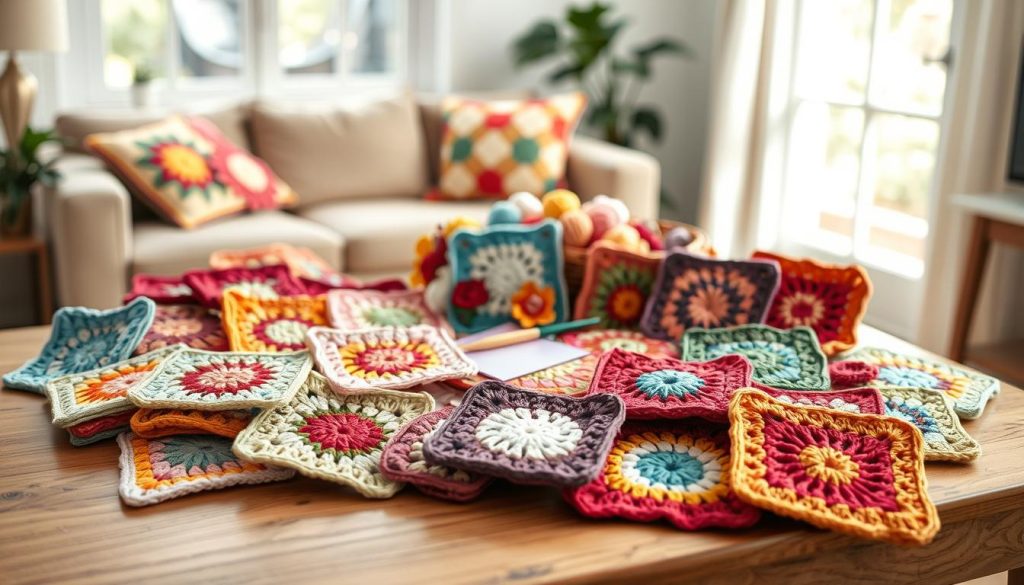
The world of granny squares is full of designs. These designs have changed from old ways to new ones. Exploring these patterns will open up new ways to be creative and improve your skills.
Traditional Patterns
Classic granny square patterns have been loved for many years. These designs usually have:
- Chain-1 spaces between double crochet clusters
- Chain-2 spaces in corner sections
- Open, lacy fabric appearance
- Bold, contrasting color combinations
Modern Variations
Today’s crocheters are making granny squares in new ways. Modern versions include:
- Textured surface designs
- Unique color blocking methods
- Varying round configurations
- Minimalist geometric approaches
| Pattern Type | Characteristics | Difficulty Level |
|---|---|---|
| Classic Granny Square | Open weave, chain spaces | Beginner |
| Solid Granny Square | Dense fabric, no chain spaces | Intermediate |
| Textured Granny Square | Raised stitches, complex patterns | Advanced |
Trying out different granny square patterns helps you grow as a crocheter. You can make unique, personal projects that show your artistic side.
Common Mistakes to Avoid
Learning to crochet granny squares is fun for beginners. But, some common mistakes can slow you down. Knowing these mistakes helps you make beautiful squares with ease.
Tension Troubles: Keeping Your Stitches Just Right
Tension is key to good crochet. In your beginner guide, learning tension is important. Here are common tension problems:
- Too Tight: Tight stitches make your hook hard to use and your fabric stiff
- Too Loose: Loose stitches make your squares floppy and uneven
Here are tips to fix tension:
- Hold your yarn right, not too tight
- Keep your hand muscles relaxed while crocheting
- Check your work often to keep it even
Navigating Stitch Spaces with Precision
Working in the right spaces is tricky in granny squares. Beginners often crochet into single stitches instead of spaces.
To not skip stitches in your project:
- Always crochet into the chain spaces between clusters
- Use stitch markers for corner spaces
- Count your stitches after each round
Every mistake is a chance to learn. With practice, you’ll get better at making beautiful granny squares.
How to Join Granny Squares Together
Turning granny squares into beautiful projects needs joining skills. You can make cozy blankets or stylish accessories. Knowing how to join squares will improve your crochet.
When making granny squares, you’ll find many ways to join them. The slip stitch and whip stitch are two main methods.
Slip Stitch Method: Invisible Connection
The slip stitch makes joins almost invisible. Here’s how to do it:
- Place two squares with right sides together
- Insert your hook through corresponding stitch loops
- Work slip stitches carefully to maintain an even edge
Tip: Work through back loops only for a special look. Or through both loops for extra strength.
Whip Stitch Technique: Flexible Joining
The whip stitch makes a flat, flexible join. Here’s how to do it:
- Thread a yarn needle
- Position squares with edges touching
- Stitch through edge stitches of both squares
You can work from the wrong side for a hidden join. Or from the right side for a decorative ridge.
Each joining method adds something special to your crochet. Try different ones to find what you like best!
Finishing Touches for Your Granny Square
Finishing your granny square is easy. You just need to add borders and weave in ends. These steps make your crochet look professional.
Adding a Beautiful Border
Borders make your granny square look great. They do many things:
- Straighten uneven edges
- Creates a clean, finished look
- Helps stabilize the square’s shape
- Adds decorative elements
Work the border evenly around all sides. Pay extra attention to corners. This keeps the border flat and prevents curling.
Weaving in Loose Ends
Securing loose yarn ends is key. Here’s how to do it neatly:
- Cut yarn, leaving 6-8 inches of tail
- Use a large-eye yarn needle
- Weave through several stitch loops on the wrong side
- Change direction at least once for secure placement
- Trim excess yarn close to the work

Pro tip: Practice weaving in ends as you go. Crochet over them for a cleaner finish.
| Technique | Purpose | Difficulty Level |
|---|---|---|
| Border Adding | Stabilize and decorate square | Beginner |
| End Weaving | Secure yarn and create neat finish | Easy |
Creative Uses for Granny Squares
Granny squares are super versatile in crochet. Your skills can turn these simple blocks into amazing projects. Let’s see some cool ways to use your crochet skills!
Blankets and Afghans: Cozy Comfort
Making a blanket is a top choice for granny squares. You can go two ways:
- Single Continuous Square: Crochet round after round until you reach your desired blanket size
- Patchwork Style: Create multiple smaller squares and join them together
When planning your project, remember these tips:
- Calculate the number of squares needed
- Plan your color scheme
- Ensure consistent square sizes
Home Décor Ideas Beyond Blankets
Your granny square skills can make many home decor items. Imagine turning those humble squares into functional art! Here are some ideas:
- Decorative throw pillows
- Wall hangings
- Table runners
- Coasters and placemats
- Unique bags and accessories
Each granny square is a blank canvas for your creativity. Whether it’s a cozy afghan or a quirky home item, your skills will make something special.
Tips for Practicing Your Skills
Getting good at quick granny square crochet takes hard work and smart practice. Your journey is special, and it takes time to get better. The right way to practice can make your crafting fun and make you feel confident.
Improving your crochet skills means practicing smartly and always learning. Here are some ways to get better at quick granny square crochet:
- Set aside 15-20 minutes daily for dedicated practice
- Create a portable project bag for practicing during downtime
- Challenge yourself with different yarn weights and hook sizes
- Start a practice sampler with varied color combinations
- Watch online tutorial videos to learn new techniques
Regular Practice Techniques
Practicing often helps you remember patterns and get better at crochet. Try making many granny squares in a row to learn fast. Carry a small project with you to practice during commutes or while waiting.
Joining Crochet Communities
Being part of crochet groups can make you more motivated and skilled. Online places have great resources for quick granny square crochet tips:
| Platform | Benefits |
|---|---|
| Share projects, follow creators, get inspiration | |
| Facebook Groups | Ask questions, receive feedback, learn techniques |
| YouTube | Free tutorials, step-by-step guides, technique demonstrations |
| Local Craft Circles | In-person learning, social connections, hands-on help |
Remember, every expert was once a beginner. Your crochet skills will grow with practice, patience, and support from others.
Troubleshooting Common Problems
Learning granny square crochet for beginners can be tricky. It’s normal to face challenges. Knowing how to solve common problems will boost your confidence.
Addressing Uneven Edges
Uneven edges often come from counting stitches wrong. This might happen if you skip a chain or pick the wrong spot. Use stitch markers to mark corners and count shells at each round’s end.
Managing Unexpected Holes
Small holes can pop up from missing spaces or yarn splits. If you see a hole, check your past rounds. You might fix it by carefully unraveling a few stitches. Remember, granny square crochet is forgiving. Most flaws blend in when you join squares together.
Don’t get down if you struggle at first. With time, your stitches will even out. Crochet experts say watching videos and joining online groups helps a lot. You can get tips and share your progress.