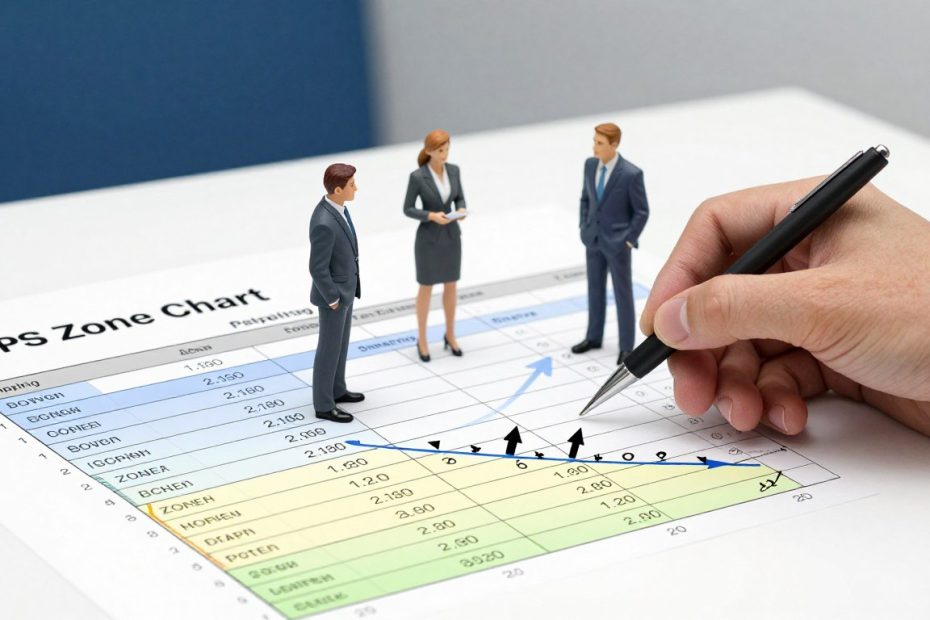
Did you know using shipping zones can save your business a lot of money? Many business owners don’t use this tool.
Shipping costs can quickly cut into your profits. Learning the UPS Zone Chart helps you make better delivery choices. This guide will teach you how to figure out shipping costs for your packages.
Whether you have a small online store or a big retail business, knowing about shipping zones is key. The UPS Zone Chart makes it easy to understand distances between zip codes. Each zone affects how much you’ll pay for delivery. Mastering this system helps control your costs.
Starting to be a UPS partner location or understanding how to be a UPS Access Point location begins with the basics. Even if you’re thinking about becoming a UPS Access Point location, knowing zones helps serve customers better. The UPS partner location application process is easier when you understand these basic shipping concepts.
This article explains the UPS Zone Chart in simple steps. You’ll learn about zones, find your shipping zone, and calculate distances. You’ll also find ways to cut shipping costs and avoid mistakes that many businesses make.
Key Takeaways
- The UPS Zone Chart divides the United States into eight zones based on distance from your origin zip code
- Finding your correct zones takes just minutes and directly affects your shipping rates
- Weight and package dimensions play important roles in your final shipping cost
- The UPS Shipping Calculator gives you instant quotes without registration
- Comparing UPS rates with FedEx and USPS helps you choose the best carrier for each shipment
- Strategic timing of shipments can lower your overall shipping expenses
- Avoiding common zone calculation mistakes protects your profit margins
Understanding the UPS Zone Chart
First, learn how UPS figures out shipping costs. The UPS zone chart is key for making these decisions. It helps you give your customers the right price at your place.
UPS splits the U.S. into zones by distance. Each zone has a range of distances. Knowing this helps you see why some shipments cost more.
What is the UPS Zone Chart?
The UPS zone chart helps figure out shipping costs. It divides the country into zones 2 through 8. Zone 2 is for short distances, like local deliveries. Zone 8 is for the longest, coast-to-coast trips.
Your shipping cost depends on the zip codes. The system checks the distance between your zip and the destination’s. This tells you which zone your shipment is in.
Why is it Important for Shipping Costs?
Shipping costs go up as you move to higher zones. Knowing the zones helps you set prices. It lets you:
- Quote prices that are right
- Plan shipping costs well
- Choose the best service levels
- Answer customer questions well
How is it Organized?
The UPS zone chart is easy to follow. Each zone has a distance range. Your distance calculation tells you which zone you are in.
Knowing this helps you make fast and accurate shipping choices every day.
Finding Your Shipping Zone
Getting your shipping zone right is key for good cost estimates and happy customers. It depends on two important things. Knowing how to find and use these will help you serve your customers well and avoid mistakes.
Identifying Your Origin Zip Code
Your UPS origin zip code is where all shipments start. It’s the zip code of your business where packages are picked up or dropped off. This zip code doesn’t change for all shipments from your Access Point.
To find your origin zip code, look at your business address. It’s on your mail, business permits, and UPS account info. Write it down and keep it close. Your team should know it well because you’ll use it a lot.
Determining the Destination Zip Code
The destination zip code is where the package goes. It changes with every shipment. Ask your customers for their address and get the zip code from there.
With your UPS origin zip code and the destination zip code, you can look up the shipping zone. UPS has online tools that match these codes. Just enter both zip codes, and it shows the shipping zone.
- Your origin zip code never changes
- The destination zip code varies by shipment
- Use both together for an accurate shipping zone lookup
- UPS systems automate this process for speed
Knowing how to find these zip codes fast helps your team give quick, accurate quotes. This skill saves time and makes customers trust you more.
Calculating Distances Between Zones
UPS uses zone ranges to figure out shipping costs. When you send a package, UPS picks a zone based on the distance. This zone affects your shipping cost. Knowing about zone ranges helps you guess costs and explain them to customers.
Understanding Zone Ranges
UPS splits the U.S. into zones 1 through 8. Each zone is a distance from where you ship. The farther the destination, the higher the zone number.
Here’s a simple breakdown of the zones:
- Zone 1 covers 0-30 miles
- Zone 2 spans 31-150 miles
- Zone 3 reaches 151-300 miles
- Zone 4 extends 301-600 miles
- Zone 5 covers 601-1000 miles
- Zone 6 spans 1001-1400 miles
- Zone 7 reaches 1401-1800 miles
- Zone 8 covers everything beyond 1800 miles
UPS doesn’t just look at straight-line distances. They use special algorithms for real routes. A place might seem close but be in a higher zone because of the drive.
Measuring Distance: A Step-by-Step Guide
You don’t have to figure out distances yourself. UPS does it for you. Knowing how they do it helps you help your customers.
Here’s how to find your shipping zone:
- Get your starting zip code and the zip code where you’re sending it to.
- Use the UPS zone chart or their online tool.
- Find your starting zip code in the left column.
- Look for the destination zip code at the top.
- The spot where the row and column meet shows your zone number.
- Use this number to find your base shipping cost.
This method makes sure all shipments are accurate. The zone stays the same, but weight and size change your price.
| Zone Number | Distance Range (Miles) | Typical Shipping Speed Impact | Rate Classification |
|---|---|---|---|
| 1 | 0-30 | Fastest delivery times | Local |
| 2 | 31-150 | Quick regional delivery | Regional |
| 3 | 151-300 | Standard regional | Regional |
| 4 | 301-600 | Standard multistate | National |
| 5 | 601-1000 | Standard national | National |
| 6 | 1001-1400 | Standard long distance | National |
| 7 | 1401-1800 | Extended delivery | National |
| 8 | 1800+ | Longest delivery times | National |
As an Access Point operator, you won’t do these calculations every day. UPS systems do it for you when you scan packages. Knowing this makes you credible with customers and helps with rate questions.
Shipping Costs Breakdown
To know your UPS shipping costs, you need to understand what affects your price. Your package’s weight and where it goes matter a lot. Many factors come together to decide your cost. Knowing these can help you save money.
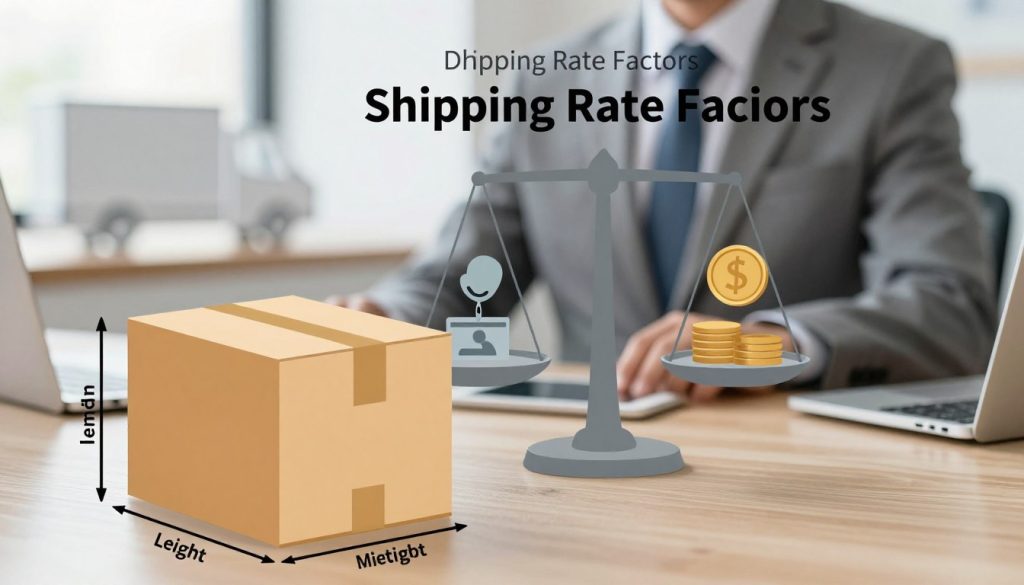
Factors Influencing Shipping Rates
UPS shipping costs depend on several things. How far your package goes is very important. A package going across town costs less than one going across the country.
What service you choose also affects your price. Ground shipping is cheaper than overnight or express. Adding extra services like insurance or signature confirmation will also increase your cost.
The weight and size of your package are also key. The weight of your items greatly affects the price. Choosing the right packaging materials and box size is important for your cost. Even the time of year you ship can change your rates. Prices often go up during holidays.
| Shipping Rate Factor | Impact on Cost | Your Control Level |
|---|---|---|
| Shipping Zone (Distance) | Higher for longer distances | Limited control |
| Package Weight | Direct increase with weight | Full control |
| Package Dimensions | Affects dimensional weight pricing | Full control |
| Service Level (Ground/Express) | Express options cost more | Full control |
| Additional Services | Insurance and signatures add fees | Full control |
| Peak Season Timing | Higher rates during holidays | Partial control |
The Role of Weight and Dimensions
Weight and dimensions are very important for UPS shipping costs. UPS charges based on whichever is greater: your package’s actual weight or its dimensional weight. This stops people from sending big, light boxes at low rates.
Dimensional weight pricing uses a simple formula. You multiply your package’s length by width by height in inches, then divide by 139 for domestic shipments. For example, a box measuring 20 inches by 20 inches by 20 inches but weighing only 5 pounds. Its dimensional weight would be (20 × 20 × 20) ÷ 139 = 57.6 pounds, which rounds to 58 pounds. UPS charges you for 58 pounds, not 5 pounds.
- Measure all three dimensions accurately
- Round up any decimal measurements
- Use a calibrated scale for accurate weights
- Compare actual weight to dimensional weight
- Choose the larger number for shipping charges
Understanding dimensional weight pricing helps you package better. Choosing a smaller box for your items can cut your shipping costs a lot. Proper packaging reduces your UPS shipping costs without changing what you’re sending. This knowledge lets you ship efficiently and affordably.
Using the UPS Shipping Calculator
The UPS shipping calculator is great for fast, accurate shipping estimates. It saves time and helps customers make smart choices. Whether it’s a small package or a big box, you get answers quickly.
Starting with this tool is simple. You don’t need special skills. The UPS website makes it easy for everyone.
Step-by-Step Guide to Accessing the Tool
To find the UPS shipping calculator, go to www.ups.com. Look for the “Shipping” section in the main menu.
Click on “Calculate Time and Cost” or “Get a Quote.” This opens the shipping calculator. You can then enter your shipment details.
How to Input Your Information
Here’s how to get a shipping quote:
- Select your origin country and enter your zip code
- Choose the destination country and recipient’s zip code
- Pick your shipping date (today or a future date)
- Enter the package weight in pounds and ounces
- Input package dimensions in length, width, and height (inches)
- Choose your service level (Ground, 3-Day Select, 2nd Day Air, or Next Day Air)
- Add special services like insurance or signature confirmation if needed
- Click “Get Rates” to see your estimated costs and delivery dates
The UPS shipping calculator shows many service options. This lets you compare prices and delivery times. It helps your customers choose the best option.
| Service Type | Typical Delivery Time | Best For |
|---|---|---|
| UPS Ground | 1-5 Business Days | Non-urgent packages, cost savings |
| UPS 3-Day Select | 3 Business Days | Medium priority shipments |
| UPS 2nd Day Air | 2 Business Days | Time-sensitive deliveries |
| UPS Next Day Air | Next Business Day | Urgent shipments |
Using the UPS rate calculator builds trust. Customers see what they’ll pay and when they’ll get their package. This makes your service better than others.
The online shipping tool works on any device with internet. You can use it on your computer, tablet, or smartphone anytime.
Comparing UPS with Other Carriers
Choosing a shipping carrier is important. Each carrier has its own strengths. What’s best for your package depends on several factors. Let’s see how UPS compares to two big competitors.
UPS vs. FedEx Zone Charts
UPS and FedEx use zone-based pricing. They both calculate costs based on where your package starts and ends. Their zone systems are almost the same.
The main difference is in pricing. UPS vs FedEx rates can change a lot. This depends on:
- The service level you choose
- Your package weight and size
- Any special discounts you’ve negotiated
- The specific route your package takes
For most business shipments, UPS and FedEx are close in price. One might be cheaper on certain routes. Your best bet is to get quotes from both and see who saves you money.
UPS vs. USPS Pricing Models
UPS vs USPS pricing is quite different. USPS has a pricing model that appeals to some shippers. Here’s how they compare:
| Feature | UPS | USPS |
|---|---|---|
| Zone-Based System | Yes, all services | Some services only |
| Flat-Rate Options | No | Yes, boxes included |
| Best for Light Packages | 2+ pounds | Under 2 pounds |
| Tracking Quality | Real-time updates | Basic tracking |
| Delivery Speed | 1-3 days | 2-7 days |
| International Shipping | Premium pricing | Most affordable |
USPS offers flat-rate boxes for one price. Your package can weigh up to 70 pounds and go anywhere. You pay the same rate. This is great for heavy items going short distances. UPS charges based on actual weight and zone distance, which can be cheaper for lightweight packages.
UPS is great for real-time tracking, faster delivery, and business solutions. USPS is cheaper for small packages and international mail. Your choice depends on what matters most to your shipping needs.
Tips for Reducing Shipping Costs
Learning to save on shipping is easy. You can start saving money today. It doesn’t matter if you’re a business or just shipping stuff. Knowing your options helps a lot.
Utilizing UPS Discounts and Services
One simple way to save is by making a free UPS account at UPS.com. This gives you discounts right away. You’ll get lower prices on all your shipments.
Joining UPS My Choice is another smart move. It’s free and offers great perks. You get alerts and can change delivery without extra cost. If you ship a lot, UPS has discounts for you too.
Choosing UPS Ground is a big money-saver. It’s cheaper than air and gets packages to most places in 1-5 days. This one change can really help your budget.
Timing Your Shipments for Savings
When you ship matters a lot. Sending packages early in the week can be cheaper. Try to avoid shipping in November and December to avoid high fees.
Here are some tips for saving money on shipping:
- Drop off packages early in the day to enter the system faster
- Ship items well in advance instead of using expensive expedited services
- Plan shipments around your UPS Access Point pickup schedule
- Use smaller boxes that fit your items safely to reduce dimensional weight charges
Good packaging is another way to save. Use the right size box and remove extra stuff. This keeps your items safe and saves you money.
Common Mistakes to Avoid
Shipping can be tricky. Many people make costly errors without realizing it. Knowing the most frequent shipping mistakes helps you save money and avoid delays.
Whether you ship occasionally or regularly, learning about these pitfalls protects your wallet. It keeps your packages moving smoothly.
Miscalculating Zones
One big shipping mistake is miscalculating shipping zones. Many people think it’s based on state boundaries or straight-line distances. But, UPS uses specific zip code pairs and actual routes.
For example, shipping from Los Angeles to San Diego might seem short. But, the exact zip codes involved might put your package in Zone 3 or Zone 4 instead of Zone 2. This mistake leads to unexpected charges that shock customers at checkout.
Always use the official UPS zone chart or calculator instead of guessing. Making assumptions about distance creates surprises later. Take time to verify your zone information before finalizing your shipment.

Ignoring Dimensional Weight Pricing
The second critical shipping mistake is ignoring dimensional weight pricing. Many people focus only on their package’s actual weight on a scale. They get shocked when charged for a much higher billable weight.
This mistake happens when you ship lightweight but bulky items in oversized boxes. A 5-pound package in a 20″ × 20″ × 20″ box costs the same as a 58-pound package. But, the same 5-pound item in a 12″ × 10″ × 8″ box gets charged at actual weight only.
Use this formula to calculate dimensional weight: length × width × height ÷ 139. This helps you choose the right box size and reduce costs.
| Box Size | Actual Weight | Dimensional Weight | Billable Weight |
|---|---|---|---|
| 20″ × 20″ × 20″ | 5 lbs | 58 lbs | 58 lbs |
| 12″ × 10″ × 8″ | 5 lbs | 7 lbs | 7 lbs |
| 16″ × 12″ × 10″ | 5 lbs | 14 lbs | 14 lbs |
| 14″ × 10″ × 6″ | 5 lbs | 6 lbs | 6 lbs |
Beyond these main shipping mistakes, several other errors drain your shipping budget. Here’s what to watch for:
- Using inadequate packaging that damages your items during transit
- Entering incorrect address information causing delivery failures
- Underinsuring valuable items without proper coverage
- Losing track numbers before delivery confirmation
- Selecting expensive services when cheaper options work just fine
Avoid these shipping mistakes by double-checking your information before submitting orders. Your attention to detail saves money and prevents frustrating delays.
Frequently Asked Questions
People often ask about UPS shipping services. Knowing the answers helps you ship packages better. Here are some common questions about UPS.
How Often is the Zone Chart Updated?
UPS updates their zone chart regularly. They usually change it once a year. This happens at the start of January.
UPS also updates the chart when they open new facilities. To stay updated, check the UPS website. Your UPS Access Point systems also show the latest zone data.
Don’t use old zone information. Each shipment needs a new zone check. This ensures you get the right price.
Can I Get a Quote Without Registering?
Yes, you can get quotes without an account. The UPS shipping calculator is open to everyone. Just enter your details to see prices.
Getting quotes this way is quick. Enter your shipment details and see rates in seconds. It’s great for fast price checks.
But, registering for a UPS account has benefits. You get lower rates and can track shipments. You can also save addresses and file claims easily. Registering takes just a few minutes at UPS.com.
| Feature | Without Account | With UPS Account |
|---|---|---|
| Get Shipping Quotes | Yes | Yes |
| Discounted Rates | No | Yes |
| Shipment History | No | Yes |
| Saved Addresses | No | Yes |
| Claims Management | Limited | Full Access |
Other questions include what ID you need for pickups and what can’t be shipped. You need a photo ID for pickups. You can’t ship hazardous materials, unpackaged perishables, or certain items.
- Track packages using your tracking number from the receipt
- Drop off packages during your Access Point’s operating hours
- Ship internationally using UPS’s global services
- File claims through your UPS account for lost or damaged packages
Knowing these answers makes using UPS easier. Keep this info ready when you ship packages or talk to customers.
Conclusion: Mastering Your Shipping Costs
You’ve learned a lot about the UPS Zone Chart and how to calculate shipping costs. Knowing about zones, weights, and dimensions helps you make smart choices. The zone system goes from 2 to 8, with costs going up as distance increases.
Dimensional weight pricing matters for big packages. The service level and extra features you choose also affect your bill. These tools help you manage your shipping costs better and serve your customers well.
Becoming a UPS Access Point opens new business doors. You get more foot traffic and reliable shipping services. UPS offers training, technology, and support to help you succeed.
You can apply online at https://apcsext.ups.com/apcs-ext/accessPointRegistration.do?locale=en_US or call Package Express Centers at 1-800-274-4732. Being a UPS partner means you get tools and resources to grow your shipping business.
Managing shipping costs gets easier with the UPS shipping calculator and zone chart. Compare prices with UPS, FedEx, and USPS to find the best deal. Avoid mistakes like wrong zone calculations or forgetting about dimensional weight.
Use discounts when you can and time your shipments right. These steps help save money and make customers happy.
You now know how to handle shipping like a pro. Use the UPS Zone Chart with confidence to give your customers accurate quotes and fast service. Whether you’re thinking about joining as a UPS Access Point or just want to improve your shipping, you have the skills to succeed.
Share what you’ve learned, answer questions with certainty, and help others with their shipping needs. Your customers will trust your expertise and come back for more.