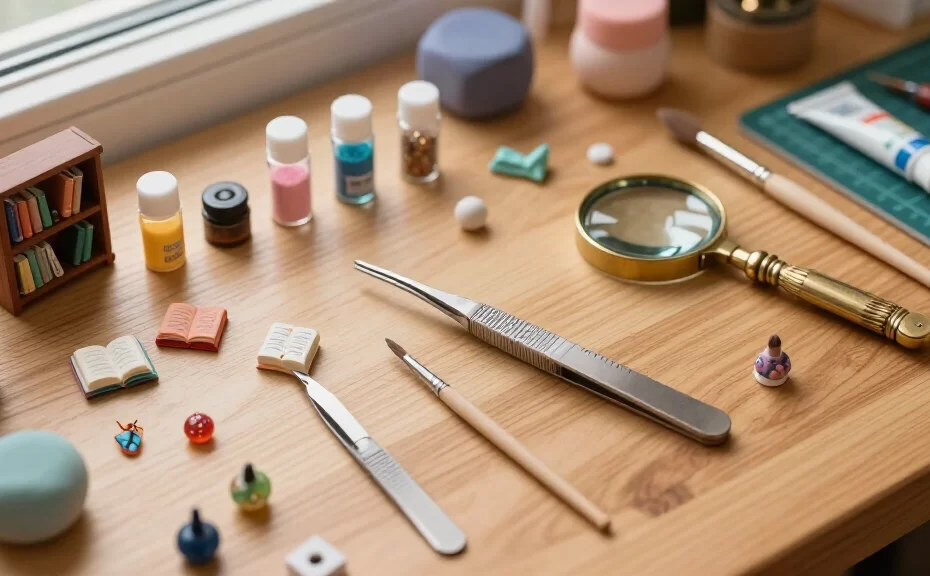
Have you ever spent an hour watching someone build a tiny 1:12 scale library on YouTube? Building things on a micro scale gives you huge satisfaction, but working this small demands specialized gear. Standard art supplies fall flat when you tackle tiny dollhouses, micro-resin charms, or mini models. Trying to detail a tiny figurine with a standard house paint brush will only drive you crazy!
To help you capture every tiny detail, we collected the top materials and tools available today. Whether you build miniature fairy gardens or throw microscopic pottery, these 25 amazing craft supplies for mini crafts and DIY projects will take your small-scale work to the next level.
1. Polymer clay

Polymer clay sits at the very center of the miniaturist world. Makers turn to trusted brands like Premo and Sculpey to sculpt everything from tiny bakery treats to micro succulent leaves. You bake this flexible clay in your standard home oven, where it hardens into a tough, workable piece.
Keep fresh blocks of white and terracotta clay in your drawer for sudden project ideas. You can visit Sculpey’s official website to grab exact temperature charts and beginner tips before you bake your first piece.
2. Precision micro-tweezers

Your fingers will feel clumsy when you try to pick up tiny parts. High-precision, anti-static tweezers give you pinpoint control over microscopic elements. Choose bent-nose tweezers so you can place small beads, bits of paper, and thin wire without blocking your view.
PRO TIP: Keep your tweezers in a protective rubber sheath so you do not bend the sharp tips when you toss them into your tool box!
3. Micro glass vials and bottles
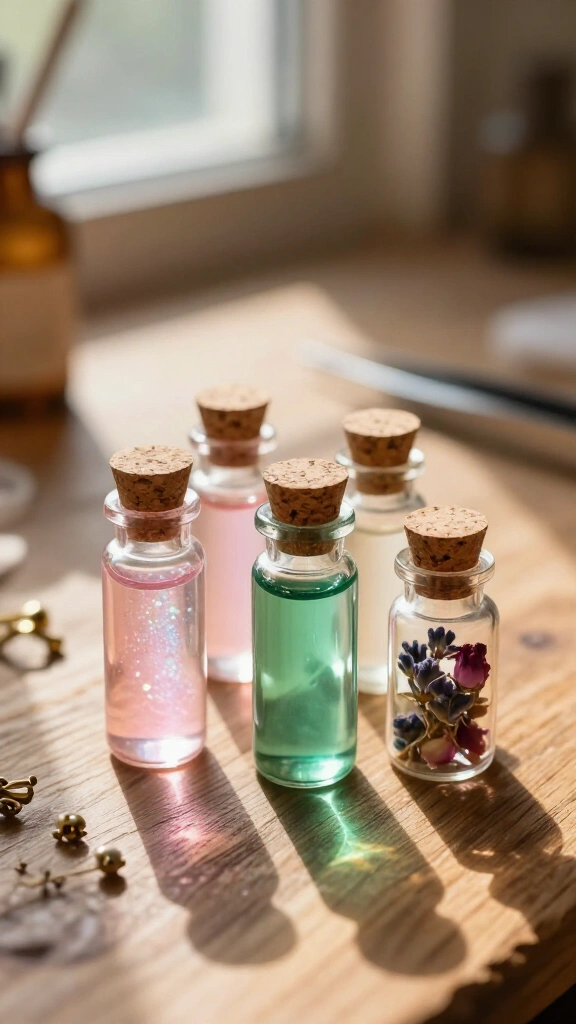
Real micro glass bottles bring instant character to miniature scenes. These clear glass containers measure between 10mm and 25mm tall and include tiny cork stoppers. Miniaturists turn them into old-fashioned potion jars, micro kitchen spice containers, or tiny pendant charms.
Creative use cases:
- Fill them with fine glitter to make fairy dust bottles.
- Add tinted resin to replicate old apothecary glass.
- Pack microscopic dried petals inside for miniature flower displays.
4. Quick-cure UV resin and mini UV lamp

Skip the 24-hour wait that traditional epoxy resin demands. UV resin hardens completely clear under ultraviolet light within two minutes. You can use it to build tiny water ponds in dioramas, add glossy coats to miniature clay fruit, or cast micro gems.
Set up a small LED UV lamp right at your desk for quick curing. Always open a window or run a fan to keep fresh air moving while you work with liquid resin!
5. Ultra-fine acrylic paint markers
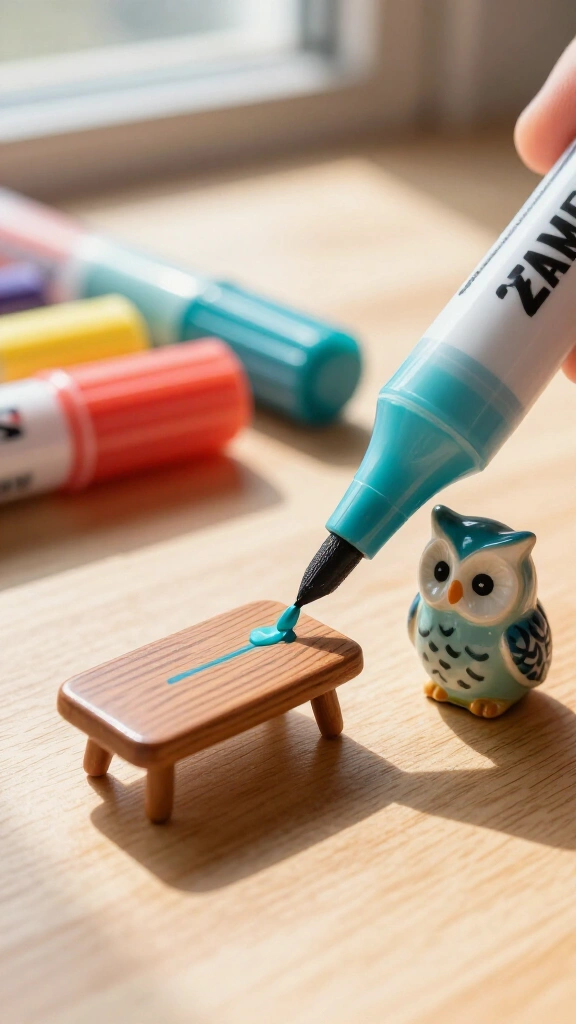
Painting crisp lines on tiny surfaces can test your patience. Acrylic paint pens with 0.7mm tips combine the control of a fine pen with the solid coverage of acrylic paint. They flow smoothly so you can skip constant brush washing.
Use fine acrylic pens to draw tiny eyes on figures, detail micro ceramics, or trace delicate wood grain onto dollhouse tables.
6. Balsa and basswood strips
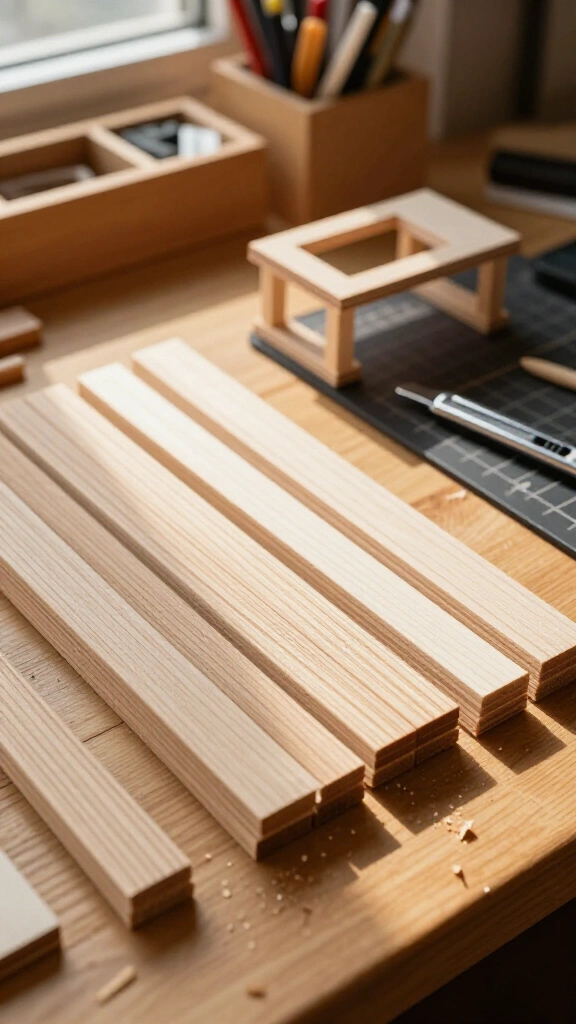
Thin wood strips form the backbone of miniature carpentry. Balsa wood stays soft and cuts cleanly with a simple hobby knife, while basswood has a tight grain that holds up to detailed carving. Use them to construct tiny frames, miniature tables, and room walls.
Keep packs of 1/16-inch and 1/8-inch wood strips in your storage bin so you can build furniture whenever ideas strike.
7. Mini craft sticks and toothpicks

Common household items offer surprising value for miniature projects. High-grade bamboo toothpicks and mini wooden ice-cream sticks act as cheap structural parts. You can transform basic toothpicks into table legs, curtain rods, or handles for tiny tools.
FYI, if you sand the sharp points off a toothpick, you get a clean mini dowel rod for virtually nothing!
8. Printable scale dollhouse wallpaper

Standard scrapbook paper usually features oversized patterns that ruin the illusion of small scenes. Scaled 1:12 and 1:24 papers feature tiny floral motifs, miniature brickwork, and micro tile patterns. You can purchase pre-printed sheets or print custom patterns directly on your home printer.
Brush a thin layer of matte Mod Podge onto the paper back to stick it in place without bubbles or wrinkles.
9. Tiny silicone molds
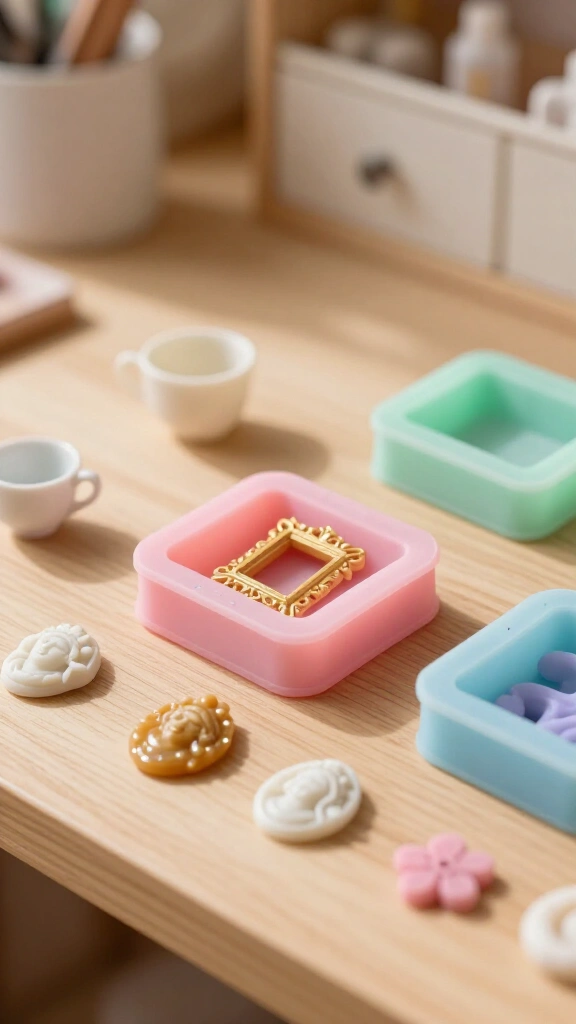
Sculpting dozens of matching small details by hand burns up hours. Miniature silicone molds let you duplicate tiny picture frames, micro teacups, and small charms in seconds. Fill these pliable molds with polymer clay, resin, or plaster.
Bend the flexible mold after the material sets to pop out clean mini replicas without damaging your work.
10. Precision hobby knife with #11 blades

Sharp cuts make the difference between rough craft work and crisp scale models. An ergonomic knife loaded with #11 pointed blades slices cleanly through soft wood, plastic strips, and unbaked clay. Swap your blades often because dull edges tear delicate materials.
Set a safe disposal jar on your worktable so you can discard old razor blades without risking injury.
11. Micro silk ribbon and fine cords
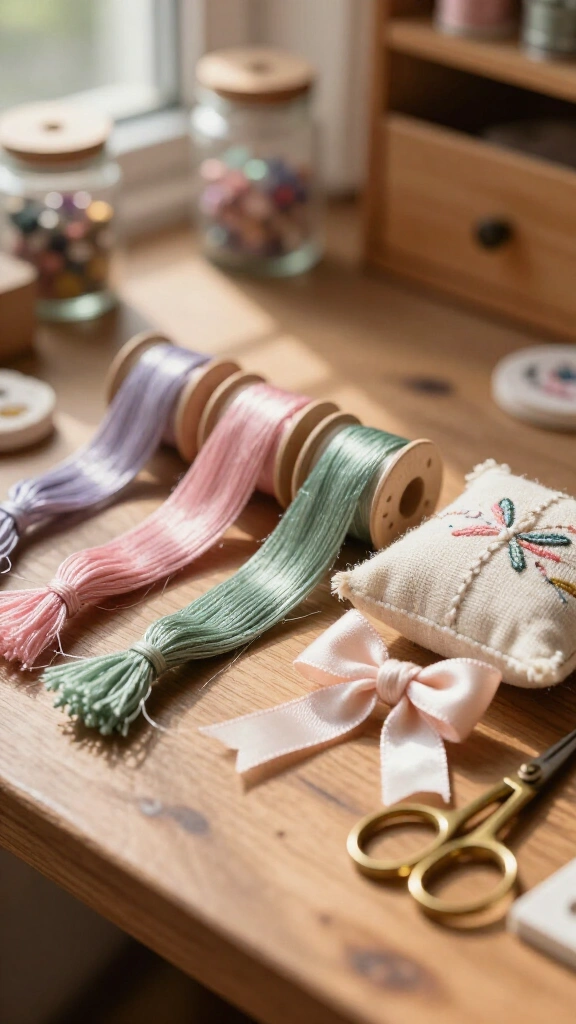
Heavy fabric and thick ribbon disrupt the scale of miniature rooms. Micro silk ribbons between 1mm and 2mm wide allow you to knot believable tiny bows that stay soft and flat. Combine them with fine embroidery thread to trim tiny curtains or stitch miniature cushions.
If you enjoy working with fabric and trims, read our guide on ribbon craft projects for more ways to incorporate thin ribbons into your crafts.
12. Miniature pressed flowers

Real dried blossoms give tiny scenes an authentic, organic feel. Crafters set micro baby’s breath, miniature hydrangeas, and tiny fern fronds into resin pendants, mini wall art, and fairy garden beds. Natural plant structures provide real detail that synthetic greenery cannot match.
Want to press your own yard blossoms? Check out our step-by-step tutorial on pressed flowers DIY projects to start drying small flowers at home.
13. Glass microbeads
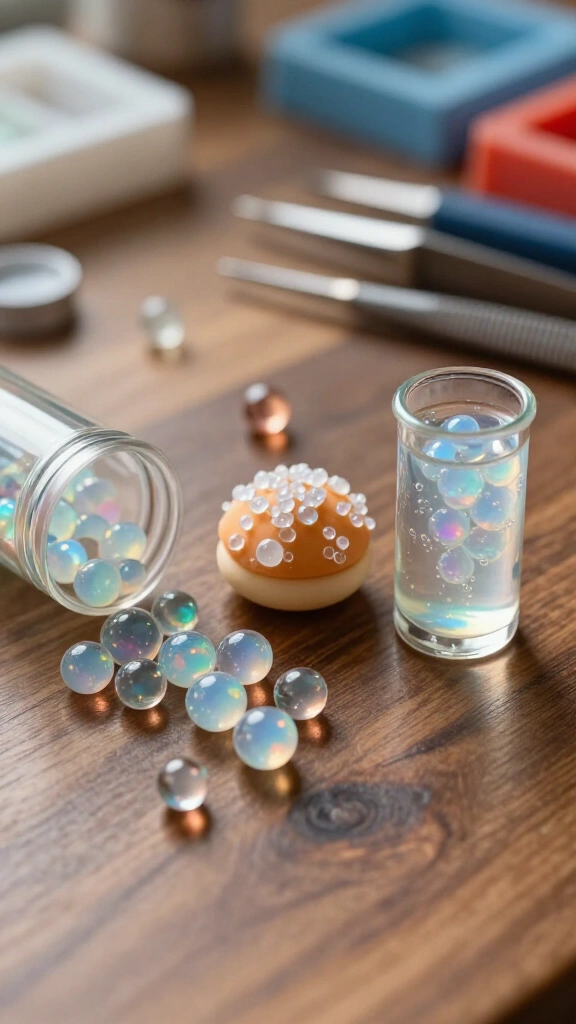
Holeless glass microbeads open up creative options across many miniature builds. Stir these tiny spheres into clear resin to mimic soda bubbles, or press them onto clay pastries as mini sugar crystals. They add realistic surface texture to tiny food and liquid props.
Grab no-hole beads in clear, iridescent, or metallic colors so you can adapt them to different projects.
14. Flexible air-dry modeling clay

Resin-based air-dry clay cures without oven heat while remaining lightweight and slightly flexible. This material works well when you mold miniature clothing, flexible book covers, or soft figures that need to withstand handling without snapping.
Planning to build darker or moody decorative pieces? Browse our collection of gothic clay ideas before you start your next sculpting session.
15. Self-healing grid cutting mat

A thick self-healing mat protects your desk while you measure and slice tiny components. Mats printed with 1/16-inch grids and angle markings help you maintain exact alignment. The high-density surface closes up after knife cuts so your blade will not jump off track later.
Pick up an A4 or A3 size mat so you can carry your entire active work area to any room.
16. Precision micro hot glue gun

Standard glue guns output thick blobs that ruin small components. Detail glue guns use extra-narrow nozzles that place microscopic drops of adhesive right on target. They heat up fast and secure wooden joints in seconds.
ATTENTION: Keep precision glue guns on low heat settings so you do not melt thin plastic parts!
17. Micro fine-liner archival ink pens

Standard pens smudge or leave lines that look far too wide on micro projects. Waterproof archival pens with 0.05mm or 0.1mm tips draw sharp black lines that will not bleed or fade over time. Use them to write text in mini books or draw faces on tiny figures.
You can pick up reliable fine-line technical pens at stores like Michaels craft store or local art supply shops.
18. Miniature flock moss and foliage

Diorama makers and model railway builders rely on turf flocking to create convincing scenery. This fine powder consists of dyed micro fibers that replicate grass, mossy stones, and leaf canopies. Brush PVA glue onto your base board and scatter the flocking material over the wet adhesive.
Mix light green, olive, and golden yellow flocking to build natural outdoor terrain with realistic color shifts.
19. Teeny-tiny brass hinges and hardware

Moving parts add charm to small creations. Tiny brass hinges measuring under 10mm let you construct working cabinet doors, micro treasure chests, and small storage boxes. Fasten them using micro nails or gel superglue.
Must-have micro hardware:
- Micro brass latches for small wooden chests.
- Teeny metal knobs for dollhouse dressers.
- Micro brass keyholes for miniature front doors.
20. Fine jewelry wire and precision pliers

Soft metal craft wire gives internal support to tiny sculpted clay figures, micro trees, and small lamp posts. Keep 24-gauge through 28-gauge copper, brass, and silver wire in your kit. Use mini round-nose pliers to bend sharp angles and smooth wire loops without marring the metal surface.
21. Micro LED fairy wire lights

Bring your book nooks, room boxes, and miniature buildings to life with micro LED lights. Tiny LEDs strung on thin copper wire tuck out of sight along ceilings or inside miniature light fixtures. Compact battery boxes using coin cells hide neatly inside back walls or underneath bases.
To see how lighting transforms DIY home projects, explore HGTV’s home DIY tutorials for design ideas.
22. Sanding sticks and micro files
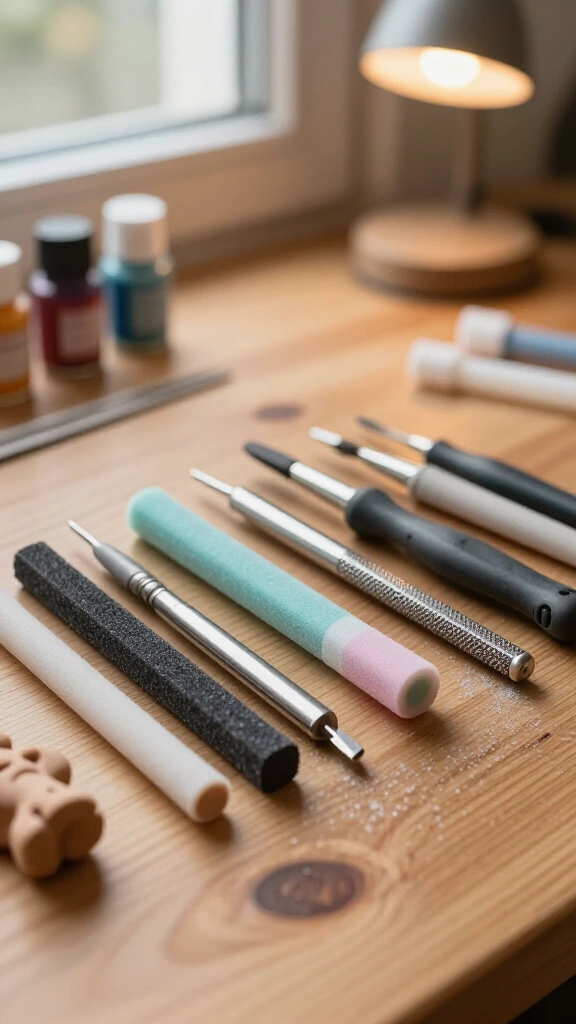
Full-size sandpaper sheets feel clunky when you work on tiny parts. Foam sanding sticks and metal needle files let you clean up tight spots on cured clay, wood, and plastic pieces. Keep a mix of coarse and fine grits on hand so you can shape rough edges and polish surfaces smooth.
23. Micro scale paper hole punches

Cutting hundreds of tiny paper leaves with scissors will tire your hands fast. Micro punch tools stamp out tiny leaves, stars, flowers, and circles under 5mm across. Punch shapes out of colored paper to scatter along miniature garden paths or fill tiny vases.
24. Mod Podge Dimensional Magic

Turn flat printed graphics into 3D glass-like surfaces with Mod Podge Dimensional Magic. This formula dries perfectly clear and creates a rounded, domed lens over your work. Use it to add realistic gloss to miniature clock faces, small phone screens, or tiny framed pictures.
Unlike regular decoupage glue, this thick liquid holds its raised dome shape as it cures.
25. High-pigment acrylic model paints

Standard craft paints contain coarse pigment particles that look thick and chalky on small models. High-pigment paints designed for miniature figures deliver smooth coverage without filling in fine details. They dry to a clean matte finish and stick well to plastic, wood, and clay.
Start with a basic set of core colors and thin your paints with a little water to apply smooth, even coats!
Final thoughts on mini crafting supplies
You do not need to buy out the entire craft aisle to start making miniatures. Begin with core materials like polymer clay, precision tweezers, and a sharp hobby knife. Once you master the basics, pick up specialized supplies like micro LED lights, UV resin, and miniature hardware as your builds require them.
What miniature project will you take on first? Grab your tools, clear off a corner of your desk, and start building your tiny creations today!