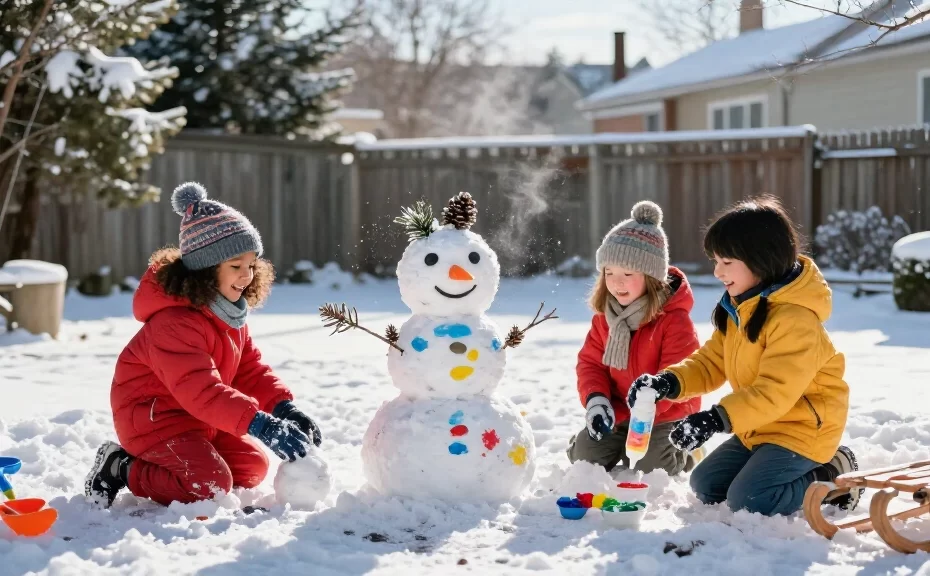
Fresh snow can turn the backyard into a place to build, explore, and play before breakfast. These snow activities for kids give your family plenty of options, whether your kids want to paint, run around, or try a messy experiment.
Before you head outside, check the weather and dress everyone in warm layers, waterproof mittens, and boots. The American Academy of Pediatrics’ winter safety guidance offers advice on clothing, supervision, and recognizing cold-weather concerns.
1. Build a snow creature
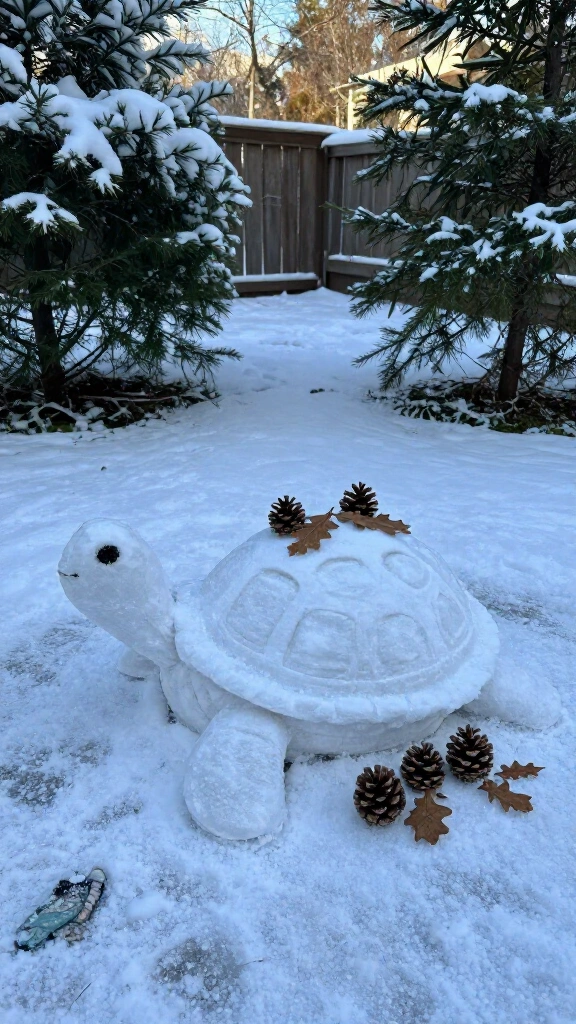
Who says every snow creation needs a carrot nose? Ask kids to build a snow turtle, dragon, puppy, or strange creature of their own invention. Pack damp snow into a large body, then shape smaller pieces for legs, ears, or wings.
Use pinecones, twigs, and fallen leaves for details, and skip anything sharp or breakable. If the snow feels too powdery to pack, sculpt a low, flat creature instead of stacking heavy snowballs. Bonus challenge: Ask your child to give their creature a name and invent a story about it.
2. Paint a colorful snow canvas
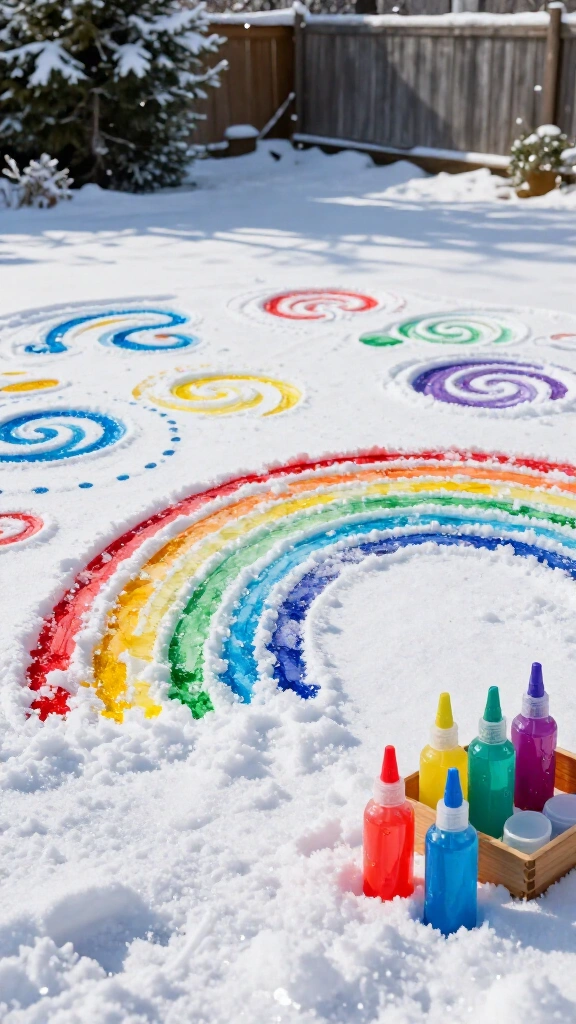
Fill squeeze bottles or spray bottles with water and a few drops of food coloring, then find a patch of clean snow. Kids can draw swirls, write their names, or make a rainbow across the yard. Warm water can help dissolve the coloring before you head outside.
Choose an area away from walkways, clothing, and anything else you want to keep free of stains. Remind kids not to eat the colored snow, and use only a little coloring to limit the mess. For another creative afternoon after the snow melts, try these paper plate crafts for kids.
3. Create a backyard snow maze
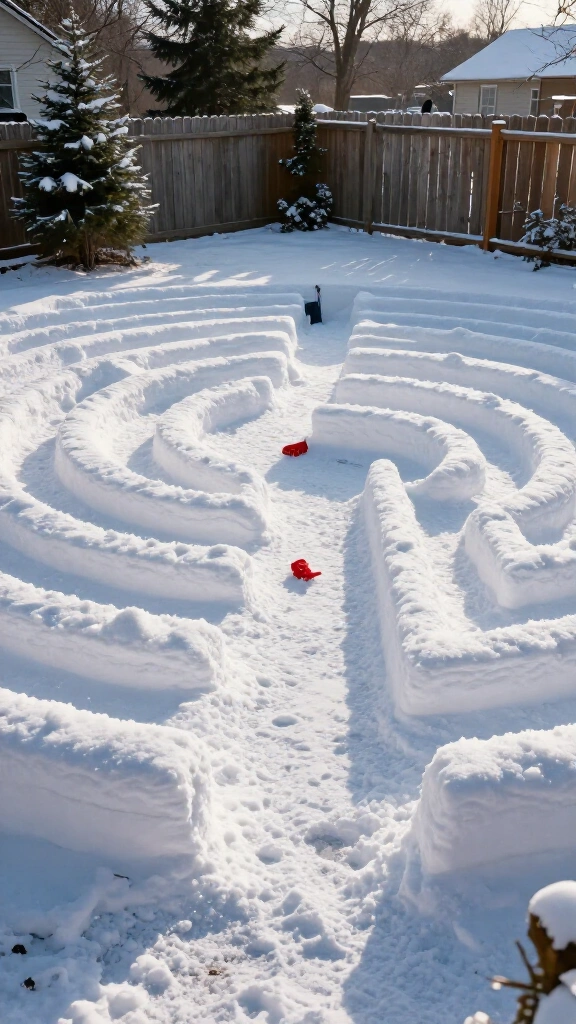
Grab a small shovel or stomp paths through fresh snow to make a maze for the kids. Start with one entrance and one finish line, then add a few turns and dead ends. Younger children can follow a simple winding trail, while older kids can help design a trickier route.
Keep paths away from roads, driveways, frozen water, and hidden hazards. Make the walls low enough for adults to see children at all times, and avoid digging tunnels or building enclosed snow structures. Who can find the finish without asking the family dog for directions?
4. Go on an animal track hunt
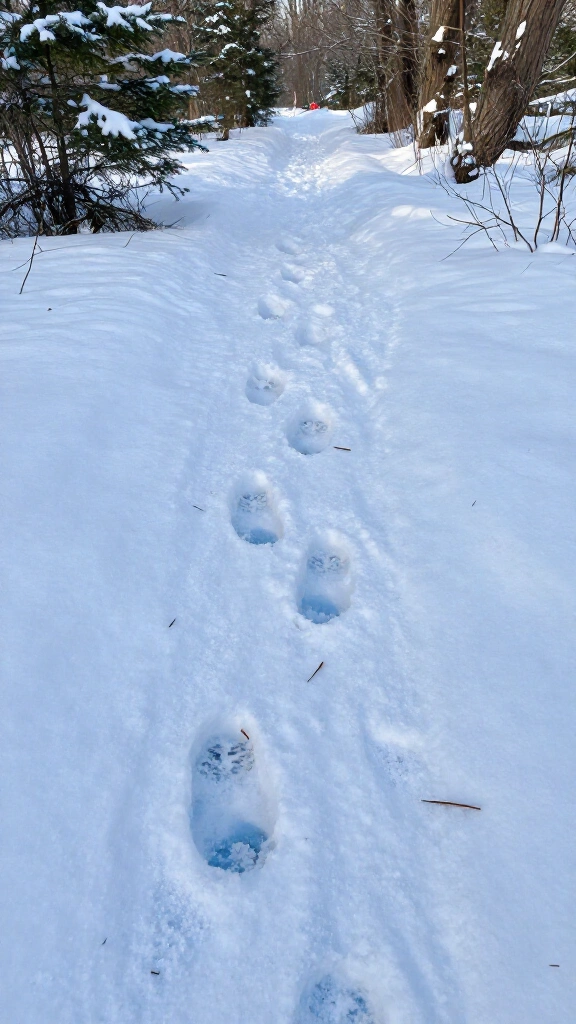
Fresh snow makes animal tracks easier to spot. Look near trees, bushes, or the edges of a familiar trail, and ask kids to notice each print’s size, shape, and spacing. You might find tracks from birds, squirrels, rabbits, or a neighbor’s wandering cat.
Take photos or sketch what you see, then compare the prints with a local field guide when you get home. Keep a respectful distance from wildlife, and never follow tracks into unfamiliar or unsafe areas. Mystery footprints can spark plenty of questions, too.
5. Make snow angels with a twist
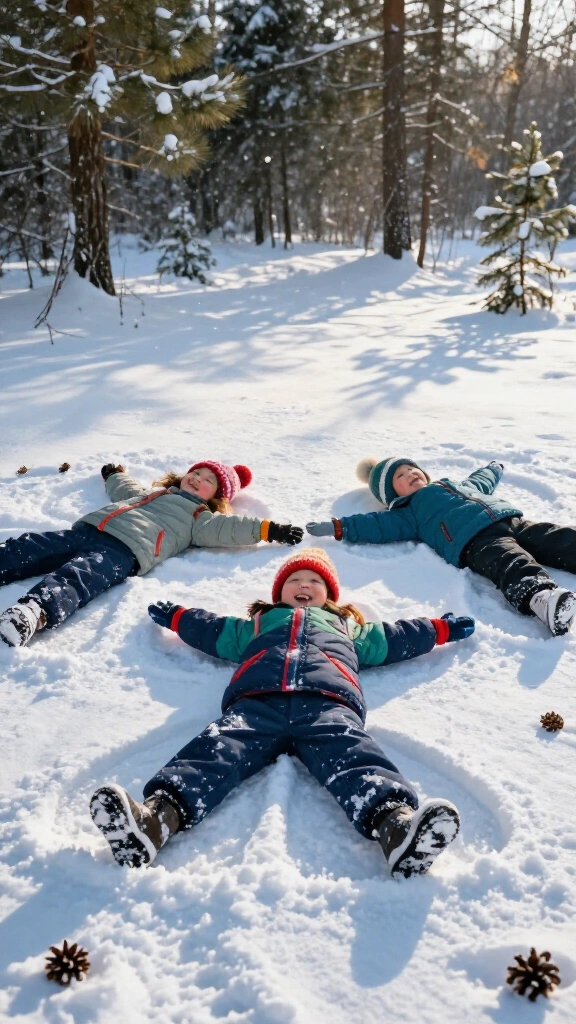
Find a clean, clear patch of snow, lie down carefully, and sweep your arms and legs back and forth. Then ask a grown-up or friend to help you stand without stepping on your design. Getting up cleanly takes practice, so expect a few accidental footprints.
Once everyone has tried the basics, experiment with different arm movements or make a whole family of angels. Add a few pinecones nearby, or snap a photo before the next snowfall covers your artwork. Waterproof outer layers help kids stay comfortable during this classic winter activity for kids.
6. Set up a snowball target toss
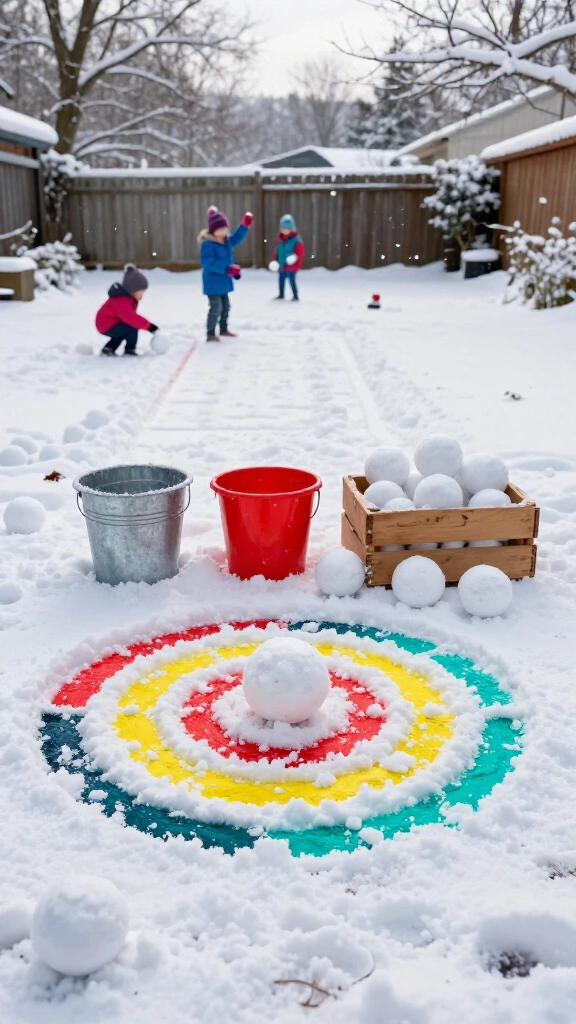
Give kids something to aim at besides their siblings. Set up empty buckets or cardboard boxes, or draw a large target in the snow. Kids can practice tossing soft snowballs from different distances and earn one point for a close target and more points for a farther one.
Use soft, loosely packed snow only, and check each handful for ice, stones, and sticks. Aim at targets, not people or animals, and keep the throwing area clear. Younger kids can stand closer or roll their snowballs instead.
7. Try a snow volcano experiment
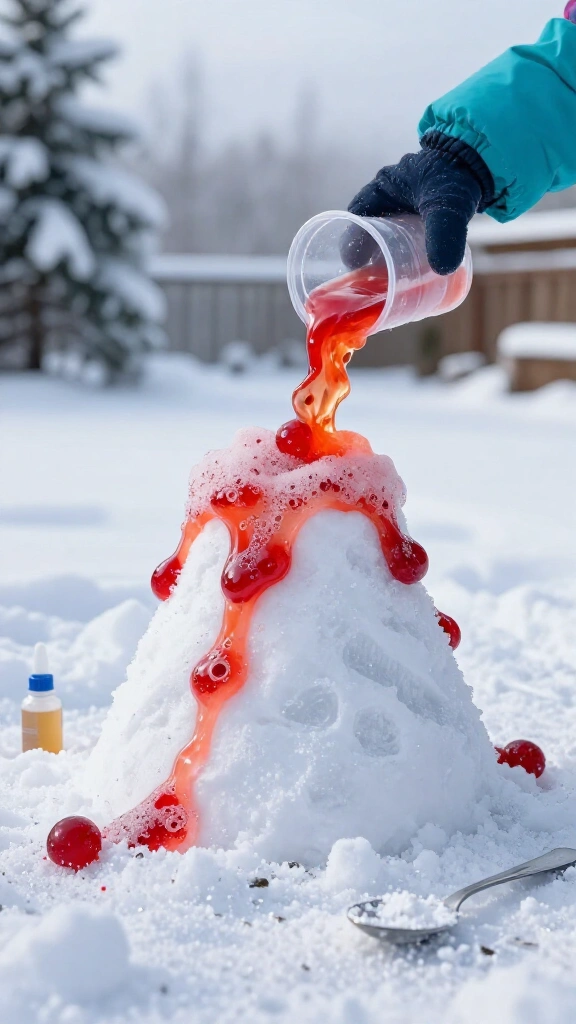
Bring a favorite kitchen experiment outdoors by packing snow around a small, sturdy container. Add a spoonful or two of baking soda to the container, then pour in vinegar and watch the foam bubble over the top. A tiny drop of food coloring can make the eruption easier to see.
Ask kids what they think will happen before they pour, and let them compare a small splash with a larger one. Supervise closely, keep the mixture away from eyes and mouths, and avoid sealing the container. When the experiment ends, collect the container and any leftover supplies.
8. Build a miniature snow village
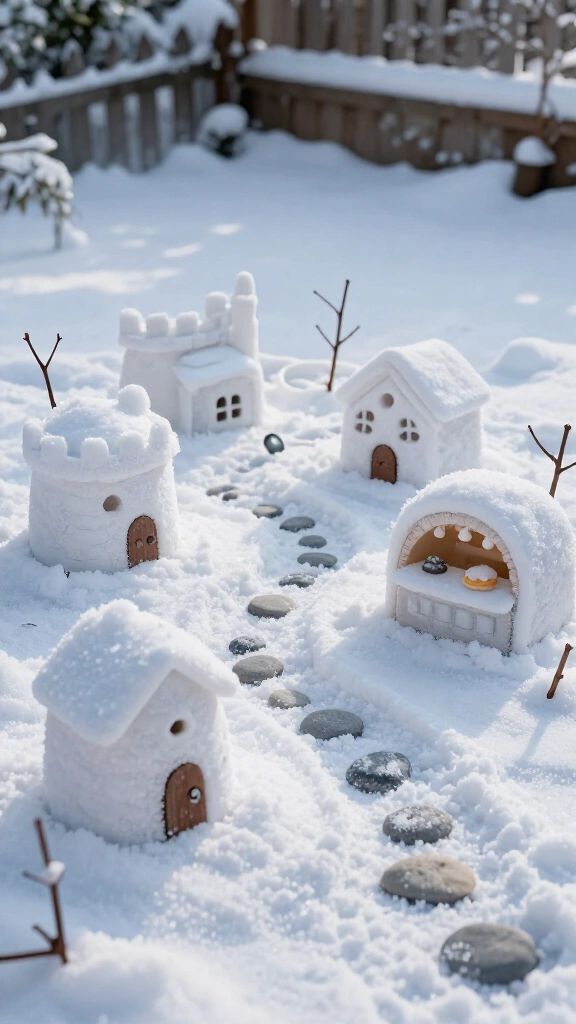
Kids can create a whole neighborhood without lifting giant snowballs. Pack snow into cups or small containers, turn the shapes out, and arrange them as houses, shops, or castles. Use a spoon to carve doors and windows, then add twig trees or pebble stepping-stones.
Give each building a purpose. Does the village need a library, a bakery, or a hot chocolate shop? Keep small decorations away from children who might put them in their mouths, and collect everything when playtime ends. Kids who prefer imaginative play to racing around may especially enjoy this activity.
9. Design a snowy obstacle course
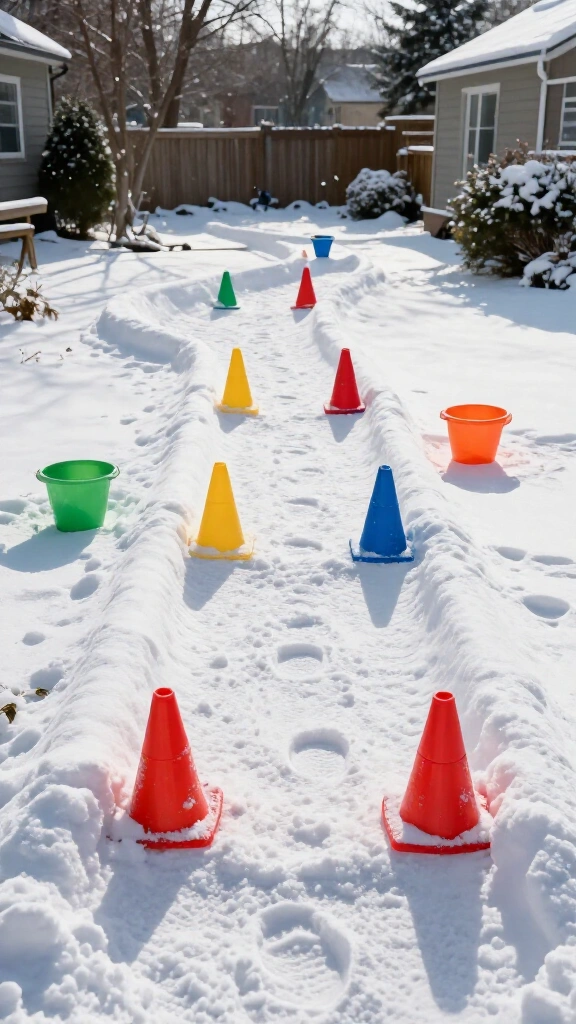
Set up a few simple stations in your yard. Kids might step over a low snow ridge, weave around cones, then stomp to a finish line. Use soft objects such as plastic cones or bright buckets to mark the route. Kids can take turns inventing new movements, including penguin waddles and giant steps.
Walk the course first to check for ice, holes, sharp objects, and slippery slopes. Adjust the route for each child’s age and abilities, and skip timed races if the ground feels slick. Keep the focus on playful movement so everyone can enjoy the course.
10. Catch and examine snowflakes
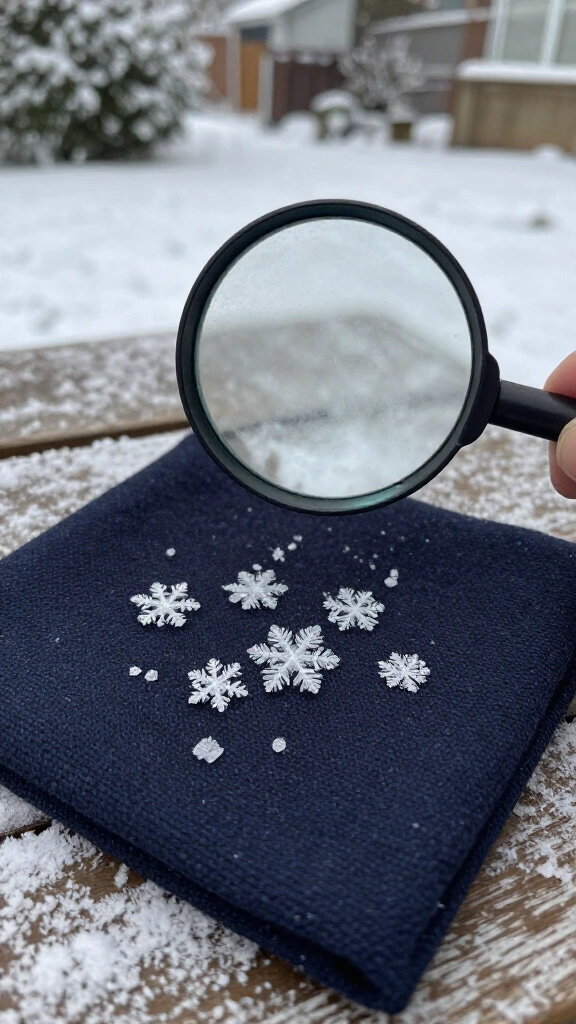
On a snowy day, place a dark piece of fabric or construction paper outside briefly to cool. Catch a few flakes on the surface, then inspect them quickly with a magnifying glass before they melt. Can your kids spot branches, points, or differences in size?
Snowflakes form under varying atmospheric conditions, which helps explain why they grow into so many shapes. The National Snow and Ice Data Center’s guide to snowflakes explains more about how these ice crystals grow. Afterward, head inside and draw the patterns everyone remembers.
11. Blow bubbles in the cold
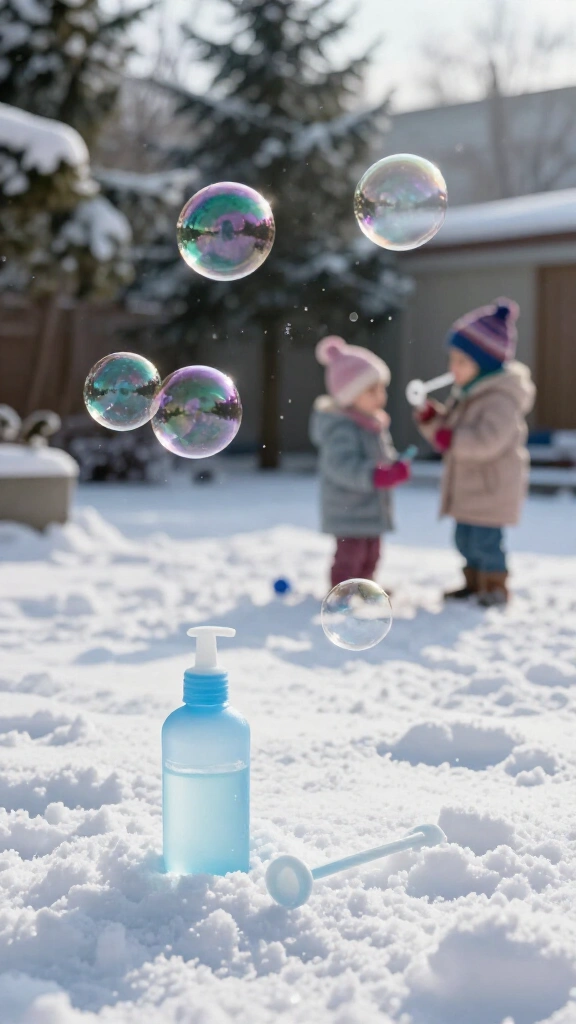
Bubble play doesn’t have to end when summer does. Bring a bottle of bubble solution outside and let kids blow bubbles against the snow. Watch how they drift, land, and sometimes pop when they touch the snow.
Some bubbles may freeze in very cold conditions, but temperature, wind, and the bubble mixture all affect the result. Treat frozen bubbles as a possibility rather than a promise, and keep the session short enough for everyone to stay comfortable. If fingers get cold, head inside to warm up instead of waiting for the perfect bubble.
12. Make nature art in the snow
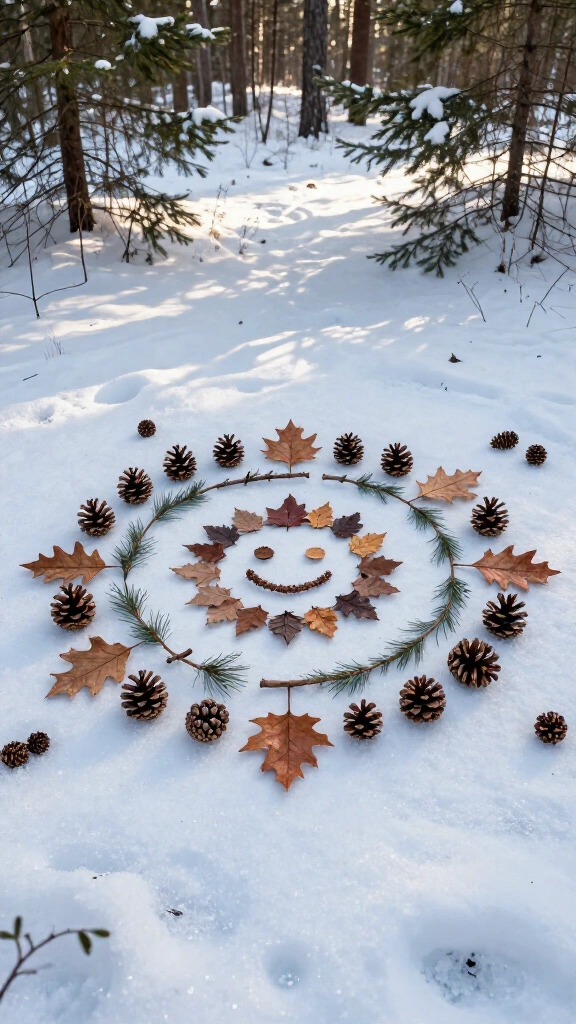
Gather fallen pinecones, leaves, and small twigs, then arrange them on top of the snow in circles, faces, or winding patterns. Kids can work together on one giant design or make their own side by side. Against the white snow, even a simple row of pinecones stands out.
Use materials from the ground rather than pulling branches or plants, and avoid collecting anything you cannot identify safely. Pick up decorations before you leave, especially small pieces that could create a hazard later. For more nature-inspired creativity indoors, explore these flower crafts for kids.
13. Pull toys on a snowy expedition
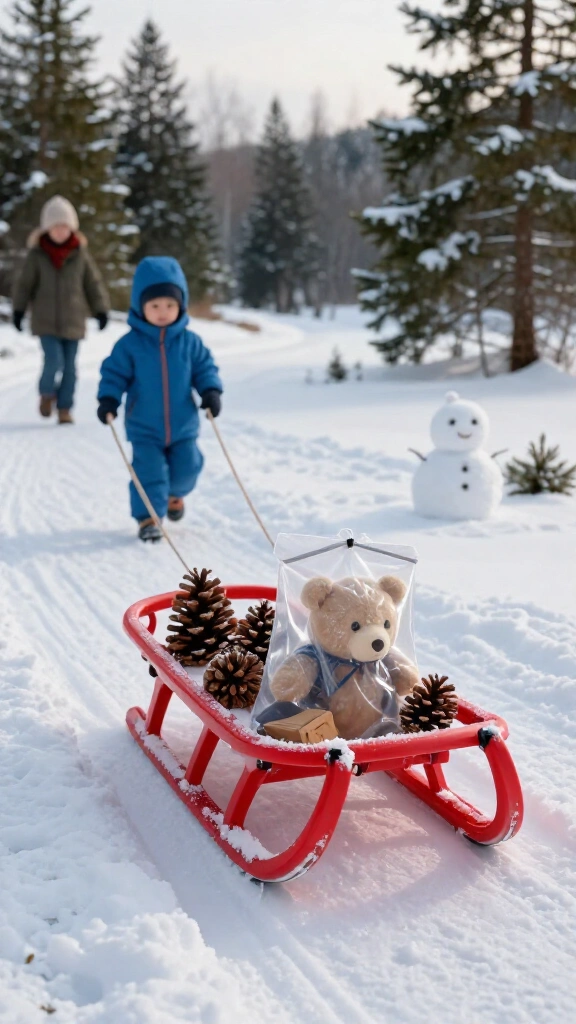
Load a small toy, a stuffed animal in a waterproof bag, or a few pinecones onto a lightweight sled. Then invite kids to pull their cargo along a flat, clear route and pretend they’re delivering supplies to a snowy outpost. Add stops for “fuel,” a map check, or an important meeting with a snow creature.
Choose an open area away from traffic, steep slopes, and frozen ponds, and supervise the entire trip. Check sled ropes for tangles, and keep ropes away from children’s necks. If your family wants to sled downhill instead, choose a safe, designated hill and follow local safety guidance.
14. Bring snow inside for sensory play
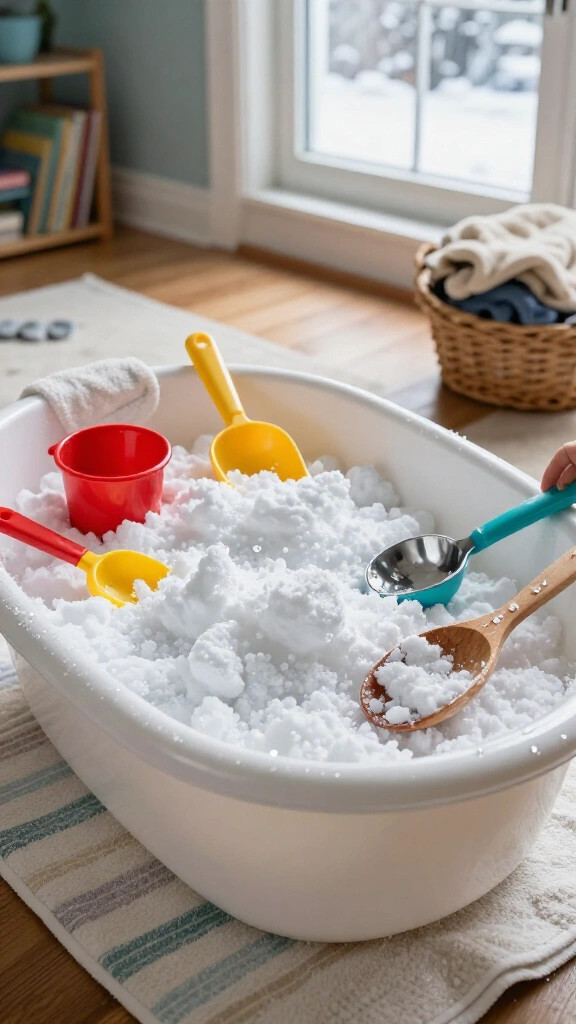
When little ones need a break from the cold, scoop clean snow into a large tub and bring it indoors. Set the tub on towels or a washable surface, then offer cups, scoops, and sturdy spoons for pouring and packing. Kids can build tiny snow piles without wrestling another mitten onto a reluctant thumb.
Stay close, especially with toddlers, and remind everyone not to eat snow that may contain dirt or other contaminants. Swap wet clothes promptly and end the activity if hands become uncomfortable. Once the snow melts, compare the remaining water with the original pile and ask kids what they notice.
Make every snow day a little more adventurous
Kids can paint snow, follow animal tracks, or build a tiny village while they move around and explore. Pick one of these 14 snow activities for kids that suits your child’s age, check the play area, and take breaks to warm up whenever anyone needs one.
You don’t need an elaborate plan to make winter memories. Sometimes a scoop, a snowbank, and a question like “What should we build next?” give everyone plenty to do.