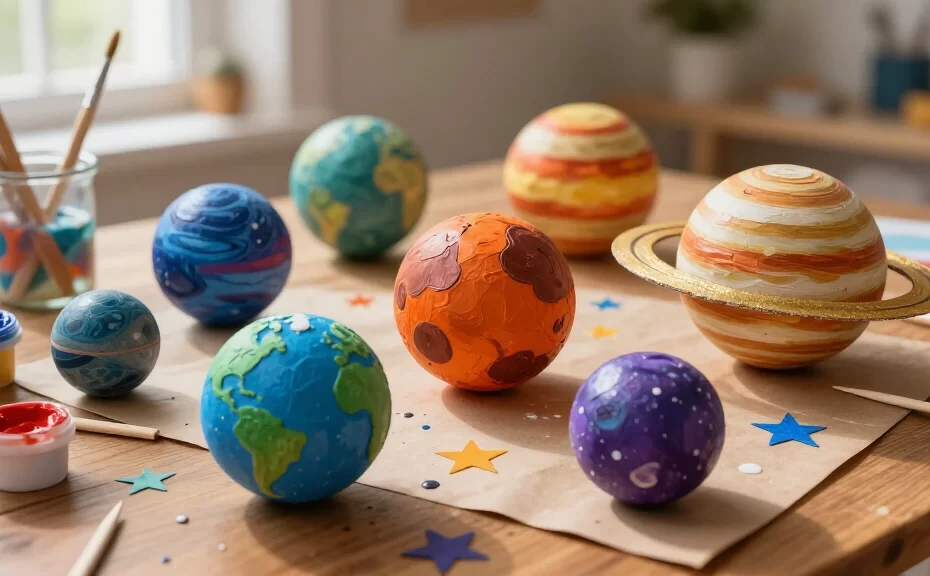
Kids naturally look up at the night sky with endless questions about space. You do not need a giant rocket or expensive gear to explore the solar system with them. With basic craft supplies from around the house, you can turn your kitchen table into a space lab.
These 29 planet crafts for creative kids combine simple science concepts with hands-on art projects. Pick a craft, grab some paintbrushes, and try one of these projects on your next rainy afternoon.
1. Papier-Mâché Solar System Mobile
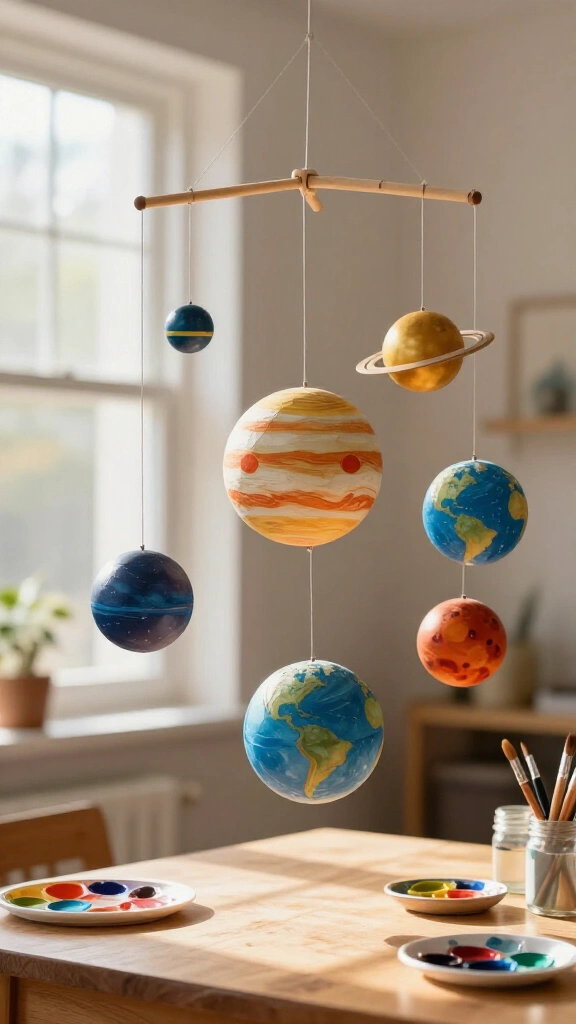
Papier-mâché remains one of the best ways to build round, sturdy planets. Blow up balloons in different sizes, dip newspaper strips into a simple flour-and-water paste, and wrap each balloon until smooth. Once the shells dry completely, kids can paint surface details using real reference photos from NASA Science before you help them string the planets onto a ceiling mobile.
2. Swirled Shaving Cream Marbled Planets

This shaving cream print activity makes rich, swirly patterns with minimal setup. Spread white shaving cream across a baking sheet, drop washable tempera paint across the top, and drag a toothpick through the foam to swirl the colors. Press cardstock circles into the foam, lift them up, and scrape away the excess cream with a ruler to reveal colorful planet prints.
3. Black Glue and Watercolor Outer Space Art

Mix black acrylic paint into a standard bottle of white school glue to draw thick, raised outlines on watercolor paper. Let the dark borders dry overnight. Kids then paint inside each section with bright watercolor washes. The raised glue lines keep wet paint from running across borders and give each planet a bold outline.
4. Recycled CD Saturn with Foam Rings

Put scratched music discs or old DVDs to good use with this quick project. Cut a small styrofoam ball in half, paint both halves yellow or gold, and glue one half to each side of the center hole. Kids can brush glitter glue along the shiny disc edge to mimic the ice and dust particles in Saturn’s rings.
5. Bleeding Tissue Paper Earth Collages

Cut circular cardboard bases from old cereal boxes. Have your toddler arrange torn squares of blue and green bleeding tissue paper across the cardboard. Spray the paper with a water bottle, and the dyes will run together to form landmasses and oceans. The tearing and spraying steps also build fine motor strength in young children.
6. Glow-in-the-Dark Salt Dough Ornaments

Mix two cups of flour, one cup of salt, and one cup of water to make a simple sculpting dough. Roll the dough flat, cut out circles with cookie cutters or drinking cups, and bake them on low heat until dry and hard. Paint each disc with glow-in-the-dark acrylic paint so kids can watch their planets shine in the dark at bedtime.
7. Yarn-Wrapped Cardboard Planet Discs
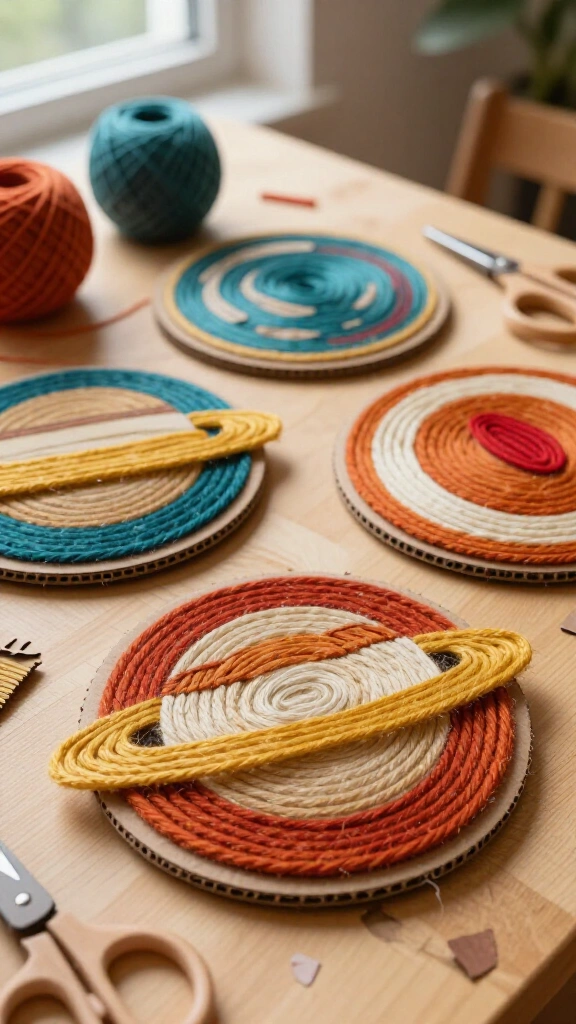
Cut circles out of sturdy shipping boxes to make flat bases. Have your child wrap scraps of colored yarn tightly around each cardboard circle to copy the cloud bands on Jupiter and Saturn. If you have extra boxes lying around, check out our favorite creative cardboard box crafts for more weekend ideas.
8. Splatter Paint Galaxy and Orbit Plates
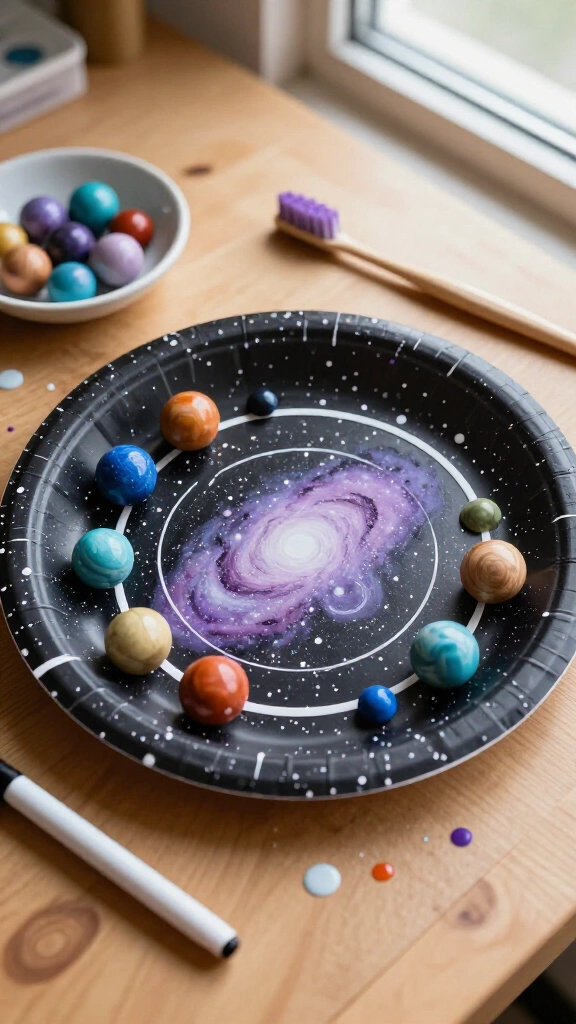
Take plain black paper plates and set them on newspaper. Dip an old toothbrush into white or light purple paint, then run a thumb across the bristles to spray fine star specks across the plate. Draw white rings with a gel pen and glue painted wooden beads along the rings to show how planets follow orbital paths.
9. Bubble Wrap Stamped Mars and Moon Spheres

Bubble wrap creates a cratered texture on paper without messy plaster. Brush red, orange, or gray paint over the textured side of a bubble wrap sheet. Press the painted bubbles onto cardstock circles to print realistic impact craters for Mars, Mercury, or the Moon.
10. Clay Slab Textured Planets

Air-dry clay allows kids to build deep ridges, canyons, and impact basins with their hands. Roll the clay into thick circles, then press household objects like forks, bottle caps, and screw heads into the surface to create geological features. Paint the clay pieces once they cure, then display them on a bookshelf or frame them.
11. Felt Button-Stitched Solar System Garland
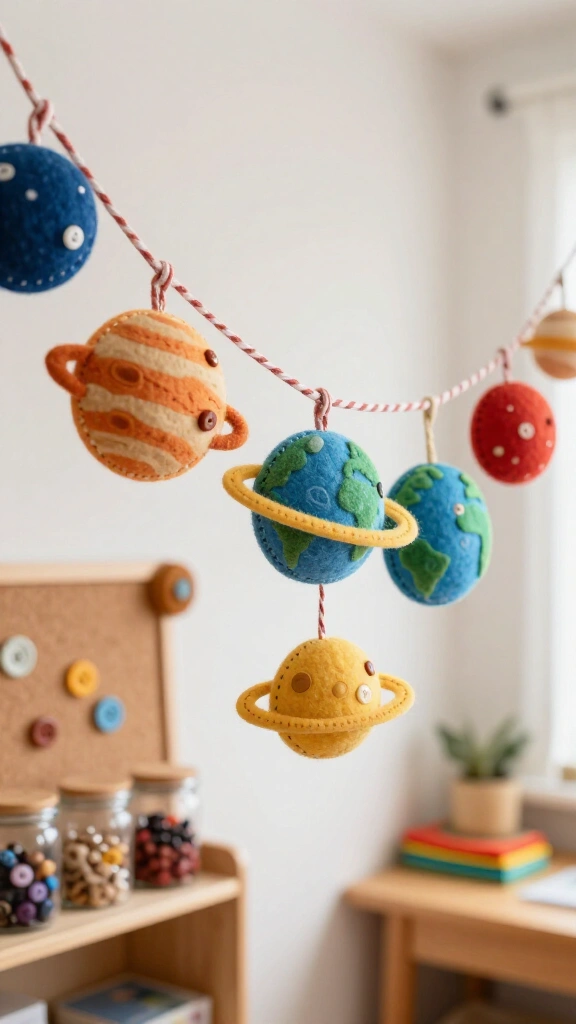
Introduce basic sewing stitches using wool felt and leftover buttons. Cut out planet shapes from different colored felt sheets, then let kids sew buttons onto the shapes to mark features like Jupiter’s storm. Thread the finished planets onto a piece of baker’s twine to hang across a playroom wall or bulletin board.
12. Marbled Milk Planetary Prints
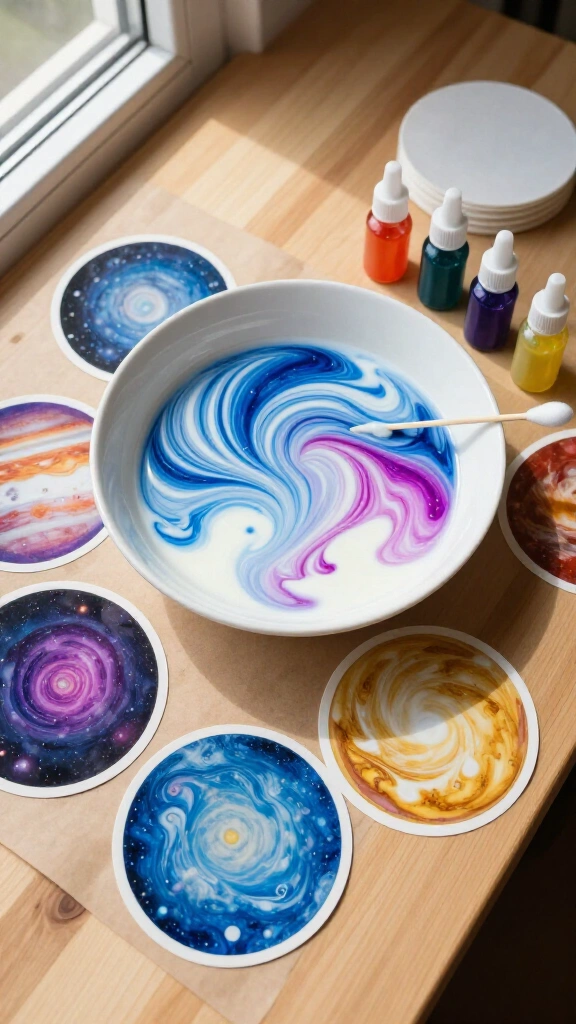
Pour whole milk into a shallow dish, add drops of food coloring, and touch the center with a cotton swab coated in liquid dish soap. The soap breaks the surface tension, pushing the colors outward in rapid swirls. Press round watercolor paper discs onto the surface for two seconds to pull custom gas-giant prints straight from the dish.
13. Upcycled Tin Can Constellation & Planet Lanterns

Wash empty soup cans, fill them with water, and freeze them solid so the metal keeps its shape during hammering. Help your child tap a hammer and nail through the sides to punch out planet shapes and star patterns. Place a battery-powered LED tealight inside each can to cast glowing patterns on bedroom walls at night.
14. Cardboard Box Deep-Space Planetarium
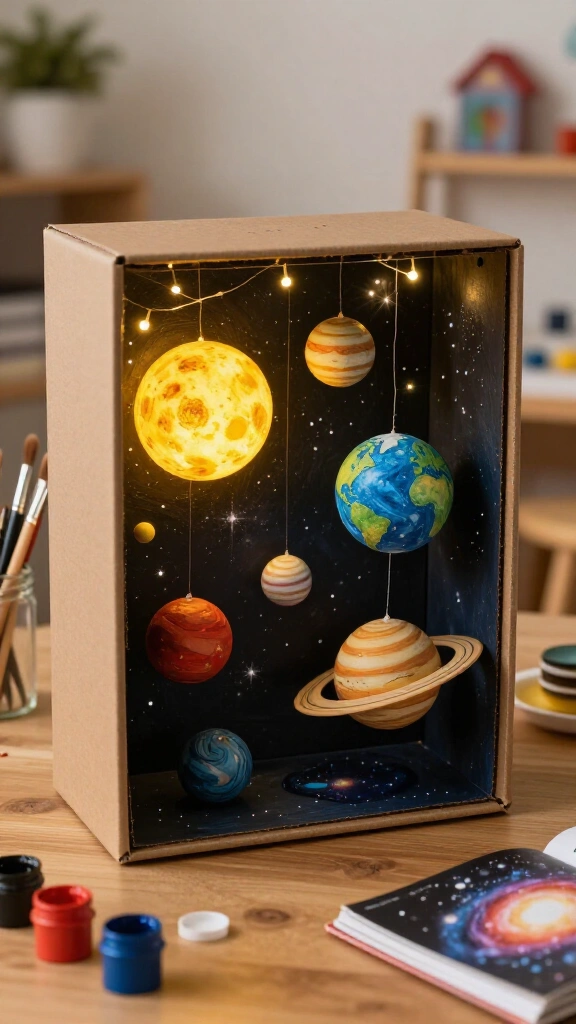
Turn a shipping box on its side to make a tabletop diorama. Paint the inside black, hang painted foam balls from fishing line, and poke small battery-operated fairy lights through the top panel for stars. Kids can read guides on National Geographic Kids to arrange each planet in the right order from the sun.
15. Layered Tissue Paper Suncatchers
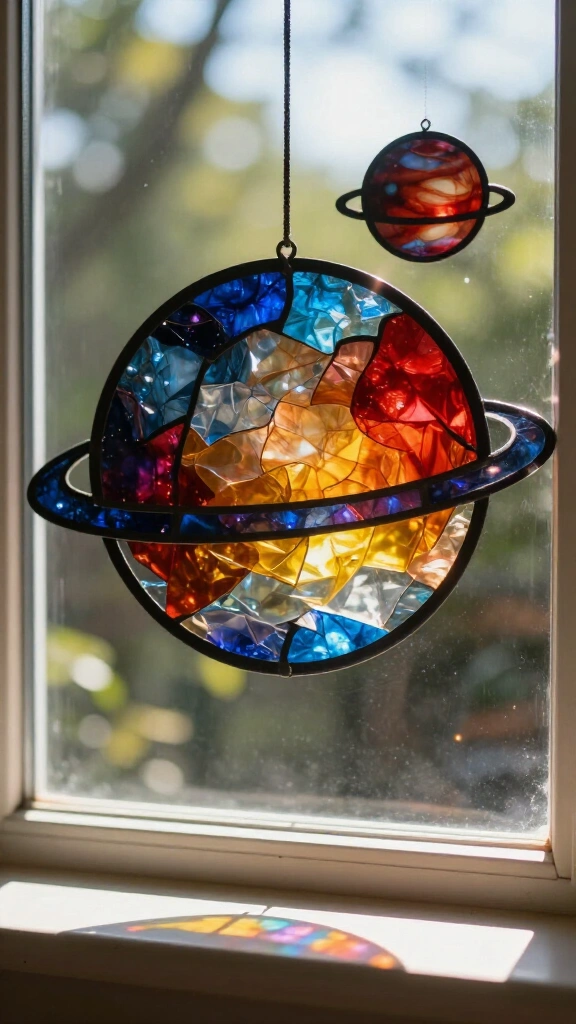
Cut hollow circle rings out of black construction paper and place them sticky-side up on clear contact paper. Toddlers can press colored tissue paper scraps inside each ring using deep blues, reds, and yellows. Tape the finished planets to a window where direct sunlight shines through the colors like stained glass.
16. Rock-Painted Asteroids and Dwarf Planets
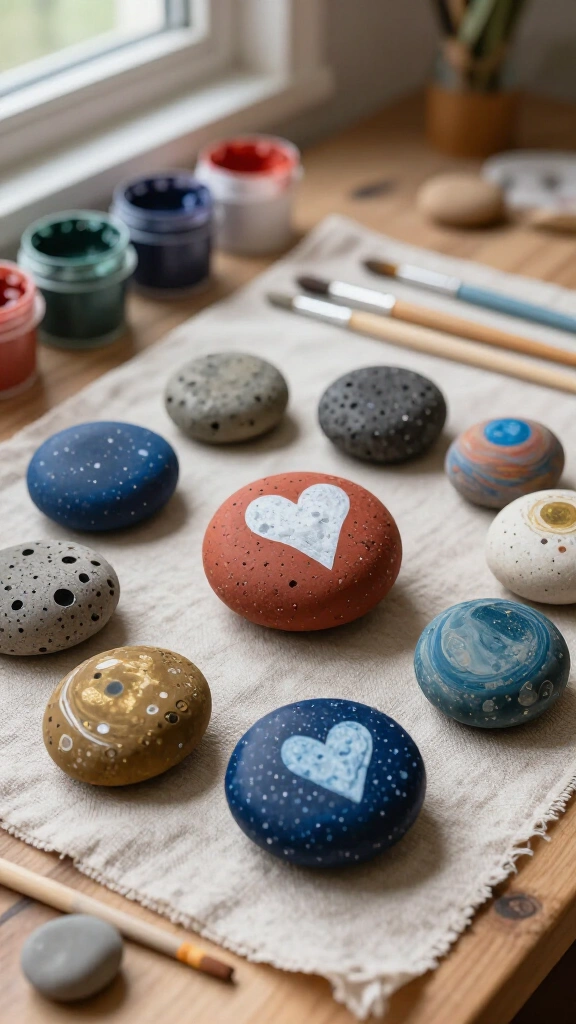
Collect smooth river rocks from your yard or a nearby trail. Wash and dry the stones, paint base colors on them with acrylics, and add details like the white heart-shaped nitrogen glacier on Pluto. For more quick projects that cost very little, explore our guide on dollar store crafts.
17. Textured Styrofoam Gas Giants
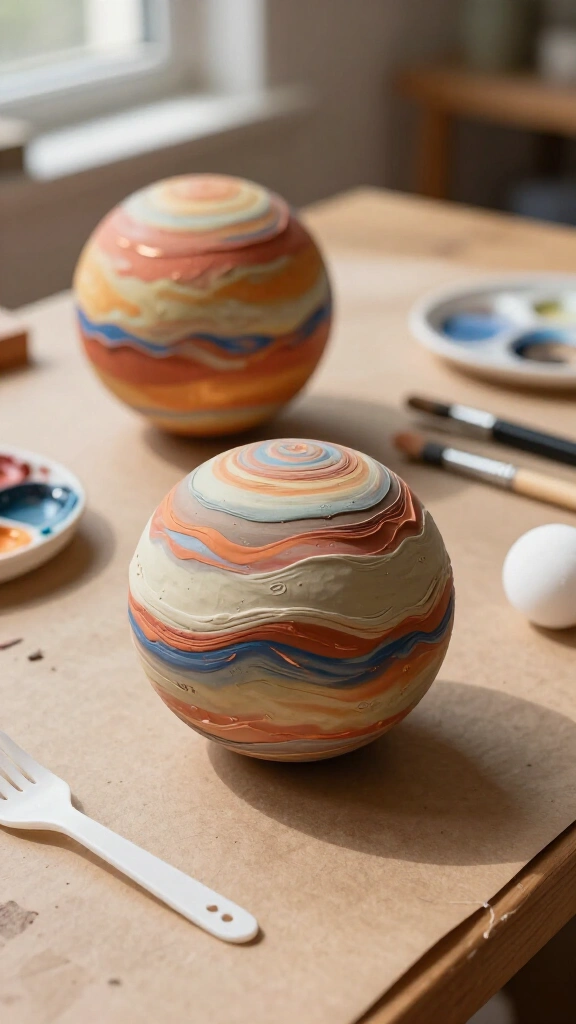
Spread joint compound or lightweight modeling paste over smooth foam craft balls to create thick cloud layers. Pull a plastic fork across the surface in wavy horizontal strokes to carve storms and bands. Let the paste dry, then brush acrylic paint over the raised ridges to bring out the depth.
18. Foil Embossed Space Relief Plaques

Glue pieces of thick yarn and small cardboard cutouts onto a sheet of heavy chipboard. Wrap standard aluminum foil over the board and rub cotton swabs gently around the raised edges to reveal the outlines. Paint black acrylic over the foil, then wipe the top surfaces clean with a damp cloth to leave dark paint in the crevices.
19. Melted Crayon Planet Discs
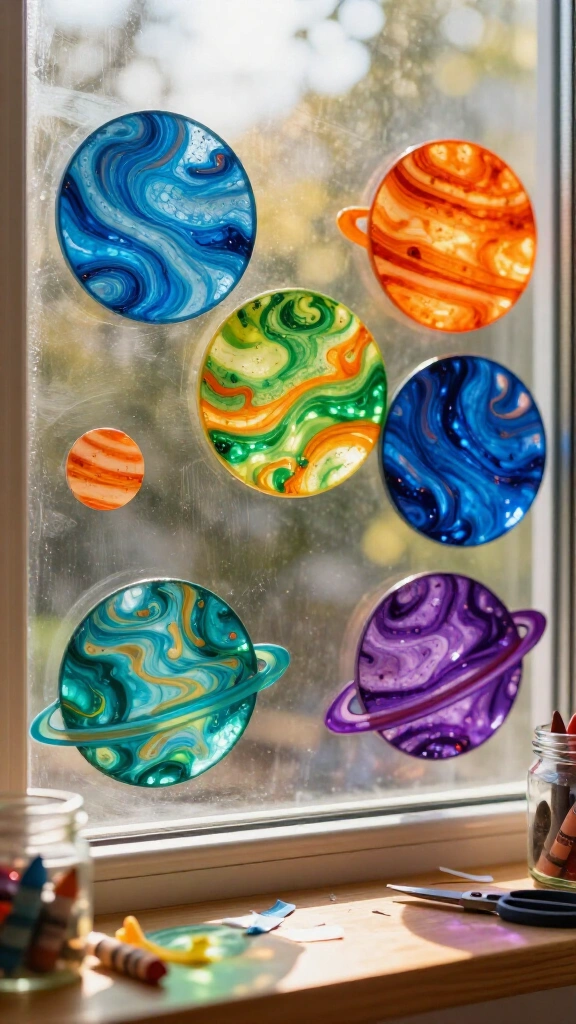
Gather broken crayon pieces from your art bin and sort them by color. Shave the crayons with a pencil sharpener, spread the flakes between two sheets of wax paper, and iron over a towel on low heat. Once the wax cools and hardens into a thin sheet, cut it into planet circles to tape onto sunny windows.
20. Plastic Lid Shrink-Art Space Charms
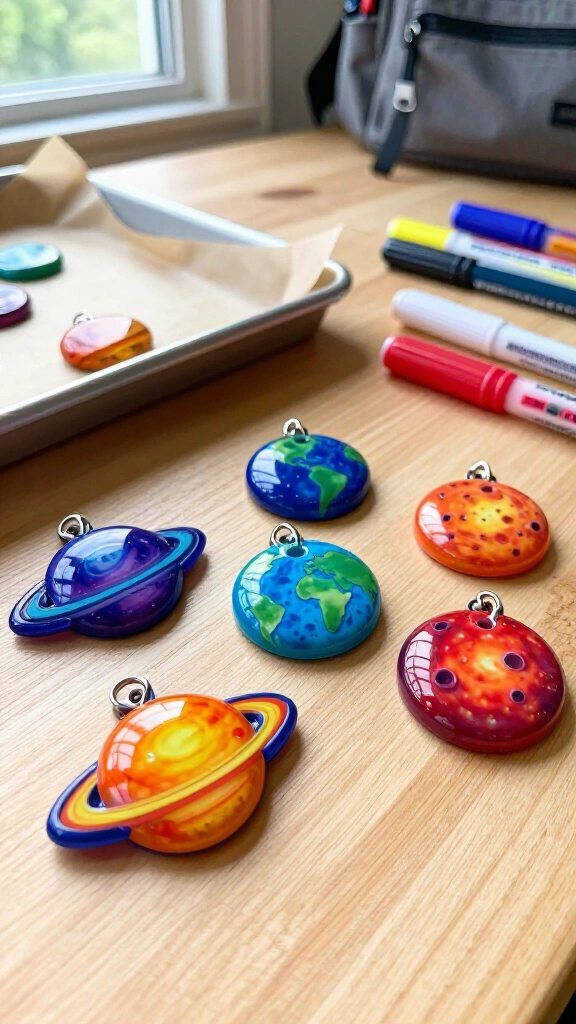
Save clear plastic takeout container lids labeled with the #6 recycling symbol. Draw planets on the plastic with permanent markers, cut out the circles, and punch a hole near the top. Bake the cutouts on a parchment-lined tray at 350°F for two to three minutes. The plastic shrinks down to one-third its size into thick, sturdy charms for backpacks or keychains.
21. 3D Puffy Paint Gaseous Worlds

Mix equal parts white shaving cream and liquid glue with food coloring to make thick, puffy paint. Spoon the mixture onto cardstock circles to give gas giants like Neptune and Uranus a raised, dimensional surface. The mixture dries with a soft, spongy texture that holds its shape on the page.
22. Mosaic Button Celestial Canvases

Paint small stretched canvases dark blue and sketch circles with a white pencil. Have your child sort craft buttons by color, then glue them in concentric circles to fill each outline. This activity teaches color grouping while producing sturdy artwork for a bedroom wall.
23. DIY Snow Globe Orbit Habitats
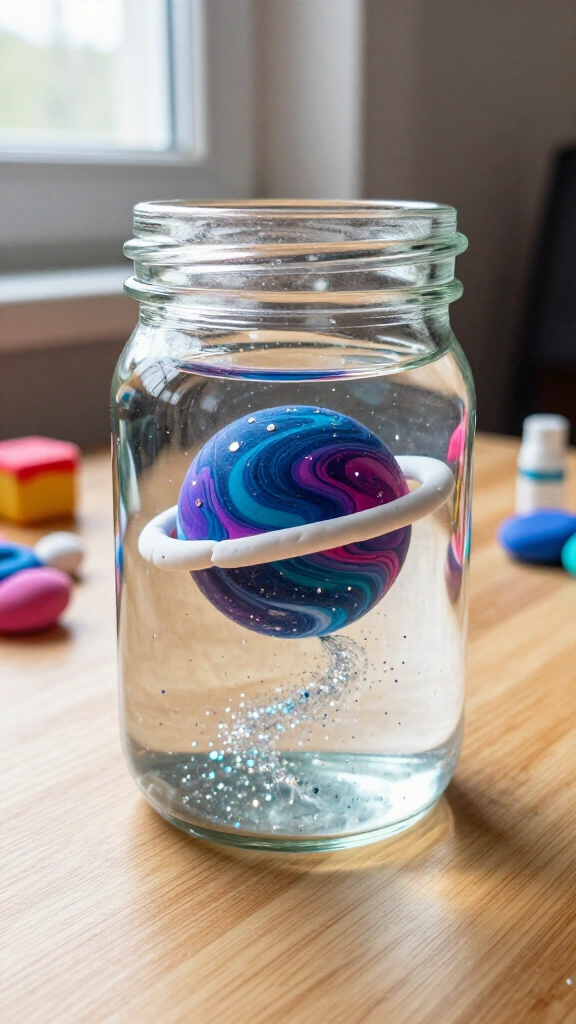
Bake small planet shapes out of polymer clay and glue them to the inside lid of a clean baby food jar with water-resistant epoxy. Fill the jar with water, add two drops of glycerin, and stir in silver glitter. Screw the lid on firmly, seal the threads with glue, and flip the jar upside down to watch glitter swirl around the planet.
24. Origami Geometric Planet Spheres
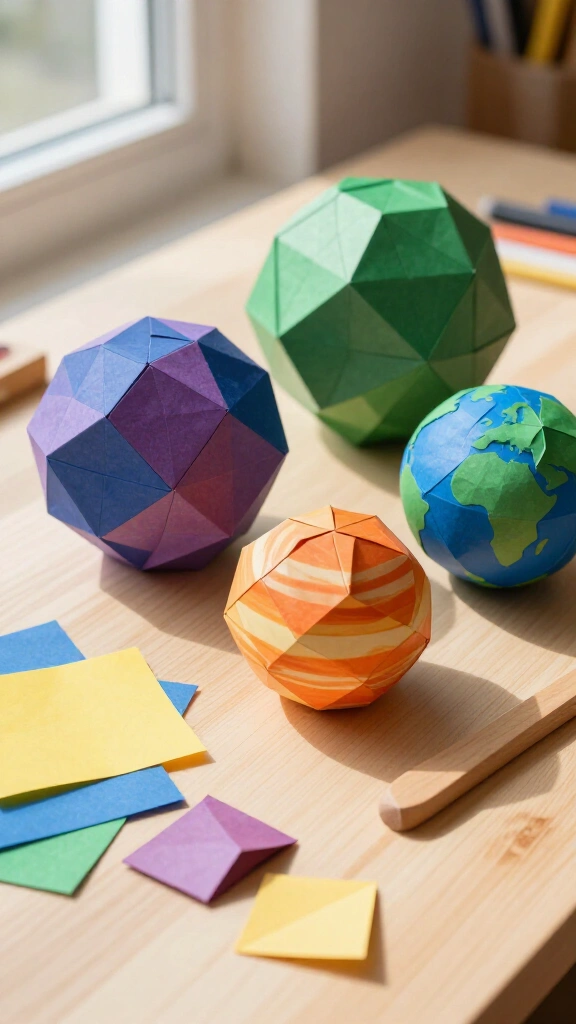
Older kids can practice modular origami by folding square sheets of duo-tone paper into interlocking units. Assemble six or twelve folded units together to build three-dimensional geometric globes. This project teaches geometric construction and lets kids build colorful desktop planets without any glue.
25. Sand Art Planetary Layers

Show the internal layers of rocky planets using clear glass spice jars and colored craft sand. Use a funnel to pour sand in clean layers: red for the molten core, yellow for the mantle, and gray for the crust. Building a cross-section model by hand helps kids remember the internal structures of Earth and Mars.
26. Clothespin & Pom-Pom Solar Clothesline

Glue craft pom-poms of different sizes and colors onto wooden spring clothespins. Have your kids clip the clothespins in proper orbital order along a length of black yarn tied between two shelves. For other easy holiday projects, check out our roundup of Valentine’s crafts for kids.
27. Scratch-Off Oil Pastel Planets

Cover heavy cardstock circles with bright yellow, orange, and teal oil pastels. Color heavily over the bright base with a thick layer of black oil pastel or black tempera paint. Kids then take toothpicks or wooden styluses to scrape lines into the black layer, uncovering the glowing colors underneath to create swirling storm patterns.
28. Wooden Bead Pocket Solar System

Paint small wooden craft beads to match the colors and sizes of the planets. Thread the dry beads onto elastic cord or leather lace, placing tiny star beads or spacer knots between each world. Kids can wear the finished string as a bracelet or clip it to a backpack zipper.
29. Cardstock Planetary Shadow Puppets
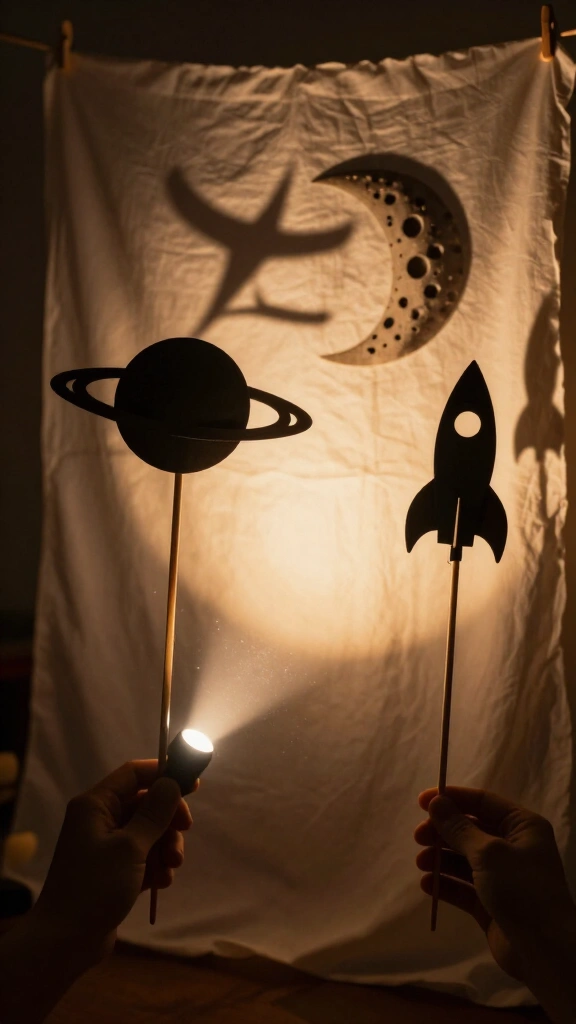
Cut outlines of ringed planets, rockets, and the Moon out of black cardstock. Tape wooden skewers to the cutouts and shine a bright flashlight toward a white wall or hung bedsheet. Kids can hold the puppets in front of the beam to act out space missions and eclipse simulations in the dark.
Try a Space Craft at Home
Hands-on art projects make space science easy for kids to grasp. You do not need expensive telescopes or rare materials to teach children about orbits, atmospheres, and planetary surfaces. Choose a project from this list, gather your supplies, and start building your own solar system together today.