
Ever wonder why some crocheters make perfect stitches? Others struggle with uneven tension. The secret is in mastering yarn holding techniques.
Learning how to hold yarn is key to your craft. A bad grip can cause uneven stitches and tired hands. It makes a fun hobby hard.
Crochet isn’t about one “right” way to hold yarn. It’s about finding what feels right for you. Every crocheter finds their own way to make beautiful projects.
Key Takeaways
- Proper yarn holding prevents hand fatigue
- There’s no universal “correct” yarn technique
- Comfort is key in developing your style
- Practice helps refine your yarn holding skills
- Consistent tension creates professional-looking projects
Understanding Yarn Structure: Fibers Matter
Learning to hold yarn in crochet starts with knowing the yarn’s structure. Different fibers can make crocheting easier or harder. This is why some yarns are better to work with than others.
Choosing the right yarn can change your crocheting from hard to fun. Each fiber type has its own special traits. These traits affect how you hold and move the yarn while crocheting.
Different Types of Yarn
There are many yarn types for holding yarn in crochet:
- Acrylic: Synthetic, cheap, and easy for beginners
- Cotton: Natural, doesn’t stretch much
- Wool: Warm, stretchy, perfect for cold weather
- Blended yarns: Mixes different fiber traits
How Fiber Composition Affects Crochet
The yarn’s fiber mix changes how you crochet. Acrylic yarns like Red Heart Super Saver are forgiving for newbies. But cotton yarns need you to control tension better.
Recommended Yarns for Beginners
Beginners should start with medium-weight acrylic yarns in light colors. These yarns help you keep the right tension. They also don’t slip much when you hold them.
Pro tip: Begin with smooth, medium-weight yarns. They let you see your stitches well and are easy to hold.
The Basics of Yarn Holding Styles
Crocheting starts with learning how to hold yarn right. Your way of holding yarn can change your crafting a lot. It affects your stitches and how your hands feel.
Yarn holding is more than just a simple grip. It’s a skill that mixes technique, comfort, and what you like. Good crocheters know that there’s no one right way to hold yarn.
Traditional vs. Contemporary Methods
Crochet has changed a lot over time. Old ways include:
- Wrapping yarn around many fingers
- Creating tension by hand
- Keeping fingers in the same spot
New ways are more flexible, focusing on:
- Using fewer fingers
- Less hand strain
- Managing tension your way
Why Your Style Matters
Your yarn holding style changes your crocheting. Different ways can affect:
| Aspect | Impact |
|---|---|
| Stitch Consistency | Makes your stitches even |
| Hand Comfort | Helps avoid hand strain on long projects |
| Crafting Speed | Changes how fast you crochet |
Remember, the best way to hold yarn for crocheting is the method that feels most natural and comfortable to you. Try out different ways to find what works best for you.
How to Hold Yarn for Comfort and Control
Learning how to hold yarn is key to better crocheting. The right way to hold it makes your work smooth and comfy. It also helps you avoid tired hands.
Yarn holding is an art that needs practice. It’s about making your yarn move smoothly and keeping the right tension.
Positioning Yarn in Your Hands
Here’s how to place your yarn:
- Start with the yarn between your pinky and ring finger
- Wrap it around your pinky for the first tension
- Then, bring it across your palm
- Lastly, drape it over your index finger
Adjusting for Tension and Consistency
Keeping the right tension is important. Your index finger helps control this:
| Tension Adjustment | Technique | Result |
|---|---|---|
| Loosen Tension | Raise index finger | More yarn flows freely |
| Tighten Tension | Lower index finger, squeeze pinky | Yarn feeds more slowly |
Your hand should be relaxed. Don’t grip too tightly – it can cause cramps and uneven stitches. Try different ways until you find what works best for you.
Finger Placement Techniques for Better Grip
Learning how to hold yarn is key to crocheting well. Your fingers are not just simple tools. They are precise instruments that help control how tight or loose your stitches are.
Using Your Pinky and Ring Finger
Your pinky finger is very important for holding yarn. Wrapping yarn around your pinky helps control how tight or loose it gets. Think of your pinky as a guide that helps the yarn flow smoothly.
- Wrap yarn once around pinky for light tension
- Use multiple wraps for tighter control
- Adjust wrapping based on yarn type and project
The Role of Your Pointer Finger
Your index finger is the main guide for yarn. It places the yarn just right for your crochet hook. This makes your stitches smooth and even. The way you hold your index finger affects your stitches and how tight they are.
Finding Your Own Comfort Zone
Everyone holds yarn differently. Try different ways to find what feels best for you. Listen to your hands and watch your stitches for consistency.
| Finger | Primary Function | Tension Impact |
|---|---|---|
| Pinky | Tension Anchor | Controls Yarn Flow |
| Ring Finger | Secondary Support | Provides Additional Control |
| Pointer Finger | Yarn Positioning | Guides Stitch Formation |
Remember, the perfect yarn holding technique is the one that feels right for you and produces consistent, beautiful stitches.
Yarn Tension: Finding the Right Balance
Learning yarn tension in crochet is like a dance. It’s about how you hold the yarn. The right tension makes your project look great.
Yarn tension is how hard you pull the yarn. It’s like a secret thread that makes your stitches even. This makes your fabric look professional.
Understanding Yarn Tension Fundamentals
Your yarn tension can change your crochet project a lot. Here are some important things to know:
- Consistent tension makes your stitches even
- Uneven tension makes your fabric look bad
- Right tension stops holes and messes
Identifying Tension Problems
Knowing when your yarn tension is wrong is key to getting better at crochet:
- Loose Tension Symptoms
- Stitches are far apart
- Fabric is floppy
- It’s hard to get the hook in
- Tight Tension Warning Signs
- Fabric is stiff
- Your hands get tired
- It’s hard to get the hook in
Practical Tips for Balancing Yarn Tension
Getting the right yarn tension takes time. Try different ways of holding the yarn. Relax your grip and let the yarn move smoothly. The goal is to make beautiful, even stitches.
Tracking Your Yarn’s Path: The Bow Method
Learning to hold yarn in crochet is key. The Bow Method is a top choice for better yarn handling. It makes crocheting more precise and comfy.
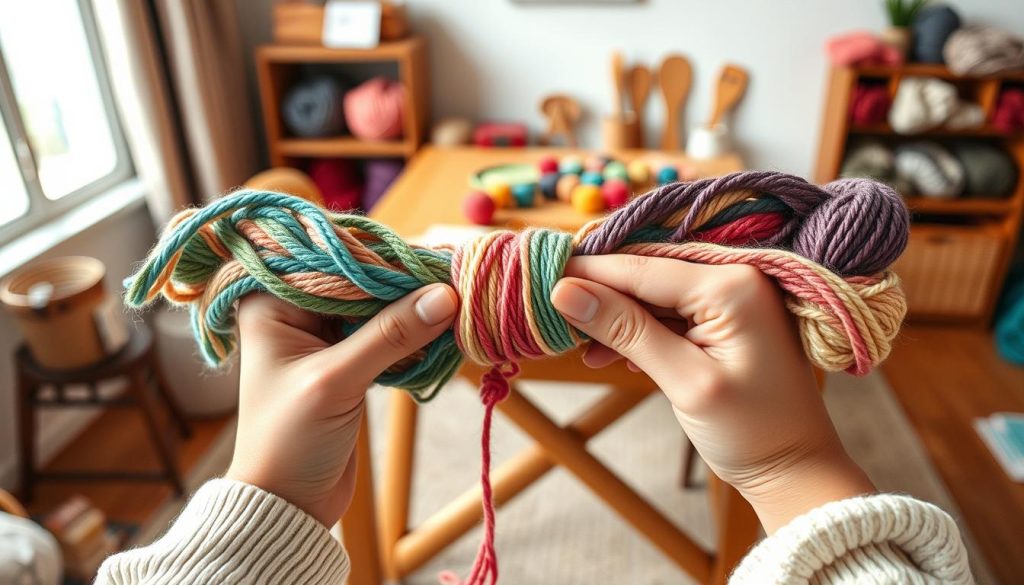
Think of making a bow-like shape with your yarn. This is the Bow Method. It keeps your yarn tension even and flow smooth.
Understanding the Bow Method
The Bow Method changes how you work with yarn. Here’s how it works:
- Make a natural curve with your yarn hand
- Let yarn flow from your pinky
- Guide yarn over your palm and index finger
- Keep your hand the same distance from your work
Key Advantages of the Technique
Using the Bow Method has many perks:
- Visual Tension Feedback – See tension issues easily
- Yarn feeds consistently in your project
- Less hand tiredness
- Builds muscle memory faster
The Bow Method is great for all crochet projects. It helps with both small and big items, making your work precise and comfy.
Holding Yarn While Switching Colors
Learning how to hold yarn for color changes can make your crochet projects look amazing. It doesn’t matter if you’re making complex patterns or simple stripes. Knowing how to handle multiple yarn colors is key for every crafter.
Switching colors needs precision and practice. Your yarn holding skill is very important for smooth color changes.
Tips for Smooth Color Changes
- Drop the old color completely before introducing the new yarn
- Weave in yarn tails as you go to reduce finishing work
- Maintain consistent tension when changing colors
- Practice keeping carried yarns neat on the project’s back
Managing Multiple Yarns
Good yarn holding techniques help you handle many yarn colors well. Here are some tips:
| Technique | Best For | Difficulty Level |
|---|---|---|
| Finger Separation Method | Colorwork projects | Intermediate |
| Drop and Pick Up | Simple color changes | Beginner |
| Carry Along Method | Intricate designs | Advanced |
Remember, practice makes perfect. Each yarn holding method needs patience and effort to get right. Don’t worry if you’re not perfect at first.
Experts say to keep your yarn balls separate to avoid tangles. Use small bowls or bags for your working yarns. This helps with smooth color changes in your projects.
Personalizing Your Yarn Holding Technique
Finding the right way to hold yarn is a journey for every crafter. Your hands are as unique as your creativity. What works for one might not work for another.
Crocheting lets you express yourself. Your yarn holding should show that. Try different ways until you find what feels right for you.
Exploring Different Holding Styles
When learning to hold yarn, try these steps:
- Start with standard techniques
- Modify finger placement gradually
- Adjust grip tension
- Experiment with hand angles
Adapting to Project Demands
Each project needs a special way to hold yarn. Here’s a quick guide:
| Project Type | Recommended Technique |
|---|---|
| Amigurumi | Tighter grip, extra finger wrap |
| Shawls | Looser, minimal contact hold |
| Bulky Yarns | Less finger weaving |
| Fine Thread | More precise finger control |
Your yarn holding skill grows with time. Focus on comfort, stitch quality, and your flow. Feel free to change methods if needed.
Keep a journal of your crafting. It helps you see what works for each project. Your ideal yarn hold is waiting to be found with patience and practice!
Troubleshooting Common Yarn Holding Issues
Learning to hold yarn can be tough. Every crocheter faces problems that stop their flow. Knowing these issues helps you get better and enjoy crocheting more.
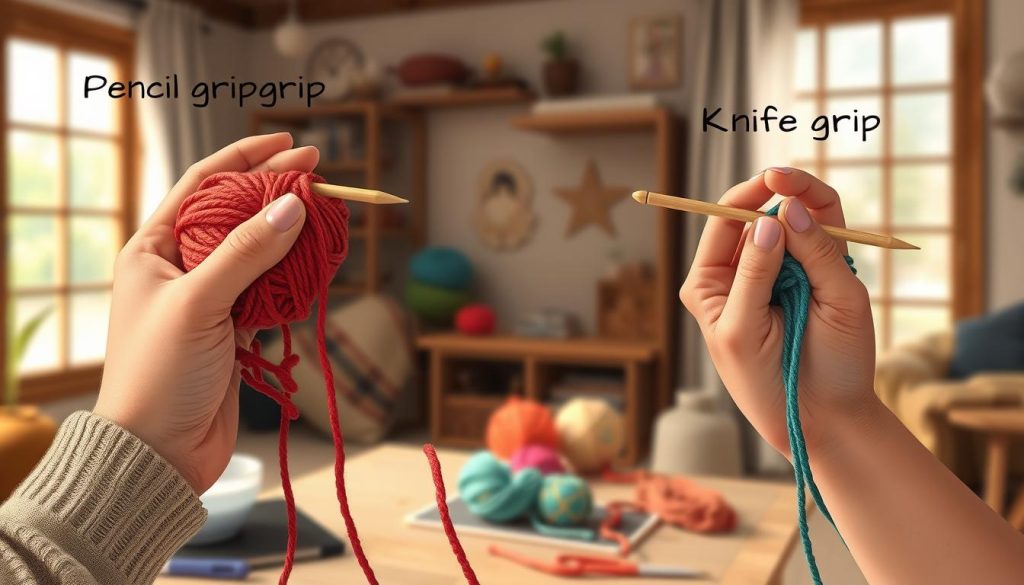
Many challenges come up with yarn holding in crochet. Here are some tips to help you hold yarn right and crochet smoothly.
Preventing Yarn from Slipping
Yarn slipping is really annoying. Here are ways to keep your yarn in place:
- Wrap yarn an extra time around your pinky for better grip
- Use slightly damp fingers for improved traction
- Adjust your hand angle to create natural friction points
- Select yarns with more texture
Managing Yarn Tension Problems
Tension problems can mess up your stitches. Here’s how to fix tension issues:
| Problem | Potential Cause | Solution |
|---|---|---|
| Inconsistent Stitch Size | Varying Grip Pressure | Practice maintaining steady hand position |
| Tight Stitches | Excessive Tension | Consciously relax your grip |
| Loose Stitches | Weak Yarn Control | Use finger wrapping techniques |
Pro tip: Take frequent breaks and stretch your hands to prevent cramping and maintain consistent yarn control.
Getting good at holding yarn takes time. Every problem is a chance to get better and crochet better.
The Importance of Practice: Building Your Skill
Learning to hold yarn right for crocheting takes time. It’s a journey of practice and getting your hands used to the movements. Your hands need to learn the fine details for crocheting to be smooth and fun.
To get better, you need a plan. Short, focused practice is better than long, long sessions. Try to practice for 10-15 minutes each day. This helps build muscle memory without feeling too tired.
Practice Techniques for Yarn Holding
- Create long chains to develop muscle memory
- Focus on the sensation of yarn flowing through your fingers
- Practice maintaining consistent tension
- Work on simple, repetitive projects like dishcloths
Don’t worry if your stitches aren’t perfect at first. Every stitch is a chance to learn. Keep your early projects as a reminder of how far you’ve come. The secret to getting better at holding yarn is to be patient and keep trying.
Joining Crochet Groups for Support
| Group Type | Benefits |
|---|---|
| Local Yarn Shops | In-person guidance, technique correction |
| Online Communities | 24/7 support, global network of crocheters |
| Social Media Groups | Quick tips, motivation, project sharing |
Being part of crochet groups helps a lot. They give you motivation and tips from experts. Whether it’s in-person or online, these groups make learning fun and fast.
Alternative Holding Methods for Advanced Crocheters
As you get better at crochet, you’ll learn new ways to hold yarn. These methods can make your work faster, more comfortable, and precise.
Not everyone holds yarn the same way. Two special methods can help you improve:
The Over Hand Method
This method changes how you hold yarn. You place your hand above your work. This helps control the tension.
- Palm faces downward
- Yarn drapes over the top of fingers
- Ideal for bulky yarns and fast crocheting
The Under Hand Method
This method is great for better tension control. It’s also good for those who have trouble moving their hands.
- Palm faces upward
- Yarn weaves through fingers in an upward path
- Provides superior tension management
Choosing Your Advanced Technique
| Method | Best For | Skill Level |
|---|---|---|
| Over Hand | Speed and Rhythm | Intermediate to Advanced |
| Under Hand | Tension Control | Intermediate to Advanced |
These advanced techniques need practice. Start slow, try different things, and find what works best for you.
Final Tips for Perfecting Your Yarn Hold
Learning to crochet with the right yarn tension takes time. Your hands will get better with practice. Be patient and curious as you learn.
How you feel matters when crocheting. Make sure you’re comfortable. Sit right, relax your shoulders, and move your hands easily.
Check your crochet technique often. See if your yarn grip feels right and your stitches are even. Don’t be afraid to try new ways of holding the yarn.
Stay positive while you learn. Every time you crochet, you get better. Your way of holding yarn will change as you grow.