
Ever wondered how crafters make simple crochet squares into beautiful blankets and decor? The secret is knowing how to crochet granny squares together. This skill turns single squares into amazing pieces.
Joining granny squares is more than a technique. It’s an art that mixes creativity and skill. Whether you’re new or experienced, learning to join granny squares opens up many project possibilities.
Crochet fans have found many ways to join squares over the years. Each method adds its own look and usefulness. You’ll find the best way to join your squares with methods like whip stitch and slip stitch.
Key Takeaways
- Multiple techniques exist for joining granny squares
- Proper preparation ensures clean, professional results
- Joining squares transforms individual motifs into complete projects
- Different methods suit various skill levels and aesthetic preferences
- Practice and patience are essential for perfect square connections
Understanding Granny Squares
Crocheting is a craft that brings families together. Granny squares are at the center of this tradition. They are loved by many for their beauty and creativity.
What Exactly Are Granny Squares?
Granny squares are small, square crochet pieces. They start in the middle and grow outward. These squares can be used to make blankets, clothes, and more.
Each square is unique. You can mix colors and patterns to make them special.
- Typically worked in multiple rounds
- Created using basic crochet stitches
- Flexible in size and color combinations
- Perfect for using leftover yarn
A Rich History of Crafting
The term “granny square” comes from a special tradition. Grandmothers taught their grandkids how to crochet these squares. They are more than just a craft; they connect us to our family’s past.
Joining granny squares has changed over time. Now, there are many ways to connect them. This makes each project unique and beautiful.
Granny squares are loved for many reasons. They are easy to make, can be taken anywhere, and offer endless design options. You can make everything from blankets to accessories with them.
Tools You Need for Joining
Getting ready for your granny square project means picking the right tools. Good crochet tips start with knowing the key materials for joining squares together.
Yarn Selection for Perfect Joins
Choosing the right yarn is key for joining. Think about these things when picking yarn:
- Match the yarn weight to your original squares
- Select fiber content that complements your project
- Decide between matching or contrasting colors
Your yarn choice greatly affects your project’s look. Cotton blends like Drops Cotton Merino have great stitch definition and are perfect for visible joins.
Crochet Hook Recommendations
Picking the right crochet hook is vital for smooth joining. Here’s a quick guide to help you choose:
| Hook Type | Best For | Recommended Brands |
|---|---|---|
| Standard Hook | Basic joining methods | Clover Amour |
| Ergonomic Hook | Comfort during large projects | Furls Crochet Hooks |
| Smaller Hook Size | Tight, secure seams | Susan Bates Hooks |
Pro tip: Use the same hook size as your original squares, or go down one size for tighter joins. Ergonomic hooks make long joining sessions comfy.
Popular Methods for Joining Granny Squares
Learning how to join granny squares can make your projects look amazing. You’ll find many ways to connect your crochet pieces. Each method can make your final piece look even better.
Choosing the right way to join your crochet pieces depends on your project. Each method has its own special benefits. They can make your crochet pieces look even more beautiful.
- Whip Stitch Method: A sewing technique that creates nearly invisible seams
- Slip Stitch Method: Quick crochet connection with subtle texture
- Long Join Method: Creates professional, flat connections between squares
Understanding Your Joining Options
When you look at joining techniques, think about your project. Consider how complex it is, what look you want, and your skill level. Some methods are better for blankets, while others are great for clothes.
Beginners might like the whip stitch because it’s easy. More skilled crocheters can try fancy joining methods. These add extra beauty to their projects.
Choosing the Right Technique
The joining method you choose can change how your granny square looks. Try each method on scrap squares. See which one fits your vision best.
Remember, practice is key when learning new joining techniques. Don’t be scared to try new things. Find the method that works best for you and looks great.
Step-by-Step Guide: Whip Stitch Method
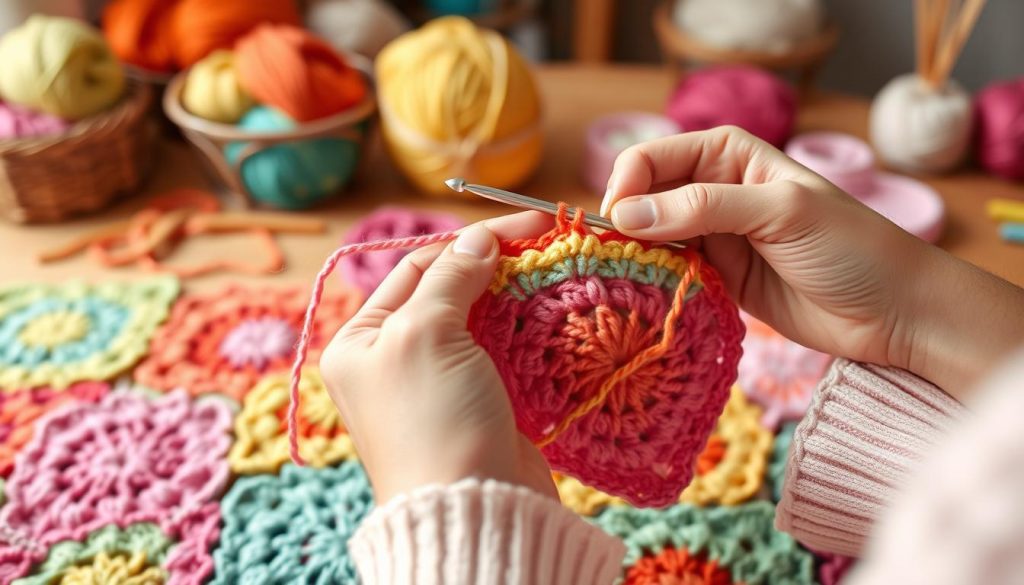
Connecting crochet squares makes your project look amazing. The whip stitch is easy and makes your squares look like they were always together.
Preparing Your Squares
Get your squares ready before you start. Make sure they are the right size and shape:
- Block each square to create uniform size and shape
- Verify stitch counts along each edge match
- Arrange squares in your desired layout
- Select a coordinating yarn for seamless connections
Attaching the First Square
Start by connecting your squares with the whip stitch. Here’s how:
- Thread a tapestry needle with matching yarn
- Position squares with wrong sides together
- Insert needle through back loops of both squares
- Maintain consistent tension while stitching
Completing the Join
Finishing your squares needs careful work:
- Work consistently through back loops for invisible seams
- Keep stitches evenly spaced
- Secure yarn ends neatly
- Check alignment after each section
The whip stitch makes your crochet look like a pro did it. With a little practice, you’ll make beautiful, connected designs.
Step-by-Step Guide: Slip Stitch Method
Learning to stitch granny squares together with the slip stitch method is key. It makes your crochet projects look pro. This method gives a clean, almost invisible join. It makes your squares connect smoothly.
The slip stitch method is great for quick, subtle joins. It keeps your project neat and polished.
Lining Up Your Squares
To join granny squares, you need to line them up right. Here’s how:
- Lay out squares with wrong sides facing each other
- Align edges precisely
- Check that corner stitches match up
- Ensure consistent tension across squares
Beginning the Slip Stitch Join
Start stitching granny squares together with these steps:
- Attach yarn at a corner with a slip knot
- Insert hook through back loop of first square
- Pull yarn through front loop of second square
- Create a smooth slip stitch
Finalizing the Connection
When you finish, keep your stitches loose. Tight stitches can make your squares pucker. Work around corners carefully. Use a chain stitch if needed to stay flexible.
Step-by-Step Guide: Long Join Method
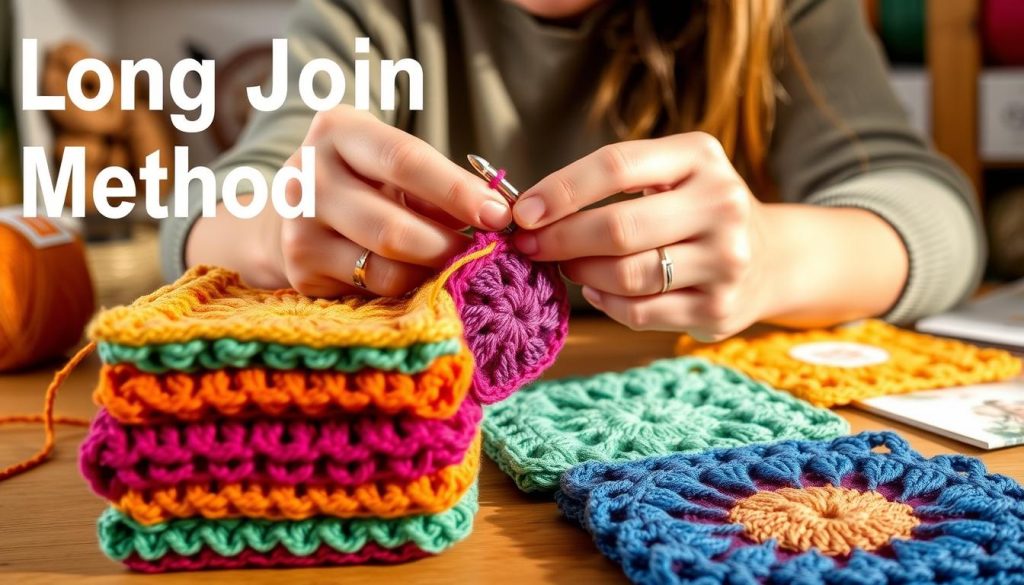
Learning to crochet granny squares together is fun. You need to know how to join them well. The long join method is great for making neat, thin connections.
Understanding the Long Join Technique
The long join is a fancy way to link granny squares. It makes them flat and smooth. There are two main ways to do it:
- Zip method (flat slip stitch join)
- Wide joining method
Starting the Long Join Process
To start, follow these steps:
- Place squares wrong sides together
- Put hook in back loops of matching stitches
- Draw up yarn slowly
- Pull through smoothly
Wrapping Up Your Project
Finishing your project well is important. Focus on:
- Keeping yarn tension even
- Dealing with square corners
- Make ends invisible
| Joining Method | Difficulty Level | Visual Result |
|---|---|---|
| Zip Method | Intermediate | Flat, Seamless |
| Wide Joining | Advanced | Decorative, Lacy |
Practice makes perfect when learning how to crochet granny squares together. Each try will make you better and more confident.
Tips for Neat Edges
Creating beautiful crocheted projects needs careful attention. When joining granny squares, your tips can make a big difference. The right techniques will help you get perfect, stunning results.
Maintaining Square Shape
It’s important to keep your granny squares perfectly shaped. Blocking is a key tip. Here are some strategies to keep your squares square:
- Use starch or blocking mats to flatten edges
- Pin squares to exact measurements
- Steam or wet-block to set square shape
- Check stitch counts on each edge
Keeping your stitches even is very important. Uneven stitches can make edges curl or get misshapen. This can mess up your whole project’s look.
Color Coordination Tips
The color of your joining yarn can change how your project looks. Here are some tips for choosing colors:
| Joining Color Strategy | Visual Effect |
|---|---|
| Matching Square Color | Invisible, seamless join |
| Contrasting Color | Bold, grid-like appearance |
| Coordinating Accent Color | Unified, cohesive design |
Try different color ways to find what works best for your project. Remember, how you join the squares is as important as the squares themselves for a professional look.
Creative Ideas for Using Joined Granny Squares
Learning to join granny squares opens up a world of creativity. You can make cozy blankets or stylish home decor. These crochet squares can turn into amazing projects that show off your skills.
Granny squares are more than simple yarn crafts. They let crafters make unique and personal items.
Blankets and Throws: Comfort Meets Creativity
Making blankets with granny squares is a fun way to create something special. You can make your blanket in many ways:
- Scrappy blankets using leftover yarn
- Color-coordinated designs with gradient effects
- Sampler blankets showing off different square patterns
Pillows and Home Decor: Small Projects, Big Impact
Joining granny squares isn’t just for big projects. You can also make small items that are great for decor:
- Decorative throw pillows
- Table runners
- Wall hangings
- Storage baskets
Using granny squares for home decor lets you show off your style. Each square is a chance to play with colors and textures.
| Project Type | Complexity | Time Investment |
|---|---|---|
| Blanket | High | Several weeks to months |
| Pillow Cover | Low | A few days |
| Table Runner | Medium | 1-2 weeks |
Starting with granny squares can lead to endless creativity. Begin with small projects, try new styles, and watch your skills grow!
Troubleshooting Common Issues
When sewing granny squares, crafters often face challenges. These can make their projects look less than perfect. Knowing how to fix these issues can help you make beautiful, professional-looking crochet pieces.
Uneven edges are a common problem. The main cause is usually tension. If you pull your joining stitches too tight, squares can pucker and distort.
When sewing granny squares, keep your tension even. Try to work your join with a slightly looser stitch than usual.
Addressing Square Edge Problems
Blocking your squares before joining can solve size issues. If your squares are different sizes, steam or wet block them to make edges even. This makes your squares uniform.
If your squares don’t match, you can fix this. Sometimes, skip a stitch or work more than one stitch in a single space. This helps spread out size differences.
Eliminating Gaps Between Squares
Gaps between squares can mess up your project’s look. These gaps happen when you’re not joining correctly or skip stitches. Make sure to pay attention to your joining technique.
Use stitch markers to keep track of your stitches. This ensures each stitch is in the right place.