
Ever wondered how to make a cozy blanket from yarn? It’s easy and fun. You can make a blanket that tells your story.
Crocheting a blanket is more than a hobby. It’s a way to relax and make something beautiful. This guide will help you make your first blanket, no matter your skill level.
Imagine having a blanket made by you. You’ll pick the yarn and learn the stitches. This guide will help you make your dream blanket come true.
Key Takeaways
- Crochet blankets are perfect for beginners of all skill levels
- You’ll learn essential techniques step by step
- No prior experience is required to start your project
- Creating a blanket is both relaxing and rewarding
- You’ll gain a new creative skill that lasts a lifetime
Understanding Crochet Basics
Starting a crochet blanket tutorial means learning the basics. These skills make the craft fun and rewarding. Whether you’re new or need a refresher, knowing the basics is key.
What is Crochet?
Crochet turns yarn into fabric with a single hook. It’s different from knitting, which uses two needles. Your tutorial will show you how to make cool designs with just one hook.
Essential Crochet Terms
Knowing crochet terms is important for following patterns. Here are some key ones:
- Ch: Chain stitch – the start of most projects
- Sc: Single crochet – a tight stitch
- Dc: Double crochet – taller, more open
- Sts: Stitches – the number of loops on your project
- Sk: Skip – to pass over a stitch
- St: Stitch – a single loop or formation
Common Crochet Stitches
Your tutorial will teach you basic stitches. These stitches are the foundation of your project:
| Stitch Name | Description | Difficulty Level |
|---|---|---|
| Chain Stitch | Basic start for most projects | Beginner |
| Slip Stitch | Used for joining pieces | Beginner |
| Single Crochet | Tight, dense stitch | Beginner |
| Double Crochet | Taller stitch for open fabric | Intermediate |
Learning these basics will help you make your first crochet blanket easily. Practice each stitch slowly. Soon, you’ll make beautiful, handmade textiles.
Choosing Your Materials
Choosing the right materials is key for your crochet blanket. The yarn and tools you pick can make it fun or frustrating. Let’s look at what you need to start.
Selecting the Right Yarn
Choosing yarn is an art. For beginners, #5 weight yarn is great. It’s thick and easy to see stitches. Think about these things when picking yarn:
- Fiber content (wool, acrylic, or blend)
- Color and texture
- Softness and durability
- Washing instructions
Pro tip: Soft yarns like Lion Brand Wool-Ease Chunky or Big Twist Posh make cozy blankets. They’re perfect for snuggling.
Picking the Perfect Crochet Hook
Your crochet hook is your main tool. For #5 yarn, a size L (8.0mm) hook is best. Choose hooks with comfy grips to avoid hand pain.
| Yarn Weight | Recommended Hook Size | Best For |
|---|---|---|
| Chunky #5 | L (8.0mm) | Beginners, Quick Projects |
| Worsted #4 | H (5.0mm) | Intermediate Projects |
| Bulky #6 | N (9.0mm) | Thick, Warm Blankets |
Additional Tools You May Need
Get these tools to complete your crochet set:
- Sharp fabric scissors
- Tapestry needle for weaving ends
- Stitch markers
- Measuring tape
With these tools, you’re set to start your blanket. The right supplies make crafting fun!
Learning Basic Crochet Stitches
Learning a few basic stitches is key to making a crochet blanket. These stitches are the base of your blanket-making journey. They help turn simple yarn into a cozy blanket.
When you start crocheting, focus on three main stitches. They are the most used in making a blanket.
Chain Stitch (ch)
The chain stitch is where you start most crochet projects. It’s like the base of your blanket. Here’s how to make a perfect chain:
- Make a slip knot on your crochet hook
- Hold the yarn in your non-dominant hand
- Wrap the yarn over the hook from back to front
- Pull the yarn through the loop on your hook
Single Crochet (sc)
Single crochet makes a tight fabric, great for warm blankets. You’ll use this stitch a lot in your blanket.
- Insert hook into the stitch
- Yarn over and pull through the first loop
- Yarn over again and pull through both loops
Double Crochet (dc)
Double crochet is faster and makes a fabric that’s a bit open. It adds texture to your blanket.
- Yarn over before inserting the hook
- Insert hook into the stitch
- Yarn over and pull through the first two loops
- Yarn over again and pull through the rest
Keep practicing these stitches. Soon, you’ll make beautiful blankets with ease. Remember, every expert began where you are now, learning these basics.
Deciding on a Blanket Pattern
Choosing the right crochet blanket pattern is exciting. It makes your crafting journey fun and rewarding. Whether you’re new or experienced, the right pattern makes your project beautiful and personal.
Popular Blanket Patterns for Beginners
Many patterns are great for beginners. The blanket stitch pattern is a favorite. It’s simple and looks amazing.
This pattern uses just a few stitches. It adds visual interest to your blanket.
- Single crochet and double crochet combinations
- Textured center designs
- Ribbed border techniques
Customizing Your Design
Your creativity has no limits with crochet blankets. You can change patterns to fit your style and skill. Start by trying different:
- Color schemes
- Yarn weights
- Stitch variations
Pro tip: Mix elements from different patterns to make something special!
Understanding Gauge
Gauge is important for the right blanket size. Beginners usually get 2.5 stitches per inch with medium-weight yarn. A small swatch helps you control your tension.
The best pattern makes you happy and fits your skill level. Take your time, practice, and enjoy the process!
Starting Your Crochet Blanket
Starting a homemade crochet blanket is fun. It begins with knowing the first steps. This part will help you get started and feel confident.
Creating a Foundation Chain
Your blanket starts with a foundation chain. The length depends on the size you want:
- Baby blanket: Chain 75 stitches (about 30″ wide)
- Throw blanket: Chain 120 stitches (about 50″ wide)
Make sure your chain is even. Pro tip: Use stitch markers every 10-20 stitches. They help you count right and keep your tension even.
Working the First Row
The first row can be tricky for beginners. Just follow these steps:
- Start in the 3rd chain from your hook
- Make 2 double crochets
- Skip 2 chains
- Single crochet in the next chain
- Repeat across the entire row
Tips for Avoiding Common Mistakes
Watch out for these mistakes when making your blanket:
- Count stitches after the first few rows
- Make sure you’re working into the right stitches
- Keep your tension even
- Avoid crocheting too tightly
Remember, practice makes perfect. Every stitch brings you closer to your beautiful blanket.
Building Blanket Width and Length
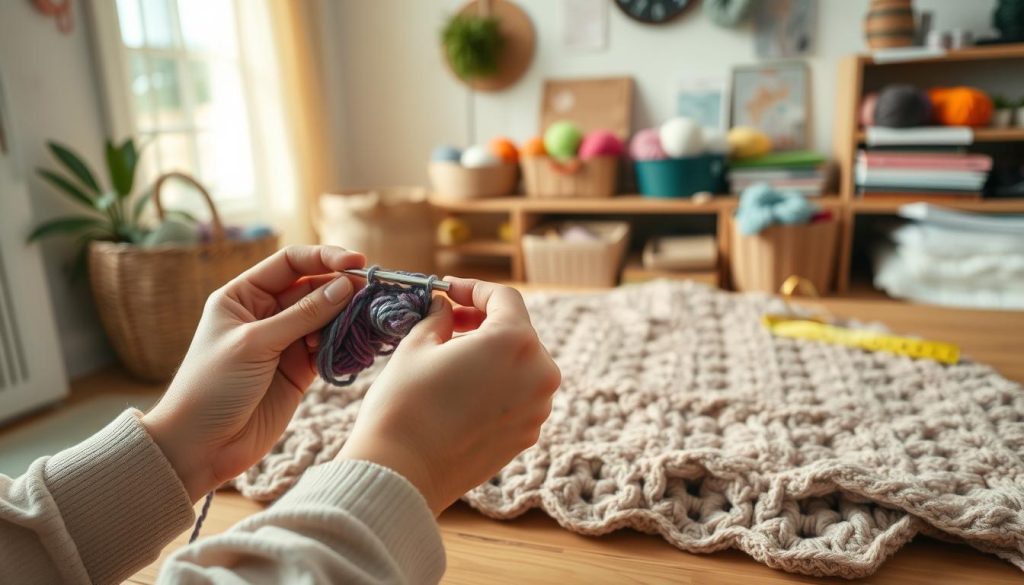
Making a crochet blanket takes time and effort. As you work, you’ll get better at making it cozy. This part will help you keep your stitches even, add new yarn, and track your progress.
Maintaining Even Tension
Even tension makes your blanket look great. You want your stitches to be the same size. Here are some tips to help:
- Hold the yarn comfortably around your fingers
- Keep a relaxed grip on your crochet hook
- Develop a steady rhythmic motion
- Practice consistent yarn wrap technique
Adding New Yarn Seamlessly
When your yarn runs out, you’ll need to add new one. Here’s how to do it right:
- Wait until the end of a row to change yarn
- Leave 6-inch tails from both old and new yarn
- Complete the last stitch with the new yarn color
- Weave in loose ends later for a clean finish
Keeping Track of Your Rows
Tracking your progress keeps you motivated. Here are some ways to do it:
- Use a digital or physical row counter
- Make tick marks on paper after every 5-10 rows
- Follow color section guidelines (like 14 rows per color)
Pro tip: For a baby blanket, aim for about 30 inches in length. A throw blanket is usually around 60 inches.
Incorporating Color
Color makes a simple crochet blanket amazing. Your choices can make it special and show your style. It becomes a unique piece that shows your creativity.
Selecting a Color Palette
Choosing colors for your blanket needs thought. Here are tips for a good color scheme:
- Monochromatic: Pick different shades of one color for a classy look
- Complementary: Match colors that are opposite each other on the color wheel
- Analogous: Use colors next to each other for a smooth look
- Neutral: Go for timeless designs with soft grays, whites, and beiges
Changing Colors Seamlessly
Changing yarn colors can be hard, but it can look great. When you finish a row, drop the old color and add the new one. Pull the new yarn through the last loop for a clean change.
Using Variegated Yarn
Variegated yarn makes your blanket interesting. These yarns change color easily, adding beauty to your work. You can get subtle ombre effects or bright colors, depending on the yarn and your stitches.
Your blanket is like a canvas, and color is your paint. Don’t be shy to try new things and show your creativity!
Adding Borders to Your Blanket
Finishing your cozy afghan crochet pattern is more than just the main body. The border makes your blanket special. It adds structure, stops edges from curling, and gives it a professional look.
Borders turn your crochet project into art. They make it look like it was made by hand. Whether you’re new or experienced, learning border techniques will show off your skills.
Simple Borders for Beginners
Start with these easy border techniques to make your afghan look better:
- Single crochet border around all edges
- Consistent stitch placement for even edges
- Working into row ends to maintain flatness
Advanced Border Techniques
When you get better, try these fancy designs:
- Ribbed borders for textured elegance
- Shell stitch borders for decorative flair
- Picot borders for delicate detailing
Choosing the Right Finishing Style
Pick a border that fits your blanket’s look. Think about these things:
- Blanket’s primary color scheme
- Intended use (decorative or practical)
- Your personal crafting style
Pro tip: The right border makes your blanket look better and stay strong.
Ensuring a Neat Finish
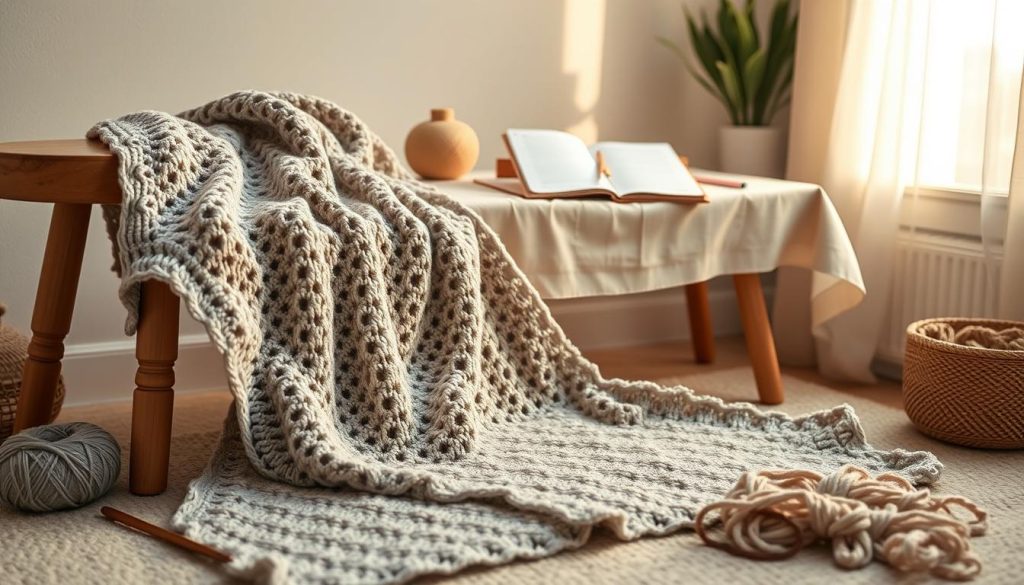
You’ve spent hours making your crochet blanket. Now, it’s time to make it look professional. The last steps are key to making it look amazing.
Weaving in Loose Ends
Loose yarn ends can ruin your blanket’s look. Here’s how to fix them:
- Leave at least 6 inches of yarn tail for secure weaving
- Use a tapestry needle to thread the yarn through the back of stitches
- Weave through 5-6 stitches in one direction
- Reverse and weave back through different stitches
- Aim to weave into same-color stitches for invisibility
- Trim excess yarn close to the fabric
Pro tip: Avoid weaving ends into the blanket’s edge to prevent them from working loose over time.
Blocking Your Crochet Blanket
Blocking is a secret to a professional finish. It shapes your blanket and fixes any unevenness.
- Wet blocking: Soak in cool water, squeeze out excess, pin to measurements, and air dry
- Steam blocking: Pin dry blanket and use steam iron carefully above the surface
- Spray blocking: Pin blanket and mist with water, then allow to dry
Different yarns need different blocking methods. Wool loves wet blocking, while acrylic yarns do well with steam. Blocking makes your blanket look truly handcrafted.
Caring for Your Crochet Blanket
Your crochet blanket is a special piece. It shows your hard work and creativity. To keep it looking great, follow these care tips.
Washing Instructions
First, know what yarn your blanket is made of. Each yarn needs its own washing method:
- Acrylic blankets: Machine wash in cool or warm water
- Wool blends: Gentle hand washing recommended
- Natural fiber blankets: Extra delicate care needed
Washing Recommendations by Fiber Type
| Fiber Type | Washing Method | Drying Recommendation |
|---|---|---|
| Acrylic | Machine wash gentle cycle | Tumble dry low heat |
| Wool Blend | Hand wash cool water | Flat dry away from direct heat |
| Cotton | Machine wash cold | Tumble dry medium heat |
Storing Tips
Storing your blanket right keeps it in good shape. Always store in breathable containers to avoid moisture:
- Use cotton storage bags
- Fold loosely to prevent permanent creasing
- Keep away from direct sunlight
- Add cedar blocks to repel moths
Repairing Damaged Areas
Small flaws don’t mean your blanket is ruined. You can fix it with simple steps:
- Reattach pulled stitches carefully
- Use matching yarn for repairs
- Learn simple darning techniques
- Reinforce wearing edges
With the right care, your crochet blanket will be a family treasure for years.
Showcasing Your Crochet Skills
After you’ve crocheted a beautiful blanket, it’s time to celebrate. You should share your passion with the world. This section will show you how to do that and connect with others who love to craft.
How to Gift Your Blanket
Handmade blankets are special gifts. They show you care and put thought into them. Here are some good times to give your blanket:
- Baby showers (30″x30″ blankets are perfect)
- Wedding celebrations
- Housewarmings
- Comfort gifts for loved ones
To make your gift even more special, try these things:
- Folding it neatly and tying with a ribbon
- Placing it in a decorative basket
- Including a handwritten note about the pattern and yarn
Sharing on Social Media
Take a photo of your blanket in good light. You can also show it draped over furniture or styled in a fun way. Use hashtags like #crochetblanket and #handmadeblanket on Instagram and Pinterest. This way, you can meet other crafters.
Joining Local Crochet Groups
Joining crochet groups can help you grow and find friends. Look for groups at:
- Libraries
- Yarn shops
- Community centers
- Online forums like Ravelry
These groups are great for learning, sharing, and making new friends. You’ll meet people who love to crochet just like you.
Troubleshooting Common Issues
Making a beautiful crochet blanket can be tricky. But, even pros face problems like crooked edges and uneven stitches. These issues are part of learning and can be fixed with patience and practice.
Crooked edges often come from adding or dropping stitches. To avoid this, count your stitches often. Make sure you’re turning correctly and working into each stitch.
Stitch markers can help keep your edges straight. They mark the first and last stitches of each row.
Fixing Crooked Edges
If your edges are crooked, don’t worry. Sometimes, it’s best to start over. Keeping your tension even and paying attention to your stitches will help.
With each project, you get better. Practice makes perfect.
Addressing Uneven Stitches
Uneven stitches usually come from uneven tension. Take breaks and try to keep your yarn grip steady. Remember, small flaws make your item special.
With time, you’ll get better at making stitches even. You’ll find a rhythm that works for you.