
A bare backyard offers plenty of room for personal projects. You do not need a big budget to turn a plain lawn into a comfortable space. With basic tools, inexpensive supplies, and an open weekend afternoon, you can make custom pieces that brighten your patio and garden beds.
Whether you want to repurpose thrift shop finds or build cedar planters from scratch, these 29 creative garden crafts DIY ideas give you plenty of practical ways to update your outdoor space.
1. Painted River Rock Plant Markers

Smooth river stones make clean, durable plant labels for your garden beds. Wash the rocks, let them dry, and write plant names or draw simple vegetable sketches with outdoor acrylic paint pens.
Coat the finished rocks with clear exterior polyurethane spray to protect the paint against rain and sun. These stones help you track your seedlings and add neat accents along your garden rows.
2. Mason Jar Solar Lanterns

Glass canning jars easily convert into functional path lights. Unscrew the jar ring, drop in a standard solar light insert, and wrap jute twine around the neck to hang the jar from a metal shepherd hook.
For more outdoor lighting projects, take a look at our guide on creative solar light crafts to brighten your walkways after dark.
3. Upcycled Tire Herb Planter

Old vehicle tires make sturdy, tiered planters for sunny yard corners. Scrub the rubber, spray on two coats of exterior paint, and arrange the tires in an offset stack.
Line the base with porous landscape fabric, pour in potting soil, and plant hearty herbs like rosemary, oregano, and thyme. The raised rubber walls warm the soil quickly and shed excess rainwater with ease.
4. Self-Watering Wine Bottle Stakes

Glass wine bottles can water your container plants while you travel. Rinse an empty bottle, fill it with clean water, and push the neck straight down into a terracotta watering cone in your planter.
The clay pulls water downward into the soil as the dirt dries. This steady moisture keeps sensitive annuals healthy during hot dry spells.
5. Beaded Suncatcher Wind Chimes
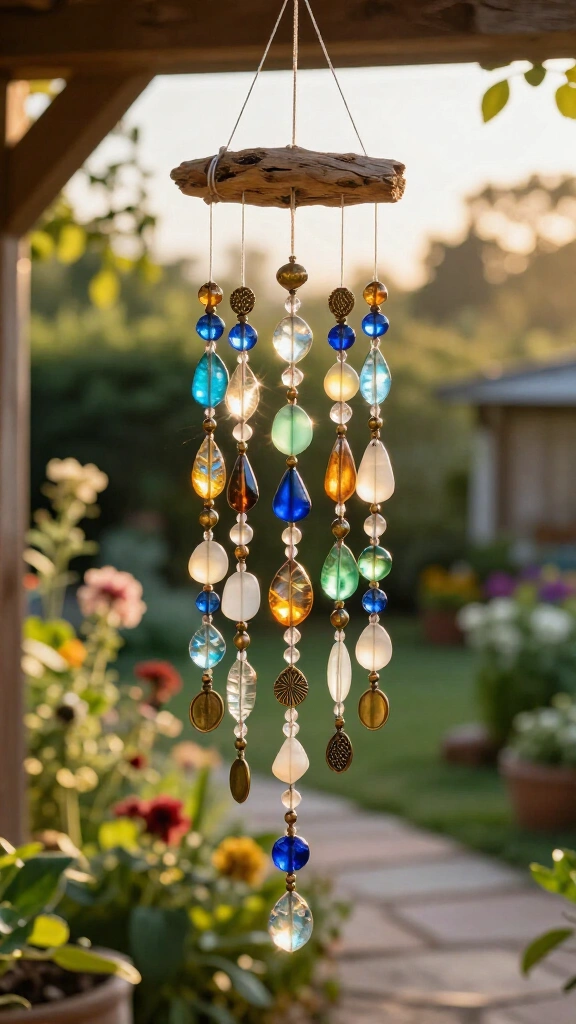
You can build an outdoor suncatcher with a piece of driftwood and scrap glass beads. String colored beads, small charms, and brass washers onto thick monofilament line, then tie each strand across the wood branch.
Suspend the chime from a patio rafter or porch beam. The glass catches the afternoon sun, while the metal washers produce a soft chime in light breezes.
6. Vintage Teacup Bird Feeders
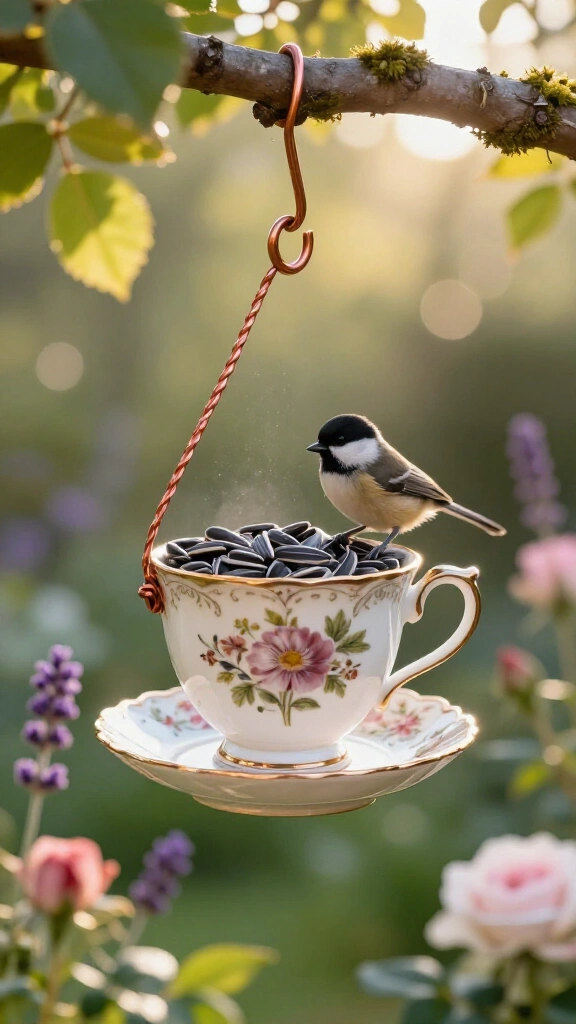
Mismatched ceramic cups make great compact bird feeders. Glue a teacup to its saucer using waterproof silicone or marine adhesive, then secure copper wire around the handle for hanging.
Fill the cup and rim with black oil sunflower seeds to feed local chickadees, finches, and nuthatches. The National Audubon Society notes that steady seed stations help resident songbirds maintain energy through changing seasons.
7. Mosaic Stepping Stones
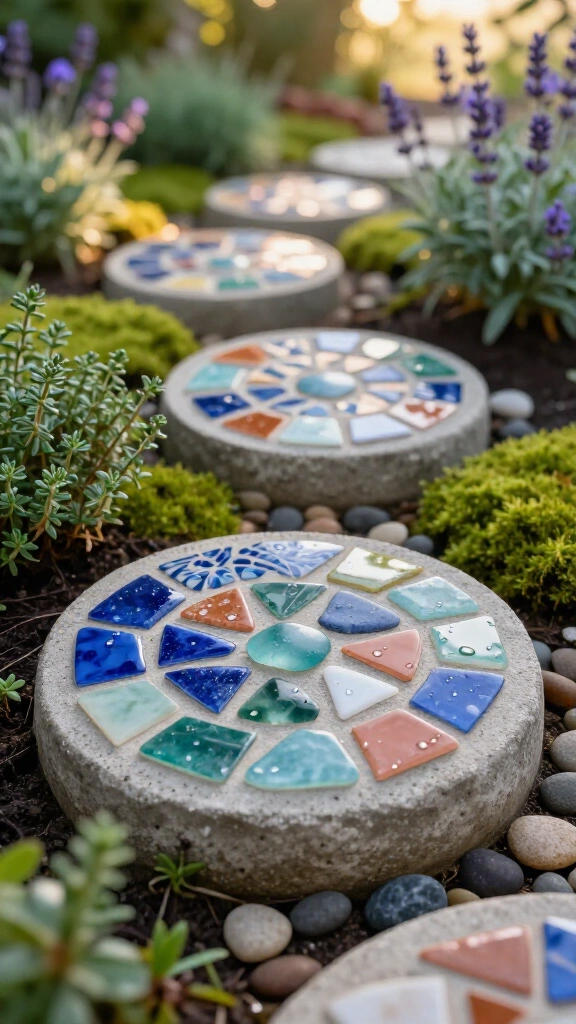
Broken plates, tumbled sea glass, and quick-setting concrete make durable stepping stones for garden paths. Mix concrete in a round plastic tray or cake pan, then set your ceramic shards into the surface in geometric layouts.
Wipe wet cement off the glass edges with a damp sponge before the mix sets. The hardened blocks hold up well against daily foot traffic and wet weather.
8. Vertical Pallet Herb Wall

A heat-treated wooden pallet provides instant vertical planting space on small patios. Staple heavy landscape fabric behind the front slats and along the base to create distinct planting shelves.
Fill each slot with potting soil and plant strawberries, parsley, and small salad greens. Mount the pallet to an exterior wall or fence next to your outdoor cooking area for quick access to fresh herbs.
9. Topsy-Turvy Terracotta Pot Tower

You can build an angled flower tower with five terracotta planters and a length of steel rebar. Drive the metal rod two feet into firm ground, drop the base pot over the stake, and thread the remaining pots through their center drainage holes at alternating angles.
Pack potting soil into every pot and plant trailing annuals like verbena and sweet alyssum. As the foliage grows, the leaves cover the support rod and create a solid column of flowers.
10. Rustic Wooden Crate Plant Shelves

Old wooden fruit crates provide modular display shelving for potted plants. Sand the rough slats and apply exterior deck stain to seal the grain against moisture and mildew.
Fasten the crates together with outdoor wood screws along an empty fence line. This setup creates multi-level storage that organizes small pots and keeps plants off the damp ground.
11. Tin Can Hanging Lanterns
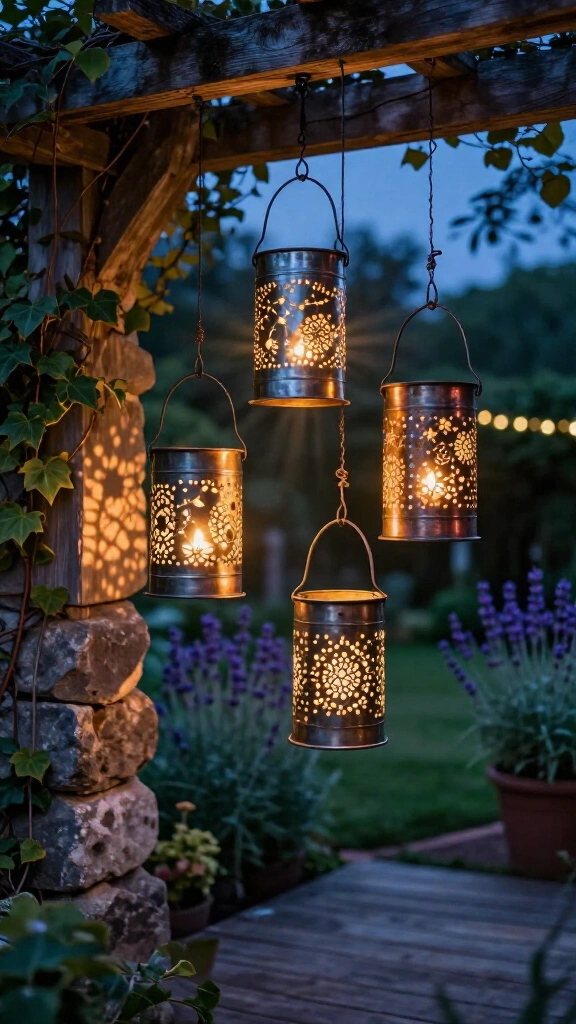
Empty soup cans make durable metal candleholders with simple household tools. Fill washed cans with water and freeze them solid so the metal walls resist bending while you work.
Punch patterns through the tin with a hammer and nail, attach a wire handle, and place a votive candle inside. The flame shines through the pierced holes to project patterns onto nearby walls.
12. Painted Clay Pot Garden Critters
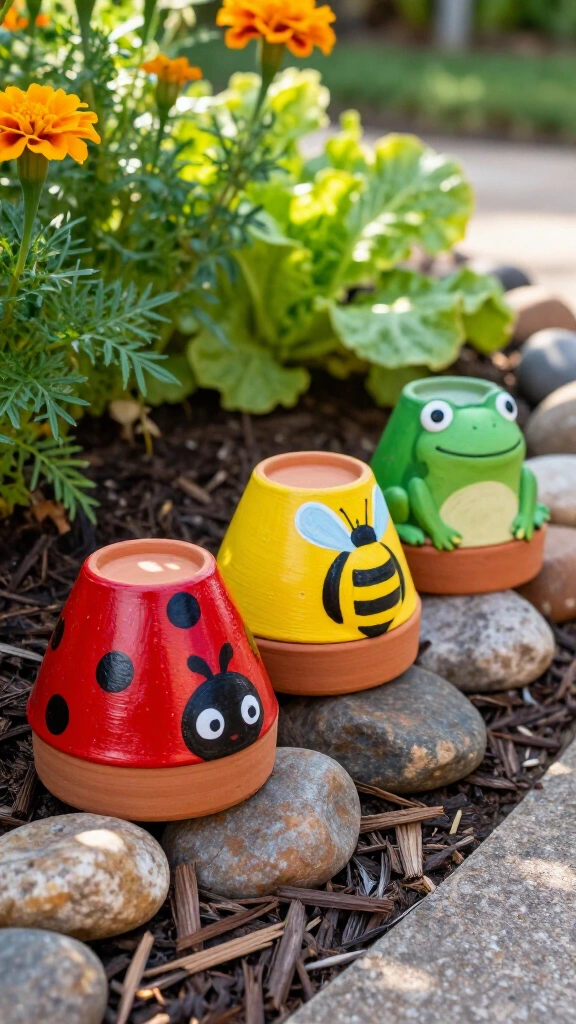
Small terracotta pots make fun craft bases for kids. Paint the inverted clay pots to look like ladybugs, bumblebees, and green frogs using multi-surface acrylic paint.
Read our full collection of fun garden crafts for preschool for more simple projects designed for young hands. Set the painted pots along border edges or beside raised beds.
13. Natural Birch Branch Garden Trellis

Fallen birch or willow branches make sturdy climbing frames for pole beans, morning glories, and sweet peas. Collect straight limbs, lash them into a teepee or ladder shape with jute twine, and push the base ends firmly into the ground.
The rough bark gives tendrils plenty of traction to climb, providing strong natural support throughout the growing season.
14. Flattened Vintage Spoon Plant Markers

Secondhand metal spoons make permanent plant markers that will not rot in wet soil. Flatten the spoon bowls on an anvil or hard wood block using a heavy mallet, then stamp herb names into the metal with alphabet punch tools.
Push the spoon handles into the soil next to your garden rows. The stamped metal will not wash away or fade under direct sunlight.
15. Repurposed Colander Hanging Baskets

Metal kitchen colanders work well as hanging baskets because they already include drainage holes. Spray an enamel colander with outdoor metal paint, clip three lightweight chains to the rim, and add potting soil.
The perforated metal drains excess water instantly, keeping root rot away from trailing petunias, creeping thyme, and calibrachoa.
16. Upcycled Chandelier Planter
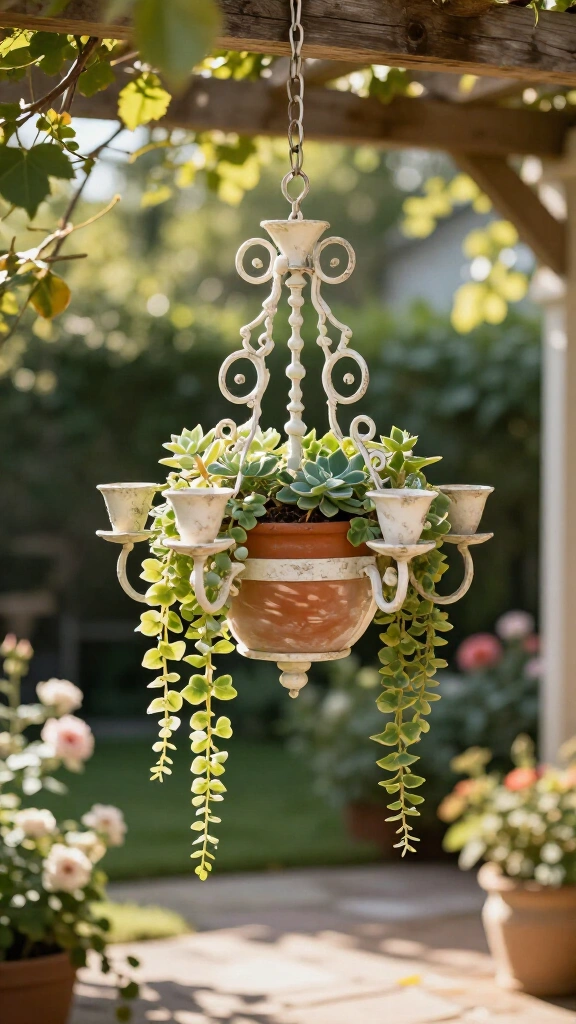
You can convert an old metal chandelier into a hanging plant display. Pull out the electrical cords, glue small terracotta pots to each light cup with construction adhesive, and spray the whole frame with satin outdoor paint.
Suspend the fixture from an overhead beam or strong branch, then fill each pot with trailing ivy, sedum, or string of pearls.
17. Broken Pot Fairy Garden
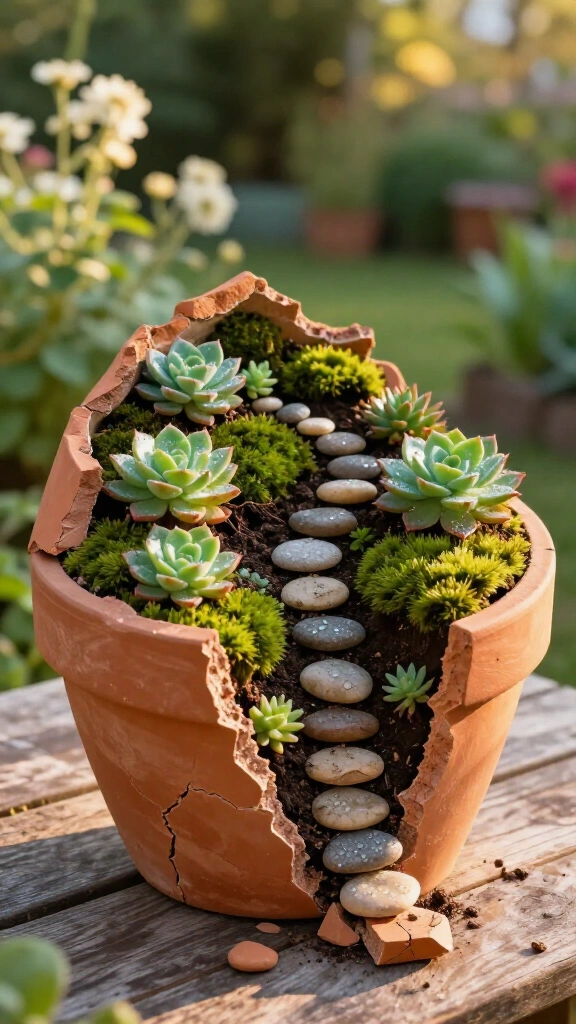
Cracked terracotta pots still have plenty of uses. Arrange the broken shards inside the main container to form tiered soil steps and miniature planting ledges.
Tuck small succulents, moss, and small stone steps into the exposed pockets. This setup turns broken pottery into a compact, tiered container garden.
18. Cement Cast Rhubarb Leaf Stepping Stones

Large foliage like rhubarb or hosta leaves can create detailed concrete garden stones. Form a rounded mound of wet sand, place the leaf top-down on the sand, and pack a two-inch layer of concrete over the ribbed underside.
Let the mixture cure for two days before peeling off the leaf to reveal the vein impressions. Coat the concrete with clear masonry sealer to protect the details from freeze-thaw cycles.
19. Colorful Bottle Cap Flower Art

Metal bottle caps make sturdy decorative flowers for spots where real plants struggle to grow. Flatten the caps with a mallet and fasten them in concentric circles onto circular plywood cutouts with small screws.
Attach the wooden backs to copper pipes or wood dowels, then push them into deep garden shade to add color beneath dense tree canopies.
20. Salvaged Wooden Ladder Plant Stand

An old wooden step ladder provides tiered shelf space for container plants. Scrub the rungs, coat the wood with outdoor sealer, and place wide cedar boards across the steps to create deeper display surfaces.
Arrange potted geraniums, herbs, and watering cans across the tiers. The staggered design lets sunlight reach every shelf without blocking lower plants.
21. Modern DIY Concrete Planters
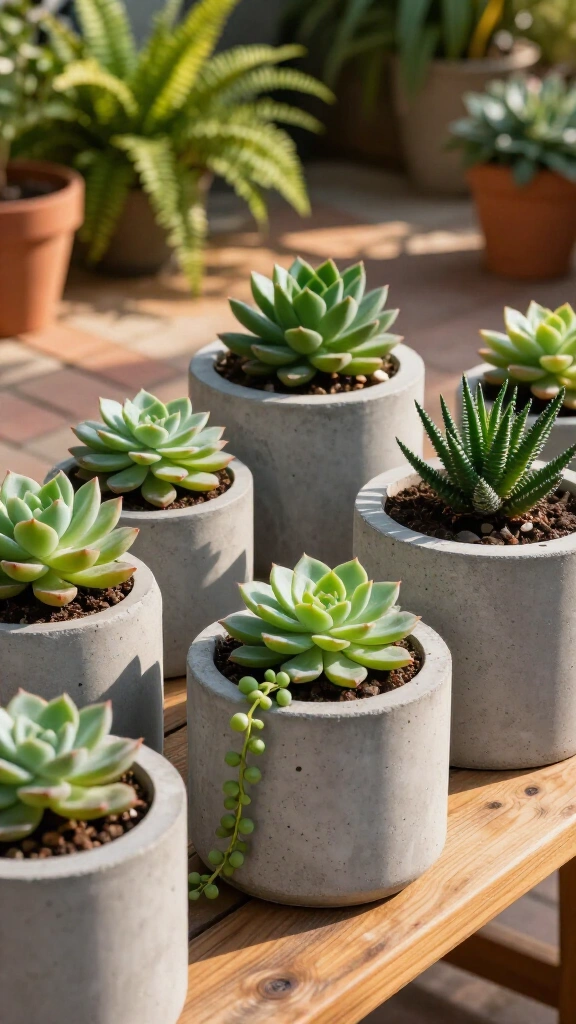
Recycled plastic tubs and milk cartons work well as concrete molds. Spray the inside of the outer mold with cooking oil, pour in quick-dry concrete mix, and press a smaller container into the center to create the planting hole.
Drill a drainage hole through the bottom after the mix cures, then sand the top rim. Concrete planters insulate plant roots well against fast temperature swings.
22. Glass Wine Bottle Garden Border
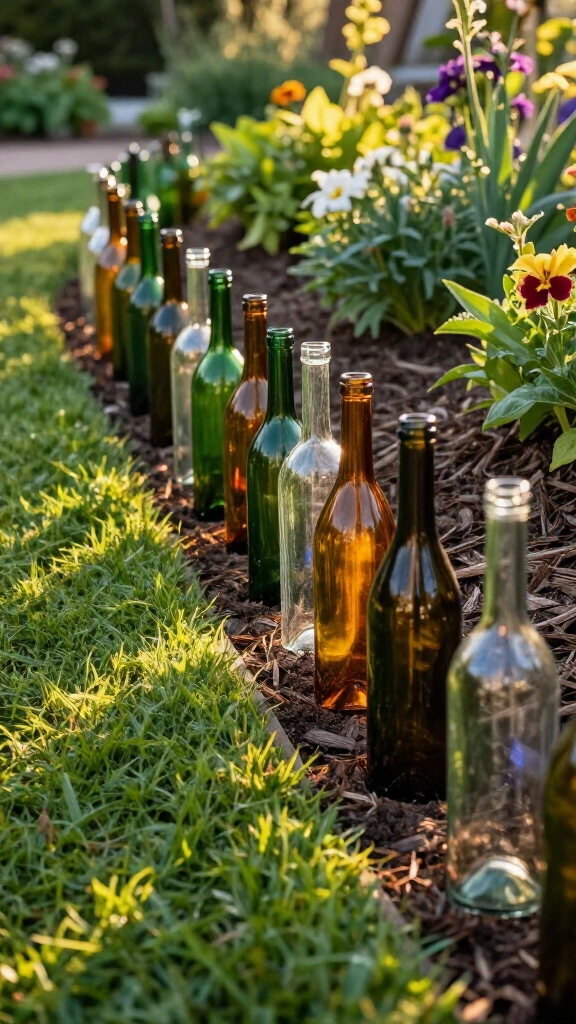
Recycled glass bottles create clean edges along garden beds and walkways. Dig a narrow trench six inches deep, set empty wine bottles upside down with their necks in the soil, and pack dirt firmly around them.
Mix green, brown, and clear glass along the border line. The glass wall holds mulch inside the beds and stops turf grass from creeping into your soil.
23. Copper Wire and Terracotta Rain Chain
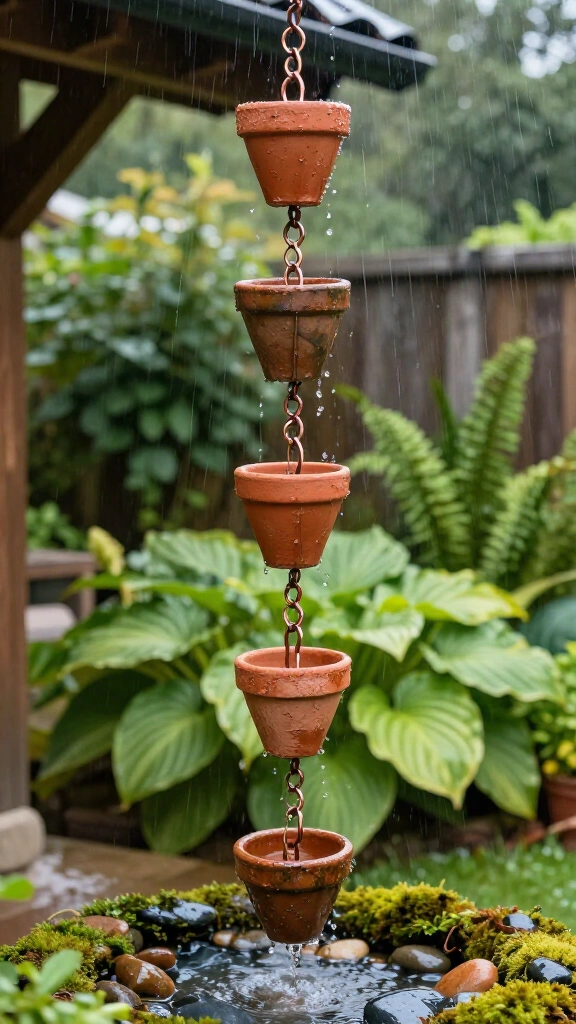
You can replace standard metal downspouts with a handmade terracotta rain chain. Connect small clay pots in a vertical line using heavy-gauge copper wire, then hook the top wire under your gutter outlet.
Rainwater channels from pot to pot during downpours, directing runoff straight into a collection barrel or stone drainage basin below.
24. Natural Hollow Log Planter
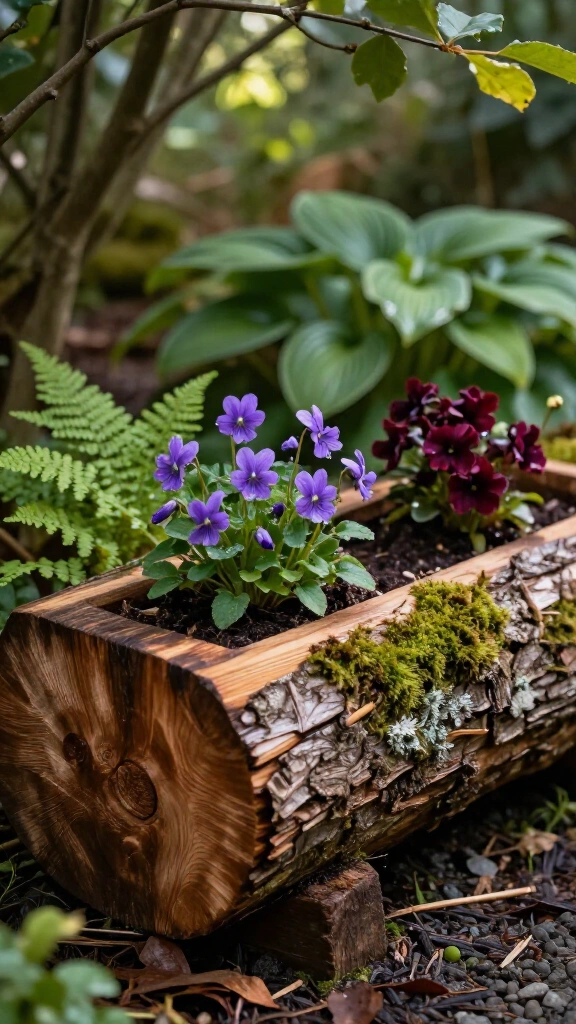
Fallen hardwood logs make rustic planter troughs for shady spots. Hollow out a channel five inches deep along the top with a wood chisel, drill several drainage holes through the bottom, and add a thin gravel base.
Fill the hollow with rich soil and plant wild violets, ferns, or coral bells. The log breaks down slowly over time and returns organic nutrients to the ground.
25. Geometric Copper Pipe Plant Trellis

Plumbing supplies like half-inch copper pipes and corner fittings can form a geometric trellis. Cut the tubing to uniform lengths and join the pieces into diamond or ladder patterns using strong metal epoxy.
Copper handles moisture without rusting and gradually oxidizes to a muted green color. The Copper Development Association provides guides on joining copper pipe for long-term outdoor use.
26. Painted Decorative Garden Hose Reel
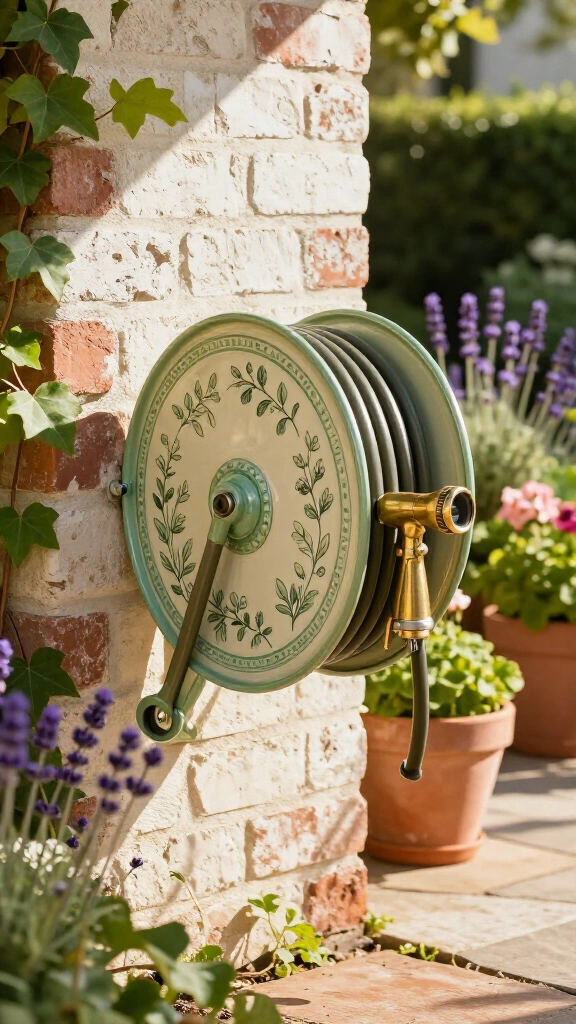
You can turn a plain metal hose reel into an attractive wall feature. Unbolt the holder, sand off rust or peeling paint, and apply outdoor enamel paint in clean floral patterns or simple geometric bands.
This quick paint job keeps the metal protected against corrosion while giving your wall a neat accent.
27. Coastal Driftwood Wind Mobile
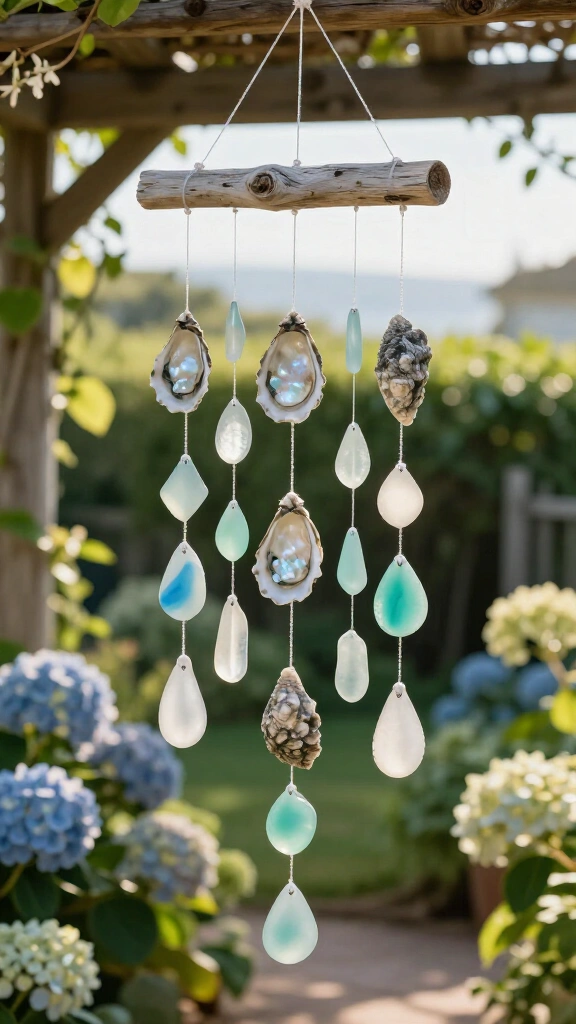
Driftwood, oyster shells, and sea glass can combine into an outdoor wind mobile. Drill small holes through each item and tie them along lengths of durable nylon line attached to a sturdy main branch.
Hang the mobile under a porch roof or arbor. When the wind picks up, the shells and glass click together quietly.
28. Whimsical Upcycled Boot Succulent Planters
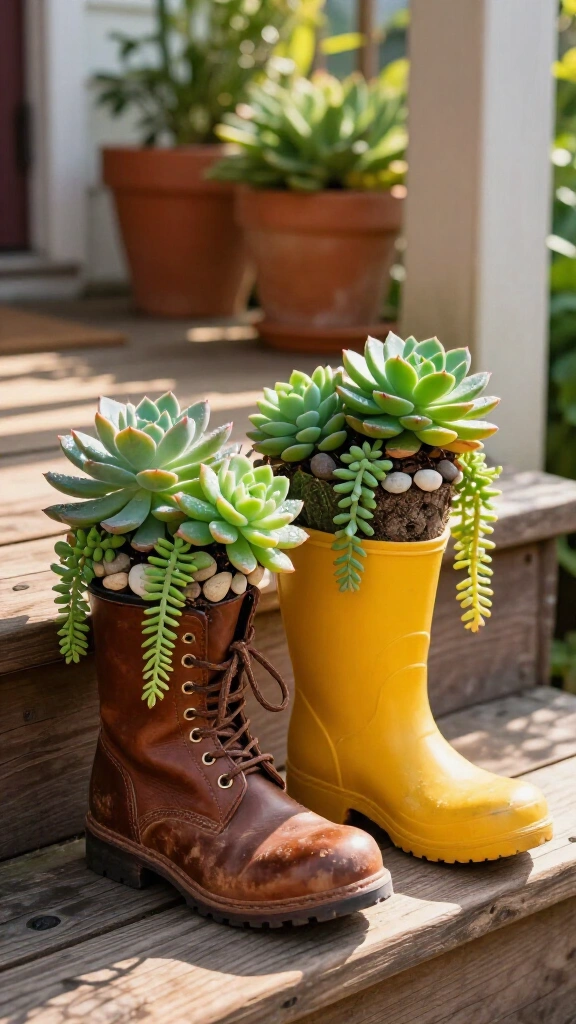
Old rubber rain boots or leather work boots make fun containers for drought-tolerant plants. Punch drainage holes through the soles, place an inch of gravel inside the foot, and fill the boot shaft with cactus potting mix.
Plant hens-and-chicks or sedums near the top opening. Group two or three boots together on your porch steps for an easy decorative display.
29. Pallet Outdoor Party & Drink Station
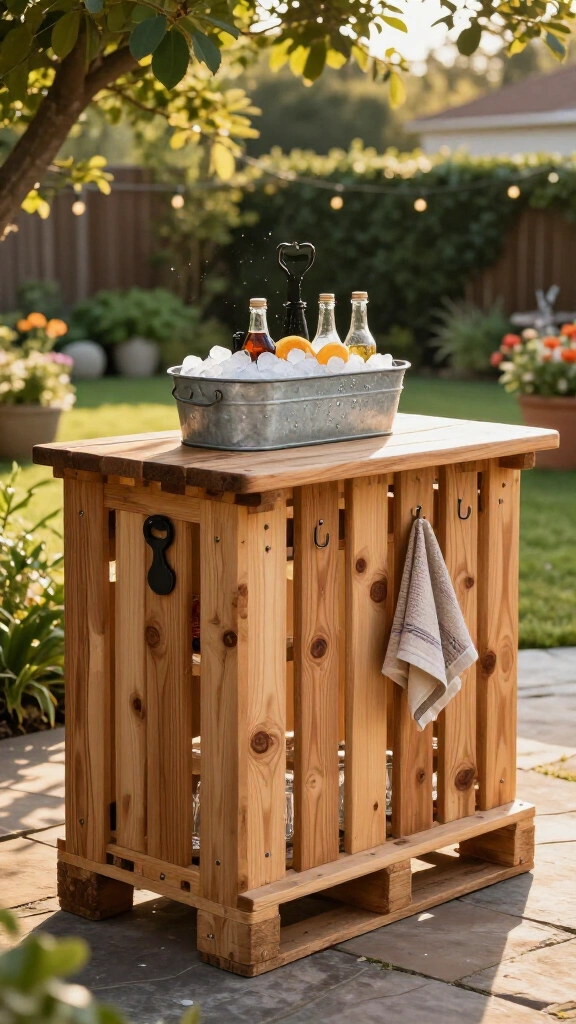
Two shipping pallets fastened together vertically can form a solid outdoor serving bar. Bolt the pallets together, secure a pine board across the top as a counter, and attach hooks for bottle openers and towels.
You can cut a slot in the top shelf to hold a galvanized tub for ice and drinks. Pair this drink station with our ideas for 4th of July outdoor decorations when preparing for summer gatherings.
Tips for Weatherproofing Your DIY Garden Crafts
- Choose Exterior-Grade Finishes: Always coat painted wood and terracotta with UV-resistant, clear outdoor polyurethane or spar urethane.
- Ensure Proper Drainage: Drill drainage holes in every handmade planter to prevent standing water and root rot.
- Use Rust-Resistant Fasteners: Pick stainless steel or galvanized deck screws and copper wire so your creations withstand seasonal rain and snow.
Bring Your Garden Projects to Life
You do not need expensive materials or professional contractors to improve your outdoor living area. By repurposing household scrap and using natural timber and stone, you can build practical, attractive projects on your own schedule.
Pick one or two of these projects for your next free afternoon, gather your supplies, and start building.