
Ever thought a simple hook and yarn could make beautiful things? Welcome to your ultimate crochet DIY tutorial for beginners! It’s here to help you unlock your creativity.
Crocheting is more than a craft. It’s a journey of imagination and skill. This guide will teach you everything from basic techniques to making amazing projects. You’ll impress your friends and family with your creations.
Do you want to make cozy blankets, stylish accessories, or cute home decor? This tutorial will show you how. With patience and the right help, anyone can become a skilled crocheter.
Ready to turn simple yarn into amazing things? Your crochet adventure begins here, now!
Key Takeaways
- Crocheting is an accessible craft for everyone
- You can start your crochet journey with minimal investment
- Basic techniques are easy to learn with the right guidance
- Crochet offers endless creative possibilities
- Practice and patience are your best tools for success
Understanding the Basics of Crochet
Starting with crochet is fun for beginners. It’s a creative and rewarding craft. A step-by-step guide helps you learn the basics. You’ll go from curious to confident crocheter.
What is Crochet?
Crochet is a craft that makes yarn into fabric with a hook. It’s simpler than knitting because you only need one hook. You can make blankets and lace with it.
Essential Crochet Terms
Learning crochet means knowing its special words. Here are some important ones:
- Ch – Chain stitch
- Sl St – Slip stitch
- Sc – Single crochet
- HDC – Half double crochet
- DC – Double crochet
- TR – Treble crochet
- YO – Yarn over
Understanding Yarn Types
Choosing the right yarn is key for your projects. Yarns vary in weight and material. Each has its own special qualities:
| Yarn Weight | Best For | Recommended for Beginners |
|---|---|---|
| Category 3 (DK) | Light garments | ✓ |
| Category 4 (Worsted) | Blankets, accessories | ✓ |
Yarn can be natural (like wool or cotton) or synthetic (like acrylic). For beginners, pick a medium-weight yarn in a light color. It makes your stitches easy to see.
Tools You Need to Get Started
Starting your crochet journey needs some basic tools. These tools help you make beautiful projects. They bring your ideas to life.
Choosing the Right Hooks
Finding the right crochet hook is key. Hooks come in different materials and sizes. They help you craft better.
- Material options include aluminum, plastic, bamboo, wood, and steel
- Size recommendations depend on your yarn weight
- Ergonomic designs reduce hand strain during long crafting sessions
Must-Have Accessories for Crocheters
Every crocheter needs these basic tools:
| Accessory | Purpose | Recommended Type |
|---|---|---|
| Scissors | Cutting yarn | Sharp fabric scissors |
| Tapestry Needle | Weaving in ends | Blunt-tipped yarn needle |
| Stitch Markers | Tracking pattern progress | Locking removable markers |
| Measuring Tape | Checking project dimensions | Flexible fabric tape measure |
Organizing Your Crochet Space
Make your crafting area efficient with these tips:
- Choose a well-lit, comfortable workspace
- Use a dedicated storage basket or project bag
- Keep tools within easy reach
- Organize yarns by color or project
You don’t have to spend a lot to start. Many stores have starter kits for beginners. Your passion and creativity are the most important tools.
Selecting the Perfect Yarn
Starting a DIY yarn craft means picking the right yarn. The yarn you choose can change everything. It affects the texture and how long it lasts. Knowing about yarn helps make beautiful crochet pieces.
Yarn Weight and Project Impact
Yarn weight changes how your project looks and feels. It’s important for crocheters to know the different weights:
- Lace (0): Thin yarns for light projects
- Fingering (1): Good for delicate items
- Sport (2): Great for baby clothes and light sweaters
- DK (3): Versatile for beginners
- Worsted (4): Popular for blankets and scarves
- Bulky (5): Fast to make, perfect for winter
- Super Bulky (6): Makes thick, warm items quickly
Color Theory for Crafters
Choosing colors can change your DIY yarn crafts. Start with simple colors to see your stitches well. Then, try:
- Complementary colors
- Ombre and gradient effects
- Monochromatic colors
Organic vs. Synthetic Yarns
What yarn you pick depends on your project. Natural fibers have special qualities. Synthetic yarns are cheaper and easy to care for.
| Natural Yarns | Synthetic Yarns |
|---|---|
| Wool | Acrylic |
| Cotton | Polyester |
| Bamboo | Nylon |
Pro tip: Always buy an extra skein to ensure you have enough yarn for your entire project!
Essential Crochet Stitches for Beginners
Learning basic crochet stitches is the first step to making beautiful things. This guide will show you the key techniques for starting your crochet journey.
Chain Stitch: Your Crochet Foundation
The chain stitch is the base of all crochet projects. It’s like a blueprint for your work. Here’s how to make a chain stitch:
- Start with a slip knot on your hook
- Wrap the yarn over the hook
- Pull the yarn through the existing loop
- Repeat until you reach the desired chain length
Single and Double Crochet: Building Your Skills
Single crochet makes a tight fabric. It’s the simplest stitch. Here’s how to do it:
- Insert hook into the second chain from the hook
- Yarn over and pull up a loop
- Yarn over again and pull through both loops
Double crochet is taller and works up faster. It’s similar to single crochet but with an extra step:
- Yarn over before inserting the hook
- Insert hook into the stitch
- Yarn over and pull up a loop
- Yarn over and pull through two loops twice
Slip Stitch: The Subtle Connector
A slip stitch is great for joining rounds or moving across stitches. Just insert your hook, yarn over, and pull through both the stitch and the loop in one smooth motion.
With these basic stitches, you’re set to start your crochet journey. Remember, practice makes perfect. Don’t be afraid to try new things and get better!
Reading Crochet Patterns
Learning to read crochet patterns is like learning a new language. It’s okay if it seems hard at first. With practice, you’ll get better at understanding these patterns.
Decoding Symbols and Diagrams
Crochet patterns can be written or shown in diagrams. Each type has its own way of showing you how to make things. Knowing how to read these is key to getting good at crochet.
- Written patterns use standard abbreviations like:
- Ch – Chain stitch
- Sc – Single crochet
- Dc – Double crochet
- Sl st – Slip stitch
- Symbol diagrams provide visual representations of stitches
- Learn to recognize common symbols for different stitches
Understanding Gauge
Gauge is important for making things the right size. It tells you how many stitches and rows fit in a 4-inch square. Pro tip: Always make a gauge swatch first. This way, your project will be the right size.
Tips for Following Patterns Successfully
Getting good at crochet patterns takes time. Here are some tips to help you:
- Print out your pattern and mark completed rows
- Maintain consistent tension throughout your work
- Count stitches at the end of each row
- Remember: the loop on your hook never counts as a stitch
As you get better at reading crochet patterns, you’ll open up a world of possibilities. Every pattern you learn makes you more confident and skilled. You’ll go from being a beginner to a skilled crocheter.
First Project: Simple Crochet Scarf
Ready to make something beautiful with crochet? Your first scarf is a big step. It’s a chance to learn and make something you can wear or give away.
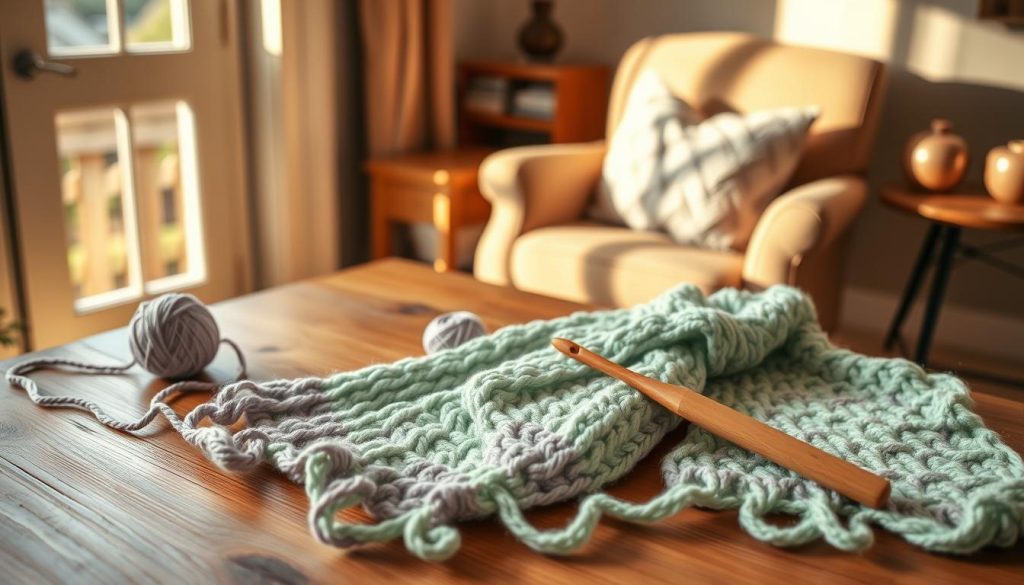
Materials You’ll Need
Here’s what you need for your first project:
- Worsted weight yarn (300-400 yards)
- 5.5mm crochet hook
- Scissors
- Tapestry needle
Step-by-Step Scarf Instructions
- Create a slip knot
- Chain 30 stitches for a 6-inch wide scarf
- Single crochet in the second chain from the hook
- Continue single crocheting across the first row
- Chain 1 and turn your work
- Repeat single crochet rows until scarf reaches 60-70 inches
Avoiding Common Mistakes
| Mistake | Solution |
|---|---|
| Uneven edges | Count stitches carefully in each row |
| Tight tension | Keep stitches relaxed for better drape |
| Losing stitch count | Use stitch markers to track progress |
Don’t worry if it’s not perfect at first. Every stitch is a learning opportunity. Your handmade scarf will be unique and special!
Expanding Your Skill Set: Advanced Stitches
Ready to make your crochet projects amazing? Advanced stitches can do that. Learning new stitches opens up a world of creativity.
Treble Crochet for Texture
Treble crochet (TR) makes fabrics light and airy. It’s quick to make and adds height. Here’s how to do it:
- Yarn over twice before inserting your hook
- Pull up a loop
- Yarn over and pull through two loops multiple times
Shells and Fans: Decorative Stitches
Make your crochet stand out with shells and fans. They add beautiful edges and textures. A basic shell is:
- Working 5-7 double crochets into one stitch
- Creating a fan-like shape
- Separating shells with single crochet stitches
Mastering Cables and Textures
Crochet cables add depth to your work. Front post and back post stitches make patterns like knitted cables. Try these techniques:
- Bobble stitches
- Popcorn stitches
- Puff stitches
Start with practice swatches before using these stitches in big projects. It takes time to get the hang of it. Don’t worry if it’s hard at first!
Joining Yarn and Changing Colors
Learning how to join yarn and change colors is key in crochet. As you get better, you’ll do projects that need smooth transitions and look great.
Techniques for a Seamless Join
When you run out of yarn, use these methods to join:
- Drop the old yarn and finish the last stitch with the new yarn
- Hold both yarn tails together and crochet over them for a few stitches
- Make sure not to create knots that can make your work bumpy
Changing Colors Without Knots
Changing colors can be smooth and pretty with these tips:
- Work the last stitch of the old color until you reach the final yarn over
- Finish the stitch with the new color
- For stripes, carry unused colors along the side of your work
How to Hide Your Ends
It’s important to hide yarn ends well for a nice project. Use these methods:
| Technique | Description |
|---|---|
| Weaving Method | Thread yarn tail on tapestry needle and weave through back of stitches |
| Secure Technique | Split yarn tail and weave in different directions for extra stability |
| Optional Reinforcement | Add small dot of fabric glue for items that will be frequently washed |
Practice these techniques to make your crochet projects look professional every time.
Troubleshooting Common Crochet Problems
Every crocheter faces challenges. Learning how to fix them makes you better. Knowing how to solve common problems boosts your confidence and creativity.

Loops and Tension Issues
Tension problems can ruin your crochet. Uneven stitches make your work look bad or feel wrong. Here’s how to fix tension:
- Practice holding your yarn the same way
- Try different hand positions
- Use tension regulators if needed
Fixing Mistakes: Unraveling & Repairing
Mistakes are common in crochet. The method called frogging helps fix errors. To frog your work:
- Remove your hook from the working loop
- Gently pull the yarn to unravel stitches
- Reinsert the hook and continue correctly
When to Start Over
Starting over is sometimes the best choice. You should restart if:
| Issue | Recommendation |
|---|---|
| Foundational errors | Always restart |
| Significant structural problems | Restart recommended |
| Minor imperfections | Optional restart |
Every mistake is a chance to learn and get better. Stay patient and enjoy the journey!
Finishing Techniques for a Professional Look
Turning your crochet into a pro piece needs special finishing steps. Your guide’s last part is all about details. These steps will make your crafts look polished and stunning.
The Importance of Blocking
Blocking changes your crochet fabric’s shape. It makes your work look even and pro. There are different ways to block, depending on the yarn:
- Wet blocking: Great for wool and cotton
- Steam blocking: Best for synthetic yarns with care
- Spray blocking: Soft for delicate projects
Adding Borders and Edgings
Borders can make a simple project amazing. Your guide suggests trying different edges:
- Single crochet borders
- Picot edges
- Shell borders
- Crab stitch
Weaving in Ends Properly
Securing yarn ends is key for a pro finish. Here’s how to do it right:
- Leave a 6-inch tail when fastening off
- Use a tapestry needle to weave through back loops
- Change weaving direction for extra security
- Trim ends close to the fabric
Being patient and practicing will help you get better. Every project will look more pro than the last.
Sharing Your Creations
Crochet is more than just a craft. It’s a journey of creativity and connection. As you make beginner crochet projects, you’ll find fun ways to share your passion.
Gift Ideas for Your Handmade Items
Your beginner crochet projects can be special gifts. They show you care and are skilled. Think about making items that are both useful and personal:
- Cozy scarves for friends and family
- Soft baby blankets for new parents
- Stylish coffee cozies
- Cute amigurumi stuffed toys
- Functional kitchen accessories like pot holders
Joining Crochet Communities and Groups
Meeting other crafters can make your crochet better. Online places are great for sharing, learning, and growing:
| Community Platform | Benefits |
|---|---|
| Ravelry Forums | Pattern sharing and technical advice |
| Instagram Crochet Groups | Visual inspiration and project showcase |
| Facebook Craft Groups | Supportive learning environment |
| Local Yarn Shops | In-person workshops and meetups |
Documenting Your Crochet Journey
Keeping track of your progress helps you get better. Start a crochet journal to write about your journey. Take photos of your work, note what you learned, and celebrate your achievements.
Continuing Your Crochet Education
Your crochet journey is just starting. It’s full of exciting adventures. Learning more will help you get better and try new things.
Online resources have changed how we learn. Crochet video tutorials let you learn at your own speed. YouTube has channels like TL Yarn Crafts and Bella Coco for all skill levels.
Digital and print resources give you lots of ideas. Sites like Ravelry and Craftsy have many tutorials and patterns. Books by experts like Edie Eckman also help a lot.
Don’t forget about your local community. Yarn shops, community centers, and craft groups have workshops. They’re great for learning, sharing, and making friends.
Every stitch you make makes you better. See each challenge as a chance to grow and be creative.