
Ever thought of making a cozy blanket from yarn? It’s easy and fun. Learning to crochet a blanket is rewarding and simple.
Starting with your first blanket is exciting. It’s more than just a warm blanket. It’s a way to connect with crafters through the ages. This guide will help you learn step by step.
Want to make a special gift or decorate your home? This guide will show you how. You’ll pick the right yarn, learn basic stitches, and make a blanket that’s all you.
Key Takeaways
- Crocheting a blanket is achievable for complete beginners
- Basic stitches can be learned with practice and patience
- You’ll create a functional and personal handmade item
- The process is relaxing and can become a enjoyable hobby
- Each blanket you make will improve your skills
What You’ll Need to Get Started
Starting your first crochet blanket is easy. You just need some basic supplies. This guide will show you how to get ready for a beautiful blanket.
Essential Tools for Crocheting
Every crochet project needs the right tools. Here’s what you’ll need:
- Sharp fabric scissors
- Tapestry needle for weaving ends
- Stitch markers
- Digital row counter (optional but helpful)
Choosing the Right Yarn
Choosing yarn can be hard, but focus on a few things. Look for yarns that are:
- Affordable
- Easy to care for
- Machine washable
Here are some good yarns for beginners:
- Hobby Lobby’s I Love This Yarn (Medium #4)
- Lion Brand Wool Ease Thick & Quick (Super Bulky #6)
- Paintbox Yarns Simply Chunky (Bulky #5)
Recommended Crochet Hooks
Your hook size depends on your yarn. For blankets, beginners often use:
- Size H/8 (5mm) for medium weight yarn
- Size L/11 (8mm) for chunky yarn
Remember, always check your yarn label. This helps your stitches look good as you learn.
Understanding Basic Crochet Stitches
Learning basic crochet stitches is key to making a lovely blanket. These skills are the base of your blanket-making journey. Whether you’re new or need a refresher, these stitches will help you succeed.
The Chain Stitch: Your Starting Point
The chain stitch is the first step in crocheting. It’s like the main part of your blanket. To make a chain stitch:
- Make a slip knot on your hook
- Wrap the yarn over the hook
- Pull the new loop through the existing loop
- Repeat until you reach the desired chain length
Single Crochet: Creating a Dense Fabric
Single crochet makes a tight, warm blanket. It creates a solid fabric perfect for cozy throws. Here’s how to do a single crochet:
- Insert your hook into the second chain from the hook
- Wrap the yarn over the hook
- Draw the hook through the first loop
- Yarn over again
- Pull through both loops on the hook
Double Crochet: A Faster Blanket Technique
Double crochet is quicker and makes a more open fabric. It’s great for those who want to finish projects fast. To perform a double crochet:
- Yarn over before inserting the hook
- Insert hook into the fourth chain from the hook
- Yarn over and pull up a loop
- Yarn over and pull through two loops
- Yarn over and pull through the remaining two loops
Practice these stitches, and you’ll make beautiful blankets with ease.
Selecting Your Blanket Size
Choosing the right size is key for easy crochet blanket patterns. The size depends on how you’ll use it and where you’ll place it.
- Baby Blanket: 30″ x 30″ – Great for strollers and cribs
- Lap Blanket: 36″ x 48″ – Good for wheelchair users or cozy reading
- Throw Blanket: 50″ x 60″ – Most loved by beginners and for living rooms
- Afghan: 50″ x 65″ – Classic size for living rooms
Measuring for Your Perfect Blanket
To make a custom blanket, knowing how to measure is important. The starting chain sets the width, and rows set the length. First, decide where you’ll use the blanket and measure that area.
Tip for beginners: Check your work by laying it flat. This ensures you’re making the size you want without surprises.
Sizing Considerations for New Crocheters
Beginners should start with smaller projects like baby or throw blankets. These sizes are easy and help you get better at crocheting without feeling too stressed.
Remember, the more you crochet, the better you’ll get. Each project will help you improve your skills and understand size and proportion better.
The Importance of Gauge
Learning about gauge is key in your crochet blanket guide. It might seem hard, but it’s really simple. It can make or break your project.
Gauge makes sure your blanket is comfy and even. It’s like a guide for your crochet path.
What is Gauge in Crocheting?
Gauge is about counting stitches and rows in a 4-inch square. Your style, yarn, and hook size change your gauge.
- Yarn weight affects stitch size
- Hook size influences stitch density
- Personal tension creates unique variations
How to Check Your Gauge
Make a gauge swatch to know your style. Here’s how to check your gauge:
- Choose your yarn and hook
- Make a sample swatch at least 6 inches wide
- Crochet 5-6 rows
- Lay the swatch flat without stretching
- Measure stitches across 4 inches
Pro tip: If your swatch feels too stiff, try a larger hook. If it’s too loose, use a smaller hook for the right texture.
Basic Crochet Techniques
Learning basic crochet techniques is key for beginners. It helps you make beautiful blankets easily and with confidence.
How to Hold the Crochet Hook
It’s important to hold the crochet hook right. You’ll learn two main ways:
- Knife Hold: Hold the hook like a knife, with your hand over the top
- Pencil Hold: Hold the hook between your thumb and fingers, like a pencil
Try both to see what feels best. Your dominant hand will hold the hook. Your other hand will control the yarn.
Keeping Tension Consistent
Even tension is key for beginners. Wrap yarn around your pinky and over your index finger of your non-dominant hand.
- Avoid pulling yarn too tightly
- Practice relaxed hand movements
- Take breaks to prevent hand fatigue
Joining New Yarn
When you need to add a new yarn ball or change colors, follow these steps:
- Join new yarn at the end of a row
- Leave 6-inch tails from both old and new yarn
- Begin next stitch with the new yarn
- Weave in loose ends with a tapestry needle
This way, your join will stay secure, even after washing.
Starting Your First Row
Starting your first crochet blanket can be both fun and scary. It takes patience and careful steps. We’ll guide you through the first steps to start your blanket confidently.
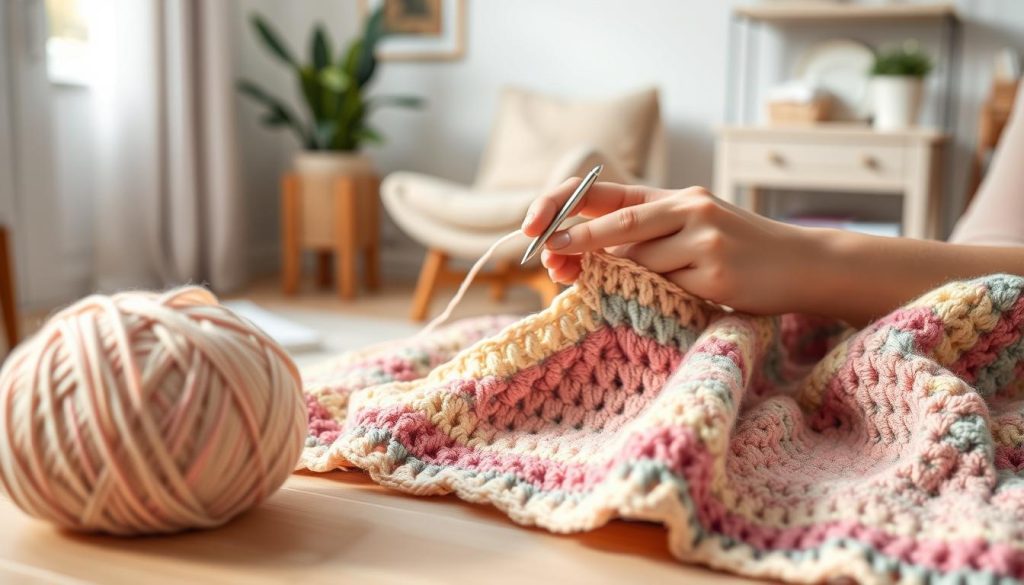
Creating a Foundation Chain
The foundation chain is key for your blanket. For beginners, here’s what to do:
- Choose the right blanket size: Baby blankets need 75 chains, and throw blankets need 120 chains
- Make your chain loose and even for smooth crocheting
- Use a bigger hook for the foundation chain if you crochet tightly
- Put stitch markers every 20 chains to count right
Beginning Your First Row of Stitches
Your first row is important for your blanket. Here’s a simple way to start:
- Make 2 double crochets in the 3rd chain from your hook
- Skip 2 chains, then single crochet in the next chain
- Make 2 double crochets in the same chain stitch
- Repeat this pattern across the row
- End with a single crochet in the last chain stitch
Take your time with the first row. It might be hard at first, but you’ll get better. Always chain 2 and turn after the row to get ready for the next part.
Working on Your Blanket Rows
Crocheting a blanket row by row is fun for beginners. You’ll learn to make something beautiful with your hands. This part will help you keep a steady pattern and keep going.
Learning to crochet a blanket is easier when you know about row progression. Most patterns are simple and get easier with practice.
Establishing Your Crochet Pattern
It’s important to have a steady pattern when crocheting. Start by learning these basic steps:
- Find your base stitch pattern
- Practice keeping your tension even
- Count your stitches often
- Use stitch markers for accuracy
Maintaining Consistency in Your Work
Keeping consistent rows takes patience and focus. Here are some tips to help:
- Work in good lighting to see your stitches clearly
- Take breaks to prevent hand fatigue
- Track your progress with a row counter or notebook
- Practice keeping an even tension
Pro tip: Don’t rush! Slow and steady creates the most beautiful blankets. As you keep crocheting, you’ll get better and find your own pace.
Adding Color to Your Blanket
Crocheting a beginner’s blanket is fun when you add colors. Colors make your blanket special and show your style.

Selecting a Color Palette
Choosing colors can be hard, but there are easy ways. Here are some tips:
- Monochromatic: Use different shades of one color for a sophisticated look
- Complementary colors: Pair opposite colors for vibrant energy
- Analogous colors: Select neighboring colors on the color wheel for harmony
- Neutral tones: Create timeless designs with whites, grays, and beiges
For your first colorful blanket, use 2-4 colors. Think about where the blanket will go. A baby blanket might have soft pastels, while a throw could match your living room.
How to Change Colors Smoothly
Changing colors smoothly is key. Here’s how to do it:
- Work the last stitch of the old color until two loops remain on the hook
- Complete the final stitch using the new color
- Leave 6-inch tails for both colors to weave in later
| Stripe Pattern | Color Change Frequency |
|---|---|
| Bold Stripes | Every 2 rows |
| Medium Stripes | Every 4-6 rows |
| Random Width | Varied row intervals |
Pro tip: Buy all your yarn from the same dye lot. This keeps your colors the same. With practice, you’ll make beautiful blankets that show off your skills.
Finishing Your Blanket Edges
After hours of work, finishing your crochet blanket is key. It makes your blanket look amazing. It turns a simple craft into beautiful art.
Adding a Beautiful Border
A border can make your blanket look better and last longer. Here are some ideas:
- Simple single crochet border
- Shell stitch border
- Picot edge design
- Decorative scalloped edge
Start by crocheting single stitches around all edges. At corners, do three single crochets for a smooth look.
Weaving in Loose Ends
It’s important to weave in ends well. This makes your blanket look professional. Here’s how:
- Thread yarn tail onto a tapestry needle
- Weave through back of stitches in a zigzag pattern
- Move in one direction for 3-4 inches
- Reverse and weave back for added security
- Trim excess yarn close to the fabric
Take your time with this step. It makes your blanket look neat and beautiful. Your hard work will make it a treasure to show or give.
Caring for Your Handmade Blanket
Your handmade crochet blanket is very special. It needs special care to stay beautiful and useful. Knowing how to wash and store it will keep it looking great for a long time.
Washing Handmade Blankets Safely
Every yarn type needs its own care. Here are some key tips for washing your blanket:
- Always check the yarn label for specific care instructions
- Use cool or warm water for most acrylic yarn blankets
- Select a gentle or delicate wash cycle
- Use a mild detergent made for delicate fabrics
Drying Techniques
Be gentle when drying your blanket to keep it looking good:
- Air dry by laying flat on a clean surface
- If using a dryer, select low heat settings
- Consider using a mesh laundry bag to prevent stretching
Smart Storage Solutions
Storing your blanket right keeps it looking new. Store it in a breathable cotton bag. Avoid plastic bags that hold moisture. Keep it in a cool, dry spot, away from sunlight to stop colors from fading.
Pro tip: Fold your blanket every now and then. This helps avoid creases and keeps its shape.
Tips and Tricks for Success
Starting a crochet blanket project takes patience and practice. As a beginner, learning crochet tips can make your project fun. Knowing how to avoid mistakes will help you make a beautiful blanket.
Pay close attention to your stitches to avoid mistakes. Use stitch markers to keep track and keep your tension even. Start with a slightly bigger hook for the foundation chain to avoid tight edges.
Common Mistakes to Sidestep
Many beginners struggle with tight stitches. Try to relax your grip and keep your tension even. Watch the first and last stitches of each row closely.
Good lighting and staying alert can help you avoid mistakes. This way, you won’t have to unravel your work.
Staying Motivated
Your crochet blanket project is a long journey. Set achievable goals and celebrate your small wins. Keep your project in a pretty bag near your favorite chair.
Join online crochet groups to share your progress and get support. Each stitch brings you closer to a unique, handmade treasure that tells your story.