
Are you ready to turn your dreams into a real business? What if you could use FedEx’s big delivery network for your own business?
Becoming a FedEx contractor is a great way to start your own business. This guide will help you every step of the way. You’ll learn how to be an Independent Service Provider (ISP) and build a successful delivery business.
The FedEx contracting model lets you start your own delivery service. You’ll learn what you need, how to grow, and the challenges you might face. You’ll also find out how to become a trusted FedEx partner.
Key Takeaways
- Learn the fundamental steps to become a FedEx Independent Service Provider
- Understand the financial and operational requirements for contracting
- Discover the business growth and independence you can achieve
- Explore the support system FedEx offers
- Gain insights into the logistics and delivery service industry
Understanding the FedEx Contractor Model
Becoming a FedEx contractor is a big step in the logistics world. You get to control your profits and enjoy support from a global leader.
The FedEx ISP model is special. It lets you own your business in the delivery world. You get to use a strong logistics network but stay independent.
What is a FedEx Contractor?
A FedEx contractor is an independent owner who offers delivery services. You get to:
- Own and run your own delivery business
- Use FedEx’s strong brand
- Reach a big customer base
- Grow with help from FedEx
Responsibilities of a FedEx Contractor
Your success depends on good management and happy customers. Key tasks include:
- Keeping delivery vehicles in good shape
- Managing and hiring drivers
- Delivering packages on time and right
- Following FedEx’s high standards
Benefits of Contracting with FedEx
Contracting with FedEx means growing your business with a trusted partner. The model offers great benefits:
| Benefit | Description |
|---|---|
| Business Independence | Run your own business with full control |
| Brand Support | Use FedEx’s global fame and marketing help |
| Financial Growth | Grow your income by working efficiently |
Your success is tied to managing well and making customers happy. Learning about the FedEx contractor model is a great start to a rewarding career in logistics.
Assessing Your Eligibility to Become a Contractor
To become a FedEx contractor, you need to check your skills, legal status, and money. First, learn what you must have to succeed in this field.
Required Skills and Qualifications
FedEx Ground likes people with experience in moving things and managing routes. Having a CDL is good, but not needed always. If you’ve worked in trucking or delivery before, it helps a lot.
- Strong understanding of logistics operations
- Excellent time management skills
- Ability to manage a small business effectively
- Customer service orientation
Age and Legal Requirements
To work with FedEx, you must be allowed to work in the U.S. You’ll need to pass background checks and follow laws. You also need to be old enough to own a business and drive big trucks.
- Minimum age of 21 years
- Clean driving record
- Ability to pass background screening
- Legal work authorization
Financial Considerations
Being ready with money is key to being a FedEx contractor. You’ll need a lot of money for things like buying a truck, insurance, and starting up. You also need money for truck upkeep, gas, and other business costs.
Things to think about include:
- Vehicle acquisition or leasing costs
- Insurance premiums
- Initial operating capital
- Emergency financial cushion
Tip: Make sure you have enough money to keep your business going for a long time.
Exploring Different Types of FedEx Contracts
Becoming a FedEx contractor means knowing the different contract types. Each one has its own challenges and rewards. It’s great for those wanting to start a delivery business.
FedEx has many contract options. They fit different business needs and goals. Choosing the right one depends on your resources and experience.
Ground Contracts
Ground contracts are a common start for FedEx contractors. They deal with delivering packages to homes and businesses.
- Typical service area covers multiple routes
- Requires multiple delivery vehicles
- Potential for significant revenue generation
Freight Contracts
Freight contracts need special equipment and skills for big shipments. They’re best for businesses with a lot of logistics.
| Contract Feature | Freight Contract Details |
|---|---|
| Vehicle Requirements | Semi-trucks, trailers |
| Shipment Type | Large commercial cargo |
| Skill Level | Advanced logistics experience |
Home Delivery Contracts
Home delivery contracts focus on delivering to homes. They’re great for smaller operations or solo entrepreneurs.
- Focus on neighborhood-specific routes
- Lower initial investment compared to ground contracts
- Flexible scheduling options
Looking at each contract type helps find the best match for your business. It’s key for reaching your entrepreneurial goals.
Creating a Business Plan
Creating a strong business plan is key for FedEx contractors. It’s your guide through the ups and downs of the delivery world. It helps you find chances and solve problems.
Setting Objectives for Your Contracting Business
Your goals should be clear, easy to measure, and match your big dreams. Think about these important points:
- Define your service area
- Set a goal for how much you want to deliver
- Make money goals
- Plan to grow your fleet
Financial Projections and Budgeting
Good money planning is the heart of your FedEx business. Make a detailed budget for:
| Expense Category | Estimated Annual Cost |
|---|---|
| Vehicle Maintenance | $15,000 – $25,000 |
| Fuel Costs | $12,000 – $18,000 |
| Insurance | $5,000 – $10,000 |
| Employee Wages | $50,000 – $100,000 |
Marketing Strategies for Your Services
Good marketing helps you shine in the delivery world. Focus on:
- Creating a strong online image
- Connecting with local businesses
- Showing you’re reliable and fast
- Using happy customer words
Pro tip: Watch your numbers and keep improving your plan to grow and make more money.
Registering Your Business
Starting a FedEx delivery business needs careful legal steps. You must register as a for-profit corporation under state law. FedEx only works with corporations, not LLCs, LLPs, sole proprietorships, partnerships, or limited partnerships.
Choosing the Right Business Structure
Your business structure is key for FedEx. You have two main choices:
- C-Corporation: Gives strong liability protection
- S-Corporation: Has tax benefits for small businesses
Think about taxes, how easy it is to run, and your future goals when picking.
Licensing and Permit Requirements
Getting the right licenses and permits is vital. You’ll need:
- Business license
- Commercial vehicle registration
- Department of Transportation (DOT) number
- Motor Carrier (MC) number
Each state has its own rules. Make sure to check your local laws.
Setting Up Your Business Bank Account
A business bank account is key for clear finances and professionalism. It helps you:
- Keep personal and business money separate
- Track business costs
- Manage payroll well
- Show FedEx you’re serious
Choose a bank that gets commercial transport and fits your needs.
| Corporate Structure | Liability Protection | Tax Implications |
|---|---|---|
| C-Corporation | High | Corporate tax rates |
| S-Corporation | Moderate | Pass-through taxation |
By following these steps, you’ll build a strong base for your FedEx business. This will help you succeed in the tough transport world.
Joining the FedEx Contracting Network
To become a FedEx contractor, you need a good plan. You must understand how to join their big contractor network.

Finding Contract Opportunities
Looking for FedEx contracts needs smart steps:
- Check FedEx contractor websites
- Go to job fairs in logistics and transport
- Call local FedEx centers
- Look at job boards for logistics
Application Process Guidelines
Get ready with important papers:
- Proof of your business
- A detailed business plan
- Financial reports
- Insurance papers
- Info about your vehicles
| Document Type | Required Details |
|---|---|
| Business Plan | How you will work, money plans |
| Financial Statements | Money in, money out, balance |
| Insurance Certificates | For accidents, vehicles, workers |
Importance of Networking
Networking is key to becoming a FedEx contractor. Make friends with other service providers. They can give you great advice and help.
Start by showing you’re interested. Want to sign up or talk to FedEx? Taking action is the first step.
Preparing for the Interview and Selection Process
To become a FedEx contractor, you need to prepare well. You must show you are professional, skilled, and dedicated. This is key to success.
The selection process checks if you know business and can do the job. It also sees if you fit with FedEx’s high standards. Being well-prepared can really help you succeed.
Common Interview Questions to Anticipate
FedEx interviewers want to know about your business and if you’re ready to work. They might ask:
- About your business or management experience
- If you know about logistics and delivery
- About your money management and investment plans
- If you focus on excellent customer service
Showcasing Your Professional Experience
It’s important to show your skills wisely. Talk about your experiences that show you’re good at:
- Transportation or logistics
- Managing a business
- Planning finances
- Helping customers
Demonstrating Unwavering Commitment
FedEx wants contractors who are truly passionate and committed. Be ready to talk about:
| Commitment Indicator | Key Demonstration Strategies |
|---|---|
| Business Investment | Detailed financial planning and resource allocation |
| Operational Readiness | Vehicle and equipment preparedness |
| Professional Growth | Continuous learning and improvement goals |
Your interview is a chance to show you’re a reliable FedEx contractor. Being prepared, confident, and clear will help you a lot.
Understanding FedEx Policies and Standards
To be a top FedEx contractor, you need to know FedEx’s strict rules. These rules help keep service quality high. They make sure FedEx stays true to its brand.
Safety and Compliance Requirements
Safety is key at FedEx. As a contractor, you must have a strong safety plan. This plan must do more than just follow laws.
- Make sure all workers get good training on driving.
- Follow the U.S. Federal Motor Carrier Act safety rules.
- Do regular checks on your vehicles.
- Keep teaching your team about safety.
Customer Service Expectations
Being reliable in service is very important at FedEx. You should:
- Always meet delivery times.
- Give superior customer service.
- Take care of packages well.
- Talk clearly with customers.
Performance Metrics
FedEx checks contractors on certain things. Here are some important ones:
| Metric | Target Performance | Importance |
|---|---|---|
| On-Time Delivery | 98% | Very important for happy customers |
| Package Handling Accuracy | 99.5% | Helps avoid damage or loss |
| Vehicle Maintenance | Regular inspections | Keeps things running smoothly |
By following these standards, you show FedEx you’re serious about being great. This helps you build a strong partnership with FedEx.
Investing in Equipment and Resources
Starting a FedEx contractor business needs smart choices in equipment, tech, and safety. Your first steps set the stage for success and profit.
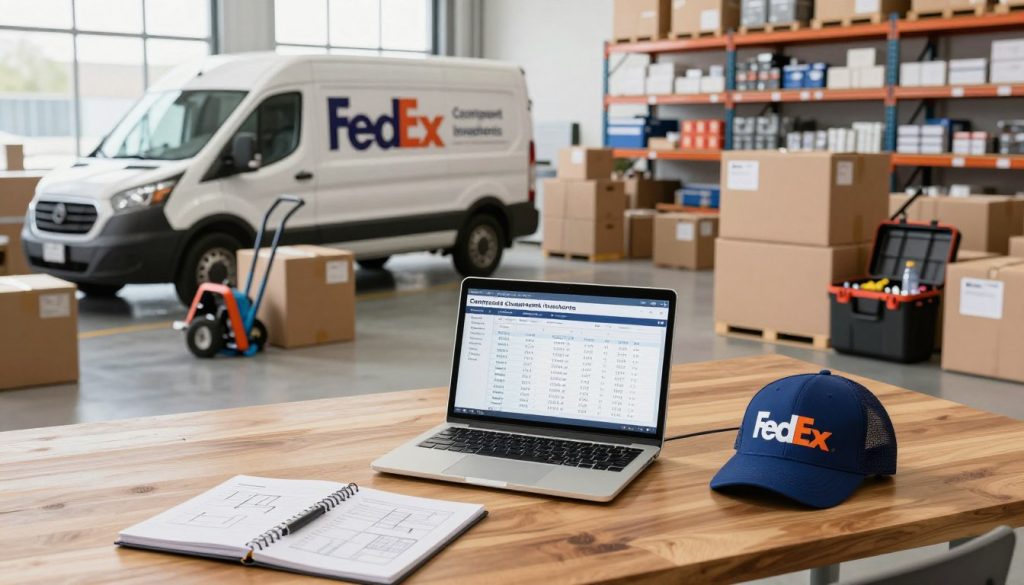
Vehicle and Equipment Needs
Choosing the right vehicles and tools is key for success. You need reliable cars that fit FedEx’s standards:
- Cargo vans with at least 1,000 cubic feet space
- Box trucks for big delivery jobs
- GPS for tracking
- Dolly and hand trucks for easy package moving
Technology Requirements for Operations
Modern tech makes your delivery work smoother. You’ll need:
- Good route planning software
- Strong mobile devices
- Scanning and tracking tools
- Cloud-based systems for management
Insurance Considerations
Keeping your business safe means getting the right insurance. You’ll need:
| Insurance Type | Coverage Purpose | Recommended Minimum |
|---|---|---|
| Commercial Auto | Vehicle safety | $1 million liability |
| General Liability | Business safety | $500,000 coverage |
| Cargo Insurance | Package safety | $100,000 per vehicle |
Plan well and invest wisely for a strong start in FedEx contracting. Look around and pick the best equipment and insurance for you.
Navigating Financial Responsibilities
Running a FedEx contracting business needs good money skills. How well you manage money decides if your business will last. It’s key to know how you get paid, keep costs down, and record money well.
Understanding Payment Models
FedEx contractors get paid based on how well they do. Your money comes from:
- How many packages you deliver
- How far you travel
- How good your service is
- What your route is like
Managing Expenses and Taxes
Managing money means watching both regular and surprise costs. Keep good records of your spending. This helps you save on taxes and stay financially healthy.
| Expense Category | Typical Costs | Tax Deductibility |
|---|---|---|
| Vehicle Maintenance | $5,000 – $10,000/year | Fully Deductible |
| Fuel | $4,000 – $7,000/year | Partially Deductible |
| Insurance | $2,000 – $5,000/year | Fully Deductible |
Setting Up Invoicing Systems
Make a good invoicing system to help your money flow. Accurate and on-time invoicing keeps your money coming in. It also helps you see how your business is doing.
- Use cloud-based accounting software
- Create standard invoice templates
- Keep track of payments
- Send out payment reminders automatically
Learning these money skills will help your FedEx business grow. You’ll make more money too.
Maintaining a Successful Contracting Relationship
Having a strong bond with FedEx is key for your success. It’s more than just delivering packages. It needs good communication, steady work, and being proactive.
Good contractors know how to build a strong FedEx relationship. They use many strategies:
- Show you’re reliable in your work
- Talk openly about problems and chances
- Keep up with FedEx rules and what they expect
- Keep learning and getting better
Building Strong Communication Channels
Talk to FedEx people in a professional way. Be on time and ready to solve problems. Regular talks and updates show you care about doing great work.
Navigating Performance Reviews
Reviews are important for contractors. Get ready by keeping records of:
- How well you deliver
- How happy customers are
- How efficient you are
- If you follow safety rules
Strategies for Long-Term Success
To keep doing well, try these strategies:
| Strategy | Key Benefits |
|---|---|
| Keep getting better at your job | Work better and faster |
| Invest in new tech | Track and check your work better |
| Connect with other contractors | Learn from others and get help |
Remember, your relationship with FedEx is a partnership built on trust, doing well, and shared goals.
Continuing Education and Growth Opportunities
Being a FedEx contractor is just the start. You keep learning and growing to stay ahead. FedEx helps you with many ways to improve your skills and business.
FedEx has special training for you. It covers important topics like how to work better, use new tech, and serve customers well. You learn how to make your delivery service better and grow your business.
Training Programs Offered by FedEx
There’s more to learn after you start. FedEx has workshops, webinars, and online courses for you. They keep you up-to-date with the latest in the industry.
These help you get better at planning routes, managing your fleet, and using digital tools. You can make your business run smoother.
Networking with Other Contractors
Meeting other FedEx contractors is great. You can learn from each other and share ideas. There are meetings, conferences, and online groups for this.
You can get tips from those who have done well. You might find new ways to grow your service.
Expanding Your Services Over Time
As you get more experience, think about adding new services. You could start doing special deliveries or handle big shipments. Growing your business can bring in more money and make it stronger.