
Ever wondered how to make a simple yarn ball into a stunning bag? Welcome to crochet bag making. It’s where creativity meets practicality in a fun way!
This easy crochet bag tutorial is for beginners. It’s perfect if you’re new to crochet or have a little experience. You’ll learn to make a beautiful bag that shows off your skills.
Making a crochet bag is more than just a useful item. It’s about gaining confidence, learning a new skill, and showing your style. These projects are great for anyone wanting to try something creative and useful.
Key Takeaways
- Learn to create a stylish bag with basic crochet skills
- Discover a fun and practical beginner craft project
- Build confidence through step-by-step crochet instructions
- Create a personalized accessory from scratch
- Develop fundamental crochet techniques
Introduction to Crochet Bags
Welcome to the world of handmade crochet bags. Here, creativity meets functionality. A beginner-friendly crochet bag tutorial opens up a universe of personalized accessories. These reflect your unique style and crafting skills.
What Makes Crochet Bags Special?
Crochet bags are special in many ways. They stand out from mass-produced accessories. These handmade crochet bags offer something truly unique:
- Personal expression through every stitch
- Customizable designs that match your individual style
- Sustainable crafting using eco-friendly materials
- Opportunity to create a one-of-a-kind accessory
Benefits of Creating Your Own
The crochet bag benefits extend far beyond a simple accessory. When you create your own bag, you’ll experience:
- Stress-relieving crafting experience
- Development of valuable creative skills
- Pride in wearing a self-made item
- Potential cost savings compared to store-bought bags
Overview of the Tutorial
This beginner-friendly crochet bag tutorial will guide you through each step. You’ll learn from selecting the perfect yarn to adding final decorative touches. You’ll craft an amazing accessory that showcases your newfound skills.
Get ready to transform simple yarn into a stunning, personalized bag. It will turn heads and spark conversations!
Essential Materials Needed
Getting ready for your crochet bag tutorial starts with the right materials. Having everything ready makes crafting fun and easy.
Recommended Yarn Types
Choosing the right yarn is key for a great bag. Each yarn type gives your bag a special look and feel.
- Cotton Yarn: Great for summer bags, it’s breathable and easy to clean
- T-shirt Yarn: Makes strong bags with a cool, textured look
- Bamboo Yarn: Eco-friendly with a shiny finish
- Raffia Paper Yarn: Perfect for beach or water-resistant bags
Ideal Crochet Hooks
Choosing the right hook depends on your yarn’s weight. The right hook gives you even stitches and a neat finish.
| Yarn Weight | Recommended Hook Size | Best For |
|---|---|---|
| Lightweight | 2.5-3.5mm | Delicate, fine bags |
| Medium Weight | 4-5mm | Standard everyday bags |
| Bulky Weight | 6-10mm | Chunky, sturdy bags |
Additional Tools and Accessories
You’ll need more than yarn and hooks for your bag project:
- Sharp scissors
- Yarn needle for weaving ends
- Measuring tape
- Stitch markers
- Blocking mat (optional)
Pro tip: Choose quality tools that feel good in your hands. They make crafting more fun!
Basic Crochet Stitches Overview
Learning basic crochet stitches is key for making a simple bag. These skills turn yarn into a beautiful bag. Knowing these stitches lets you make your first bag with ease.
Chain Stitch: Your Foundation
The chain stitch is the base of most crochet projects. For a standard bag, you’ll need about 30 chains. But, this number can change based on your bag size.
- Make a slip knot on your hook
- Yarn over (wrap yarn around hook)
- Pull yarn through the loop
- Repeat until you reach your desired chain length
Single Crochet Stitch: The Workhorse
The single crochet stitch is key for a strong bag fabric. It gives your bag good structure and stability. Here’s how to do it:
- Insert hook into the next stitch
- Yarn over
- Pull yarn through the first loop
- Yarn over again
- Pull through both loops
Double Crochet: Adding Variety
The double crochet adds more texture and flexibility to your bag. It’s taller than the single crochet, making the fabric more open.
| Stitch Type | Height | Best Used For |
|---|---|---|
| Single Crochet | Short | Sturdy bags |
| Double Crochet | Tall | Lighter, more flexible bags |
Learning these basic stitches is essential for making beautiful bags. Practice each stitch until you’re comfortable. Don’t be afraid to try new things.
Getting Started: Making the Base
Making a DIY crochet bag starts with a strong base. This base shapes your bag’s strength and look. It’s key for a bag that looks good and lasts long.
Choosing Your Starting Chain Length
The chain length you start with affects your bag’s size. Here’s what to do:
- Small bag: 20-30 chains
- Medium bag: 40-50 chains
- Large bag: 60-70 chains
Creating a Sturdy Foundation
A solid base keeps your bag’s shape. Use these tips:
- Start with a slip stitch to anchor your work
- Count chains carefully for consistent width
- Choose between circular or rectangular base
Tips for Even Tension
Even tension is key in your DIY crochet bag tutorial. Hold your yarn right and make stitches the same. If your stitches are uneven, your bag might look bad.
| Tension Level | Stitch Appearance | Bag Quality |
|---|---|---|
| Too Tight | Stiff, Compressed | Rigid Structure |
| Just Right | Smooth, Consistent | Professional Finish |
| Too Loose | Gaps, Uneven | Weak Structure |
Building the Body of the Bag
Creating the body of your crochet bag is exciting. It turns your start into a useful item. Learning to crochet in rounds makes your bag look great.
Working in Rounds vs. Rows
There are two main ways to build your bag’s body:
- Circular Method (Working in Rounds): Crochet around without turning
- Joined Rounds Method: End each round with a slip stitch for a clean look
Increasing for Shape
Shaping your bag needs smart increases. For round bags, add stitches evenly for a smooth shape. Rectangular bags need precise stitch placement for straight edges.
Keeping Your Edges Neat
Clean edges are key in your crochet bag tutorial. Here’s how to keep them tidy:
- Use stitch markers to mark round starts
- Keep your tension even
- Practice even increases and decreases
Remember, the more you practice, the better you’ll get. Each bag you make will make you more confident!
Adding a Lining for Durability
Make your quick crochet bag look like a pro by adding a lining. This step makes your bag last longer and look better. You’ll love it for many years.
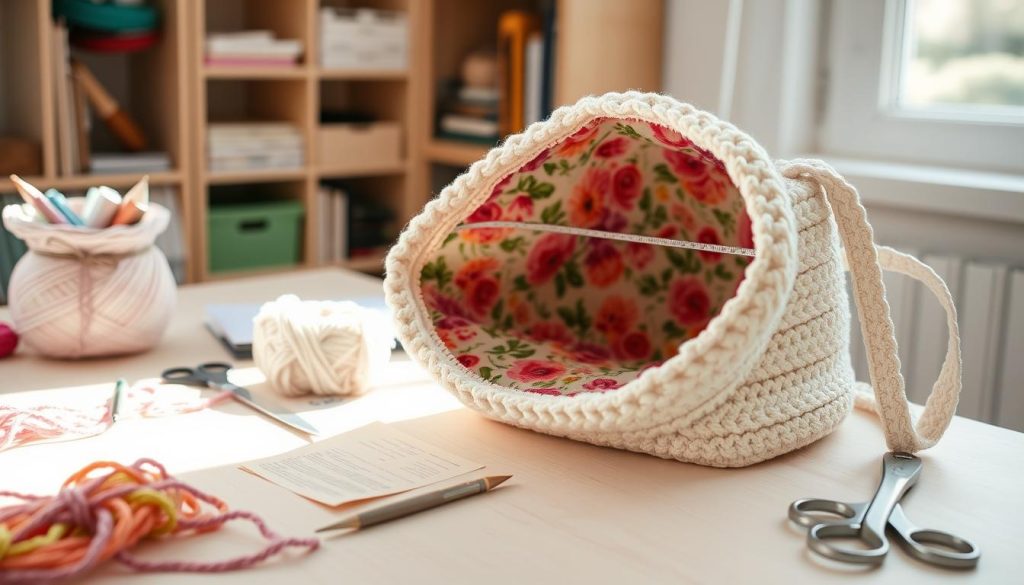
Selecting the Perfect Fabric
Choosing the right fabric for your lining is important. Pick something that matches your bag’s look and keeps it safe. Here are some great options:
- Cotton: Breathable and versatile
- Canvas: Great for bags you use a lot
- Laminated cotton: Good for bags that need to be water-resistant
Measuring and Cutting Your Lining
When making a lining, measure carefully. Add a half-inch to all sides for a good fit. This way, your lining will fit perfectly.
| Bag Type | Recommended Lining Fabric | Best Use |
|---|---|---|
| Everyday Tote | Medium-weight cotton | Daily use, lightweight items |
| Beach Bag | Laminated cotton | Water resistance |
| Market Bag | Heavy canvas | Carrying heavy items |
Sewing and Attaching the Lining
Here’s how to attach your lining:
- Sew side seams with right sides together
- Press seams open for a crisp finish
- Turn down top edge and press
- Whipstitch lining to bag’s interior
Your quick crochet bag tutorial now has a pro lining. It keeps your stitches safe and makes your bag strong. Follow these steps to make a bag that lasts.
Creating the Strap or Handles
Making the perfect handles can make your bag go from simple to spectacular. The right straps not only add function but also show off your skills. Let’s explore how to attach handles that will make your bag stand out.
Handle Style Options
When designing your bag, you can choose from many handle styles:
- Shoulder Strap: Great for crossbody bags
- Short Handles: Best for tote-style bags
- Braided Handles: Adds texture and interest
Securing Your Handles
Attaching bag handles needs precision and care. First, find the right spots on your bag. For a basic method, do this:
- Measure the same distance on both sides of the bag
- Mark the spots with stitch markers
- Make sure the tension is even when crocheting the handles
Decorative Finishing Touches
Your bag straps can be more than just useful. Think about these creative ideas:
- Use different yarn colors
- Add decorative stitching
- Include beads or small decorations
Pro tip: If you’re using stretchy yarn like t-shirt material, make your straps a bit shorter. They’ll stretch when you put things in, fitting your bag perfectly.
Personalizing Your Crochet Bag
Making a crochet bag your own is fun. This guide shows you how to make it special. You’ll learn to add your own touch to it.
Adding Color and Texture
Color is key in making your bag stand out. Here are some cool ways to use color:
- Create bold stripes by changing yarn colors every few rounds
- Try color blocking with contrasting base and handle colors
- Experiment with ombré effects using gradient shades
Embellishments to Elevate Your Design
Make your bag pop with fun embellishments:
- Attach decorative buttons
- Add crocheted appliqués like flowers or leaves
- Create tassels or fringe for bohemian flair
- Weave ribbons through stitches for texture
Customizing Size and Shape
Make your bag fit your needs perfectly. Change its size and shape to match what you want:
| Bag Style | Customization Technique |
|---|---|
| Spacious Tote | Increase foundation chains, work more rounds |
| Compact Crossbody | Reduce foundation chains, limit round count |
| Bucket Bag | Create circular base, adjust height |
| Market Tote | Use oval base, modify strap length |
Personalizing your crochet bag is all about trying new things. Don’t be afraid to experiment. Every change brings you closer to your dream bag.
Finishing Techniques for a Professional Look
Turning your crochet bag into a pro piece needs careful finishing. A good tutorial shows how to make your bag look top-notch. It’s all about the details.
Mastering End Weaving
Weaving in ends makes your bag look finished. Here’s how to do it right:
- Cut yarn, leaving a 6-inch tail
- Thread the tail through a yarn needle
- Weave in a zigzag pattern through back stitches
- Secure ends by weaving back and forth multiple times

Blocking for Perfect Shape
Blocking changes everything. Spray your bag with water and shape it right. Pro tip: Use towels to keep it shaped while it dries.
Final Presentation Touches
For a pro finish, add these touches:
- Steam lightly with an iron
- Check for loose stitches
- Add decorative closures if desired
- Inspect overall bag shape and finish
Finishing well makes your bag stand out. Paying attention to details turns your project into something you’ll love showing off.
Troubleshooting Common Issues
Making a simple crochet bag can be tricky. But don’t worry! Every crocheter faces problems that can be fixed easily. Learning how to fix mistakes is key to making a beautiful bag.
Dealing with Uneven Stitches
Uneven stitches can be a big problem for beginners. The secret to fixing this is to keep your tension even. Here are some tips to help you:
- Practice holding your yarn with consistent pressure
- Use stitch markers to track your progress
- Take breaks to prevent hand fatigue
- Compare your stitches periodically
Fixing Mistakes in Your Work
There are many ways to fix mistakes in crochet. Careful unraveling can often fix problems without starting over.
| Mistake Type | Recommended Solution |
|---|---|
| Recent row error | Gently unravel to the mistake |
| Multiple rows back | Use a lifeline or carefully frog the work |
| Minor cosmetic issue | Consider leaving as a unique design element |
Ensuring a Stable Shape
A good crochet bag needs careful making. To keep it stable:
- Choose the right hook size for your yarn
- Count stitches regularly
- Use stitch markers at round edges
- Consider adding a sturdy base insert
Remember, fixing mistakes is part of learning. Every mistake makes you better at crocheting!
Sharing Your Creations
After you finish your DIY crochet bag tutorial, it’s time to celebrate. You can share your crochet projects with others. This is a fun way to show off your creativity and feel more confident.
Capturing the Perfect Photo
Good photos can make your crochet bag look amazing on social media. Here are some tips for great shots:
- Use natural light near a window
- Photograph from multiple angles
- Style your bag with complementary props
- Highlight unique details and textures
Social Media Strategies
The crochet community loves seeing handmade things. Here are ways to share your work:
| Platform | Sharing Strategy |
|---|---|
| Use hashtags like #DIYcrochetbag and #crochetcommunity | |
| Join crochet groups and share your project story | |
| Create boards for your crochet projects |
Connecting with Crochet Enthuasiasts
Joining online and local crochet groups can change your crafting. Ravelry, Reddit’s crochet forums, and local yarn shops are great places to meet others. You can share tips and find new ideas.
Remember, every project has a special story. Your DIY crochet bag tutorial might inspire someone else to start crocheting!
Conclusion and Next Steps
You’ve just finished a great crochet bag tutorial for beginners! Your first bag shows your creativity, patience, and new skills.
Think about your bag and all you learned. Every stitch is a story of growth. You’ve learned a lot and can do more.
Get excited for new challenges. Try different bags, yarns, and patterns. Each project will make you more confident and skilled.
Expanding Your Crochet Horizons
Look online for new ideas on Craftsy, YouTube, and crochet forums. Local yarn stores have workshops to learn more.
Sharing Your Creative Path
We want to hear about your bag! Post photos on social media or in crafting groups. You might inspire others to crochet.
Embrace the Learning Process
Every expert was once a beginner. Enjoy your skill, be patient, and keep exploring crochet. Your creativity is endless!