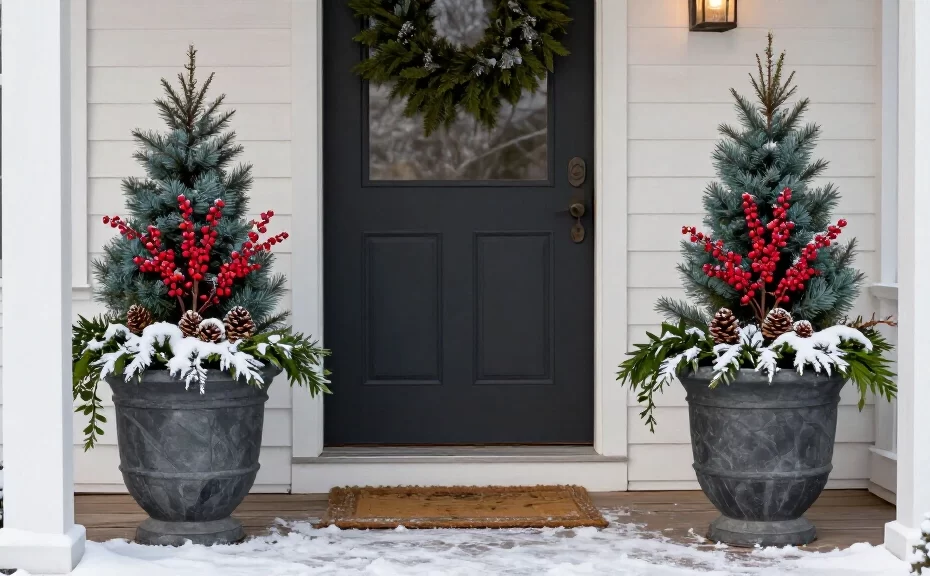
Your porch pots looked fantastic in October. Then the first hard freeze hit, and now they look like a sad compost pile. Winter planters for front porches don’t have to follow that script.
Pick cold-hardy plants and frost-proof containers, then layer in texture that survives snow, ice, and wind. I’ve watched terracotta pots crack in half after one January cold snap, so trust me on this one. Here are 18 ideas that hold up when the temperature drops.
Quick note: container plants run roughly one to two hardiness zones colder than plants in the ground, because their roots have less insulation. Check your zone on the USDA Plant Hardiness Zone Map and shop with that in mind.
1. Dwarf Alberta spruce duo
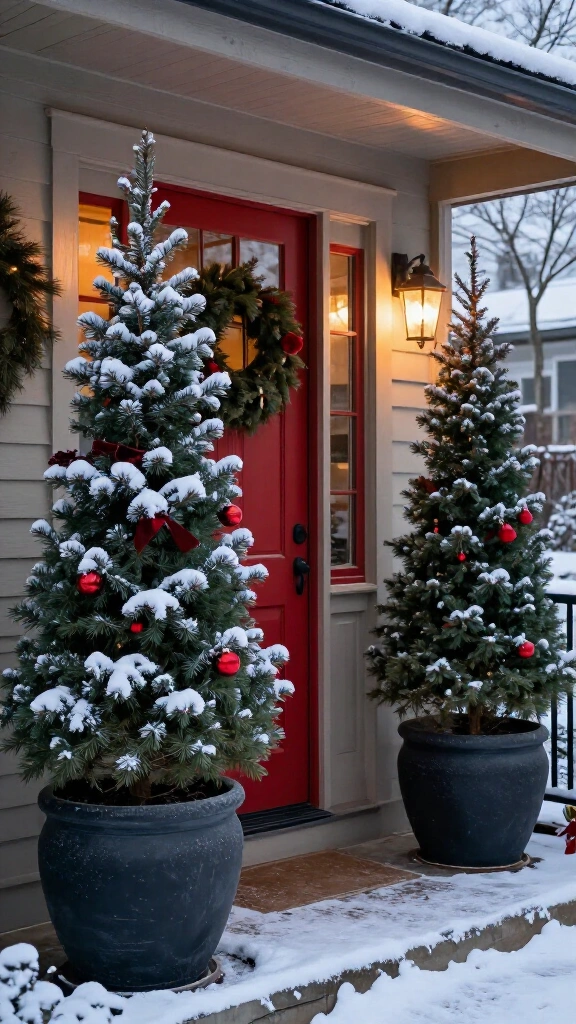
Two dwarf Alberta spruces flanking your door look polished from December through March. Their dense, cone-shaped form gives you instant structure, and they need very little care. Plant them in large, frost-proof pots so the roots stay insulated.
Want a little extra holiday charm? Tuck a few red ornaments or a ribbon into the branches. Nobody has to know you spent four minutes on it.
2. Classic mixed evergreen bough arrangement
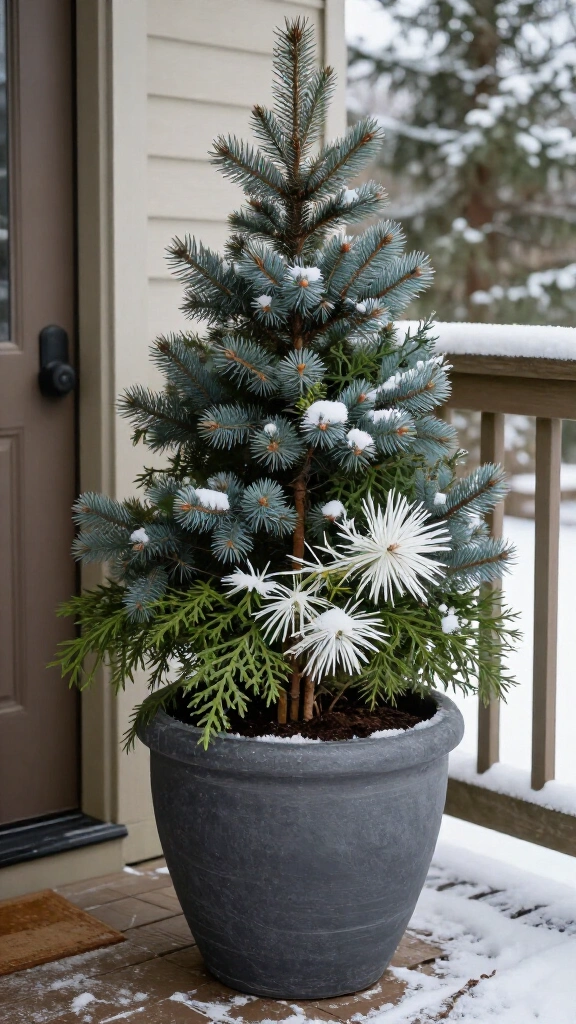
Cedar, pine, fir, and juniper boughs make a full, fragrant filler for any pot. Push the stems into moist soil, and they stay green for weeks in cold weather. The cold works in your favor here.
Mix needle textures. Pair soft white pine with spiky blue spruce, and you get a designer look without buying a single flower.
3. Ornamental kale and cabbage bowl
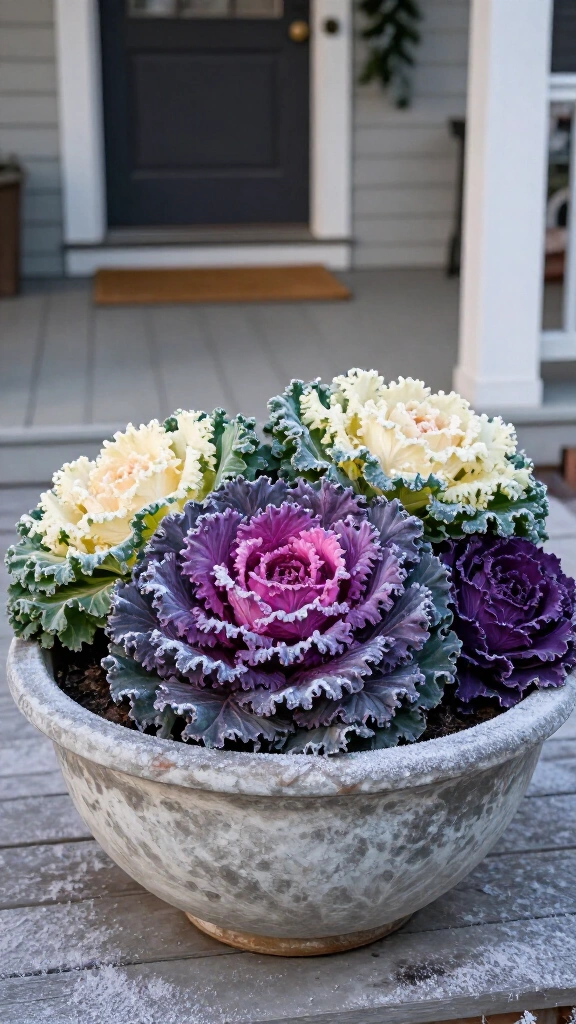
Ornamental kale and cabbage love the cold. Their ruffled leaves in purple, pink, and cream often look better after a frost, since chilly nights deepen the color. They handle light freezes with ease.
Plant them in a wide, shallow bowl and group three heads at different heights. Why settle for boring when your cabbage can look this fancy?
4. Pansy and viola color pop
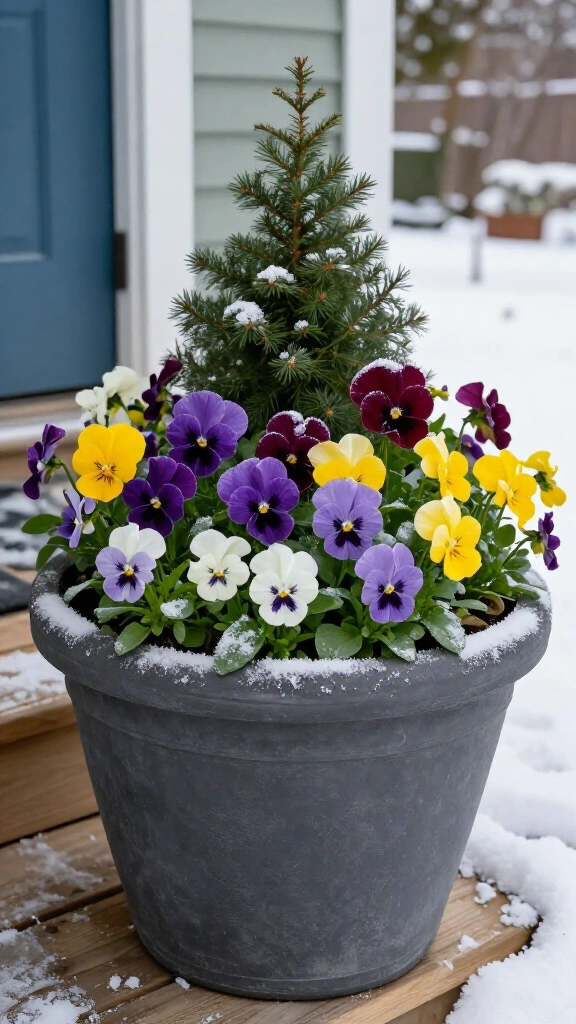
Pansies and violas shrug off light frost and keep blooming through mild winter stretches. In colder zones, they go dormant under snow and often perk up again when temperatures rise. They give you the cheerful color that most winter pots lack.
Plant them near the pot’s rim so they spill over the edge. Pinch off spent blooms to keep new ones coming.
5. Boxwood spheres in black urns
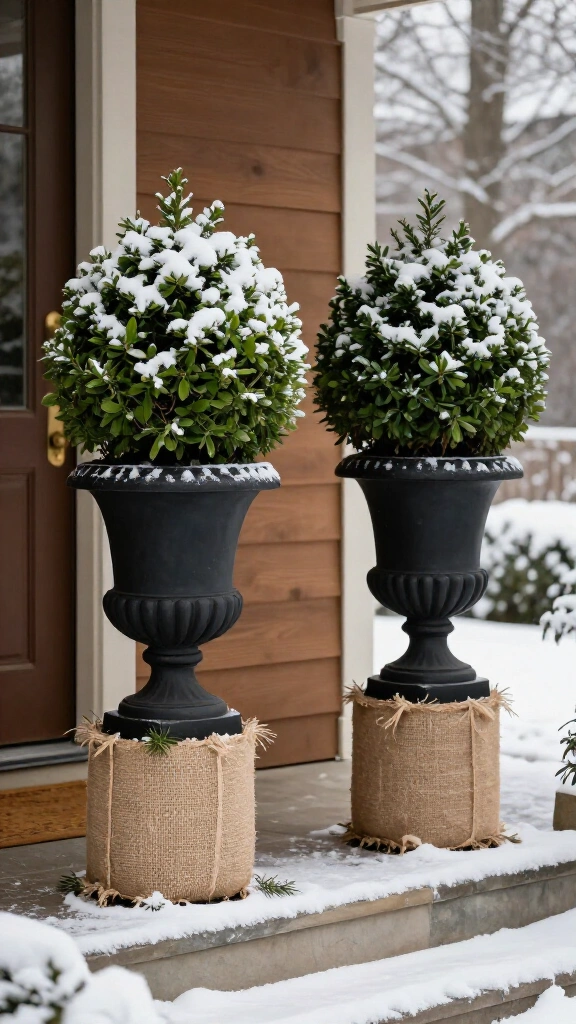
A clipped boxwood sphere in a black urn is the classic front porch look. Boxwoods stay evergreen in zones 5 through 9 (choose cold-hardy varieties like ‘Winter Gem’ or ‘Green Velvet’). They look crisp against snow.
Wrap the pot in burlap during extreme cold snaps to shield the roots and foliage from wind burn. I think this is the most elegant low-effort look on the list.
6. Red twig dogwood and birch branch spikes
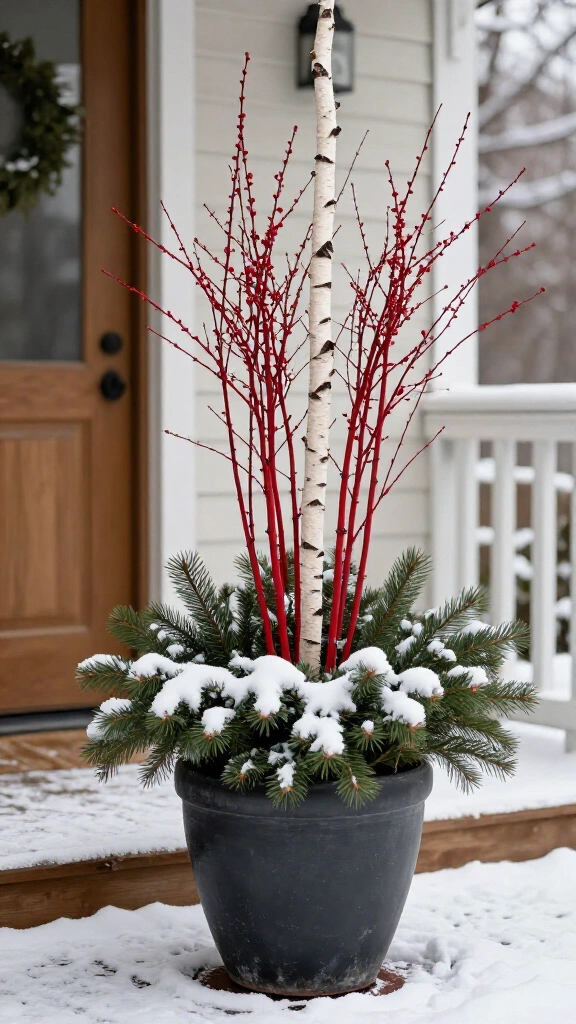
Cut stems of red twig dogwood add a blast of crimson that pops against white snow. Pair them with white birch branches for a high-contrast, wintry look. Stick them into soil or a floral foam base inside a sturdy pot.
Fill the base with evergreen clippings to hide the bottoms of the stems. The result looks like a magazine spread.
7. Winterberry holly planter
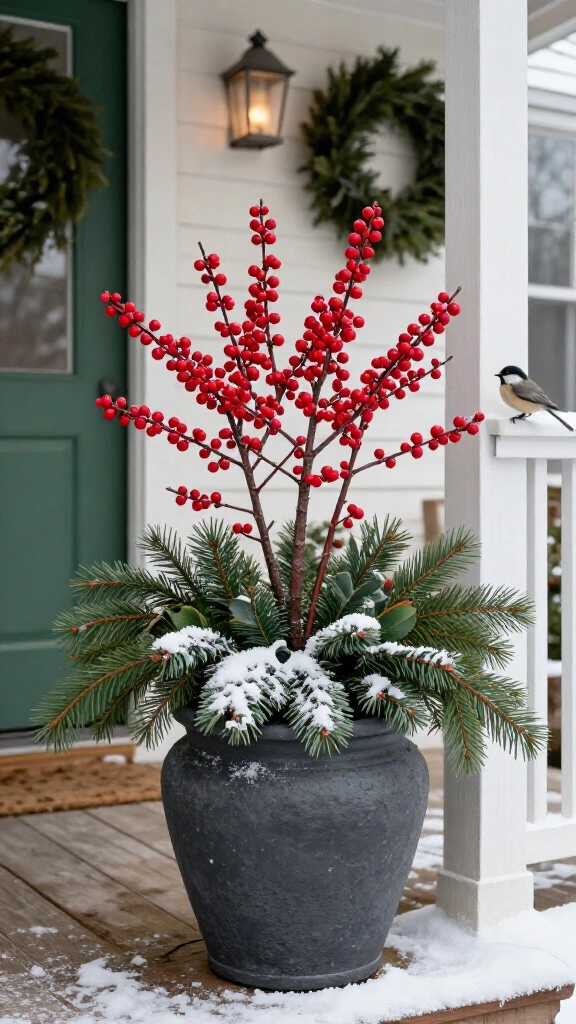
Winterberry holly drops its leaves and leaves behind bright red berries that glow all winter. Birds love them too, so expect some feathered visitors. For berries on a living shrub, you need a male and a female plant nearby.
Don’t want the commitment? Cut winterberry stems and arrange them in a pot of evergreens for the same festive effect.
8. Hellebore and heuchera combo
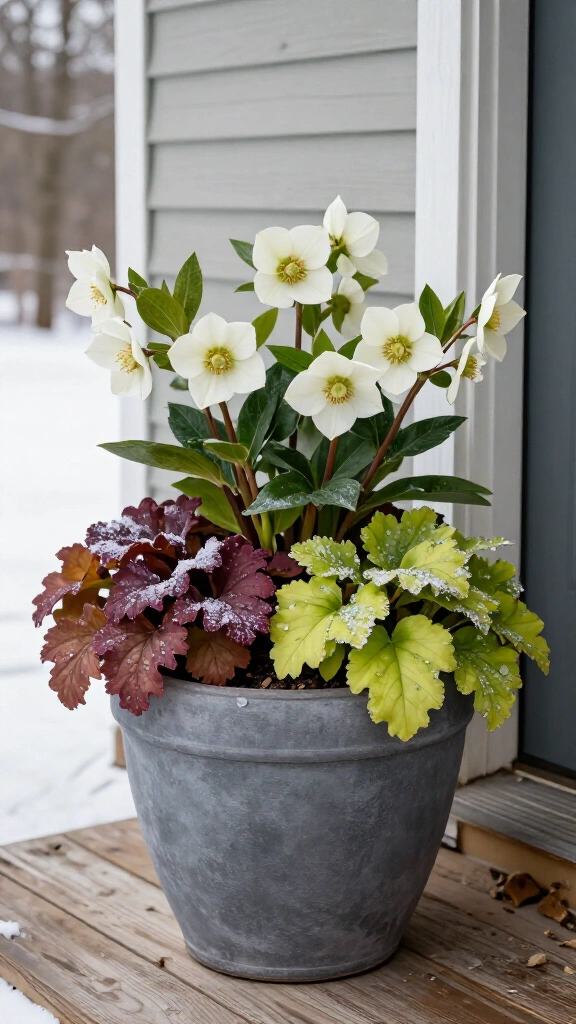
Hellebores, often called Lenten or Christmas roses, bloom in late winter when almost nothing else does. Pair them with heuchera (coral bells) for colorful, semi-evergreen foliage in burgundy, lime, or caramel. Both tolerate cold well in zones 4 through 8.
Why this duo works
- They tolerate shade, which suits covered or north-facing porches.
- Deer leave hellebores alone because the plants are toxic to browsers.
- They live a long time. Move them to the garden in spring and they keep going.
9. Skimmia japonica statement pot
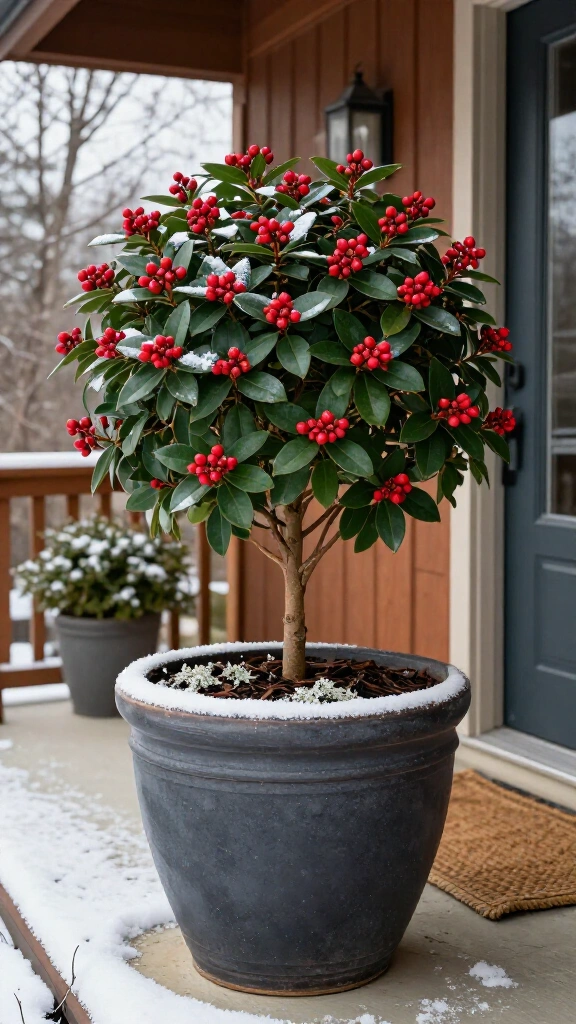
Skimmia is a shade-loving evergreen shrub with glossy leaves and clusters of red buds that look festive from fall through spring. It grows well in containers and handles cold in roughly zones 6 through 8. The Royal Horticultural Society lists it as a reliable container plant for shady spots (see the RHS website for care details).
Give it a spot out of harsh wind, and it rewards you with months of color.
10. Galvanized bucket with juniper and pinecones
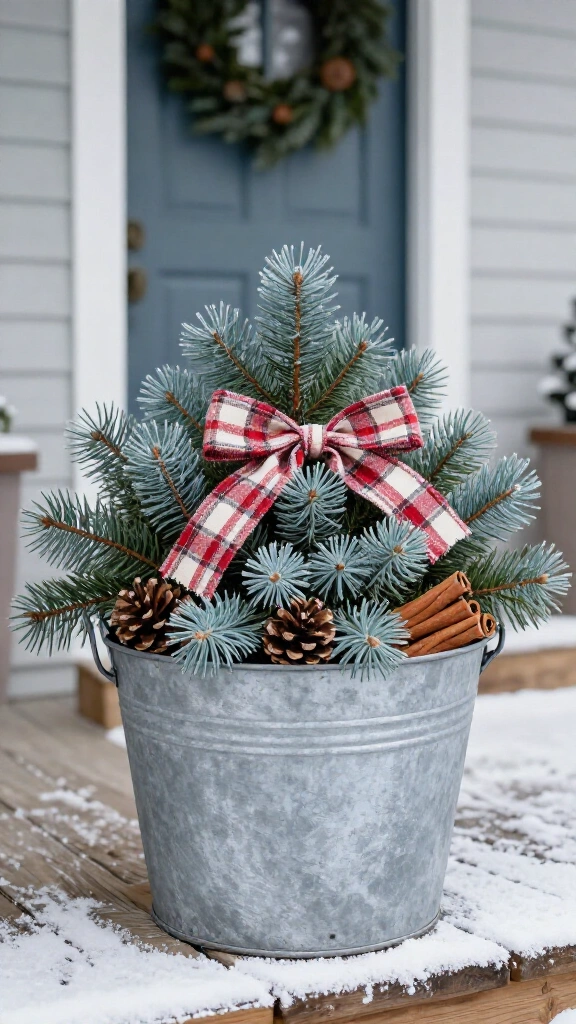
A rustic galvanized bucket brings farmhouse charm and shrugs off freezing weather. Drill drainage holes in the bottom first, because soggy roots die faster than cold ones. Fill it with low-growing juniper, then tuck in pinecones and cinnamon sticks.
Want an even cozier look? Add a plaid ribbon. Yes, you can put flannel on your front door.
11. Tall fiberglass or faux stone planter
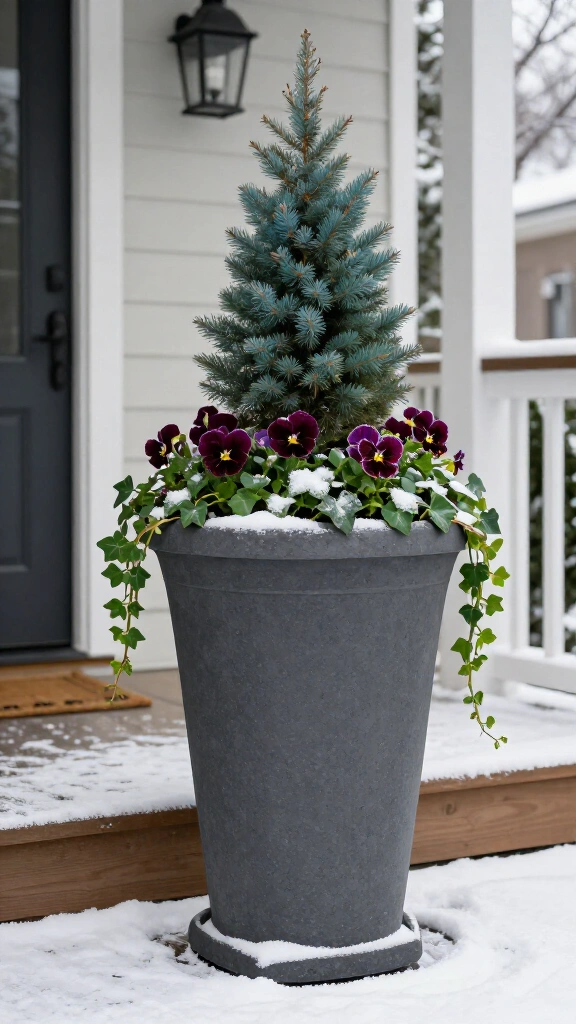
Container material matters more than most people think. Fiberglass, resin, and thick concrete resist freeze-thaw cracking far better than thin terracotta or ceramic. A tall planter also gives you room for a “thriller, filler, spiller” combo.
Try a spiky evergreen in the center, pansies around it, and trailing ivy over the edge. If you want more inspiration on layered looks, check out these winter planter and front porch ideas, which pair well with this style.
12. Half-barrel wooden planter
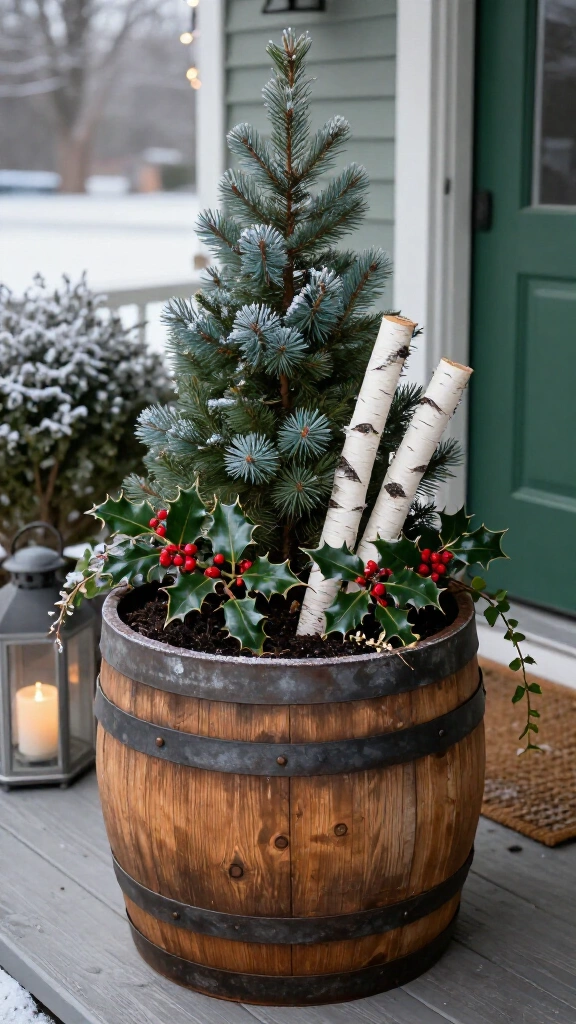
A wooden half-barrel holds a lot of soil, and more soil means better root insulation. That extra mass protects plants during deep freezes. It also gives you room to plant a small evergreen with seasonal fillers around it.
Line the inside with landscape fabric to extend the wood’s life. Then add spruce tips, holly sprigs, and a few birch logs for a woodsy centerpiece.
13. Lantern and greenery combo
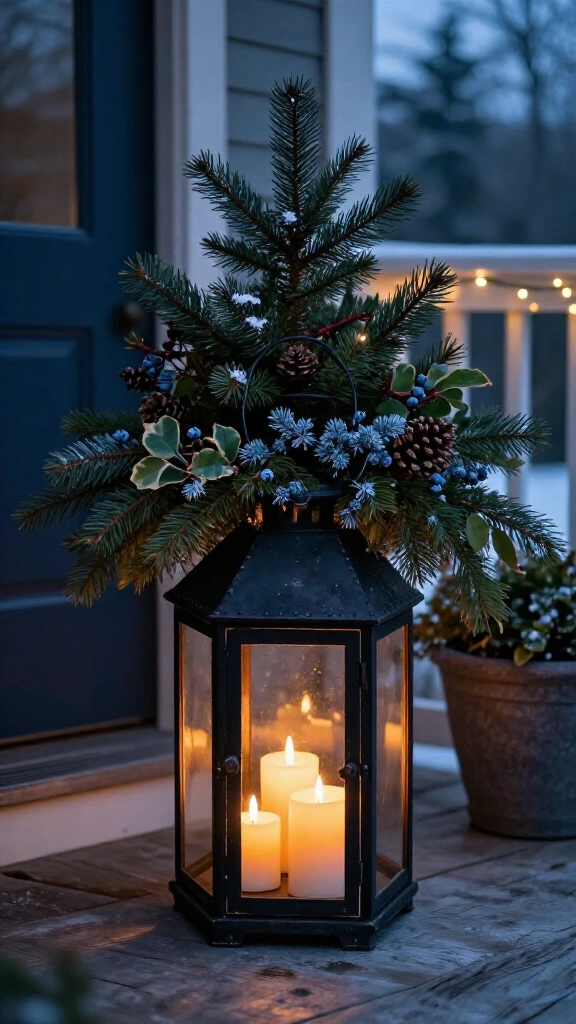
Set a weatherproof lantern in the middle of an evergreen-filled pot. Use LED candles with timers rather than real flames, since wind and wet weather make open flames a headache. The glow looks great at dusk.
This suits you if your porch gets dark by 4:30 p.m. (and let’s be honest, it does). Keep the greenery full so the lantern looks tucked in, not perched on top.
14. Dusty miller and silver foliage mix
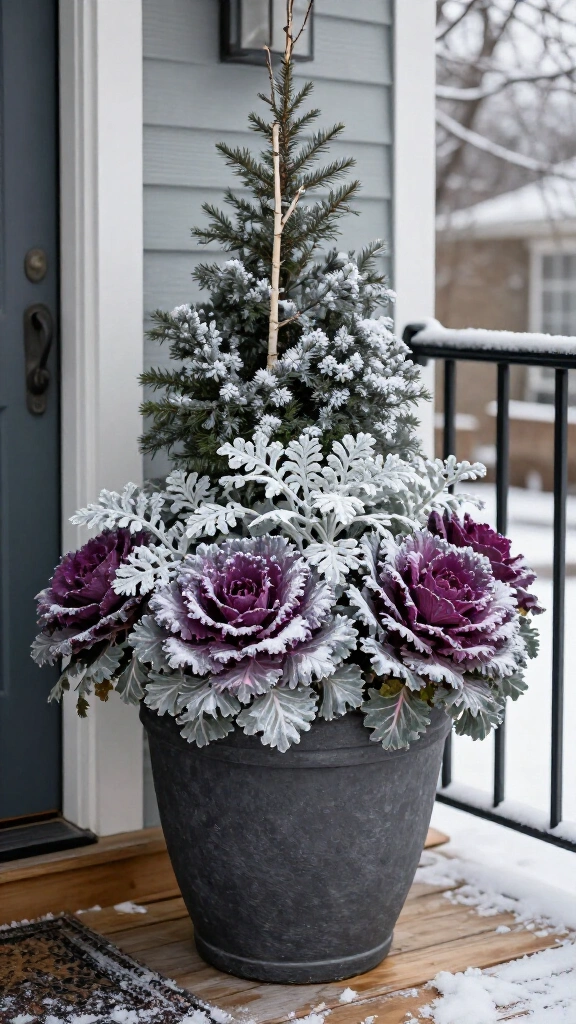
Dusty miller has soft, silvery foliage that looks frosted even before the snow arrives. It tolerates light frost and hangs on in mild winters. Pair it with deep burgundy cabbage for strong contrast.
Silver and plum look expensive together. Your neighbors will assume you hired someone.
15. Wintergreen and cranberry accent pot
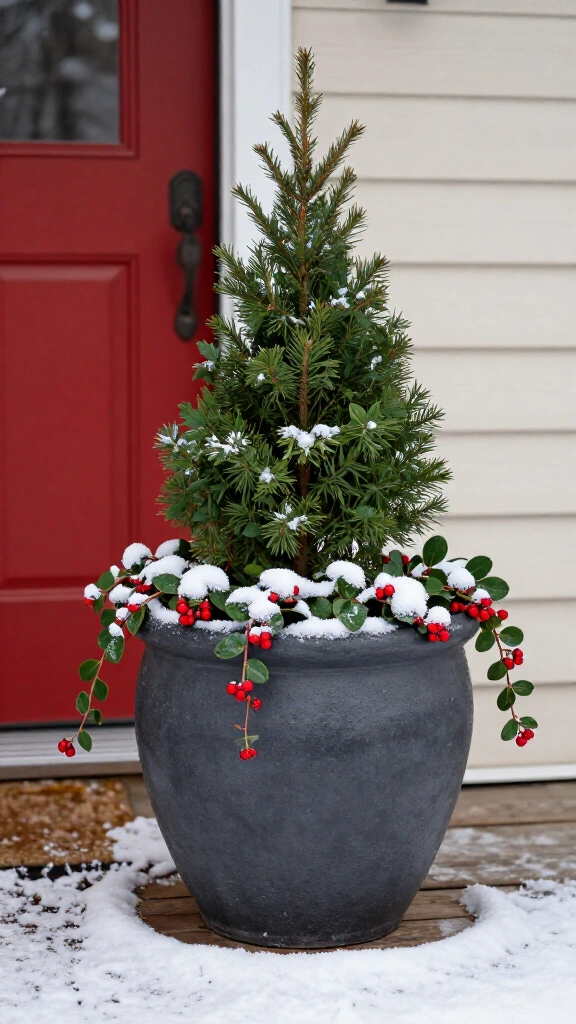
Creeping wintergreen (Gaultheria procumbens) is a tough native groundcover with glossy leaves and bright red berries. It works well as a spiller around the pot’s edge. It grows in zones 3 through 8 and tolerates serious cold.
Combine it with a small conifer for height. The red berries echo a red front door.
16. Carex and ornamental grass texture pot
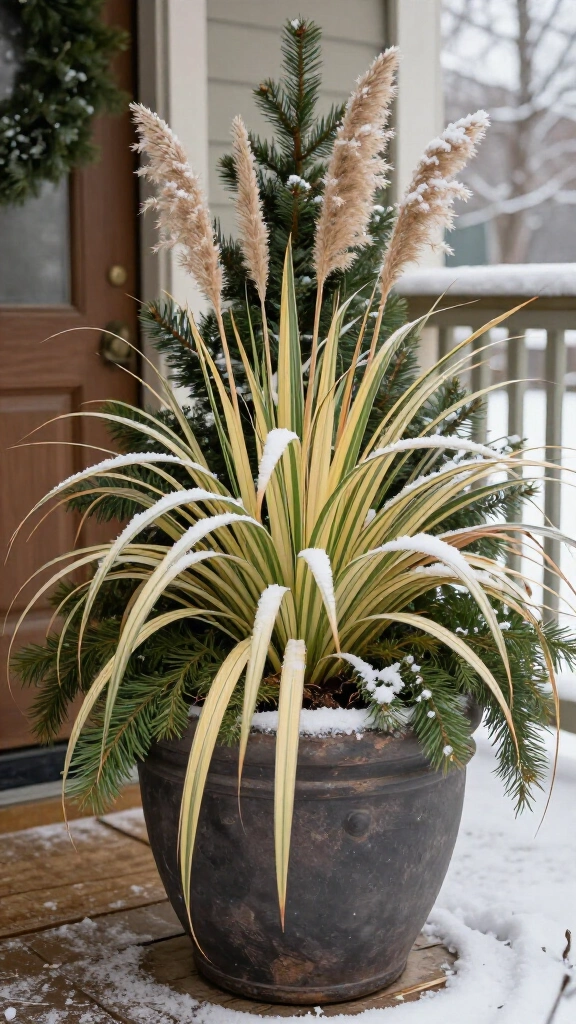
Evergreen sedges like Carex ‘Evergold’ keep their arching, golden-striped leaves through winter in many climates. They add movement and softness next to stiff evergreens. Dried grass plumes also look great dusted with snow.
Cut back the dead growth in early spring, and the plants bounce right back. It’s the easiest texture upgrade on this list.
17. Hens and chicks stone trough
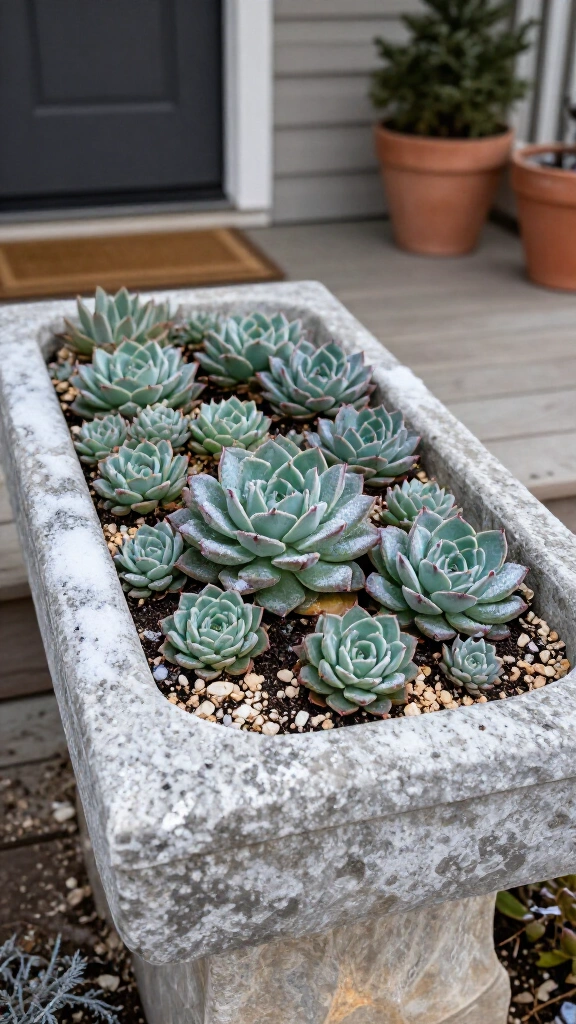
Some succulents love winter. Hardy sempervivum (hens and chicks) survive well below freezing as long as they have sharp drainage. Plant them in a shallow stone trough with gritty soil.
Use a mix of potting soil and coarse sand or perlite. Winter wet kills these plants, not cold, so drainage matters most.
18. Illuminated planter with string lights and bows
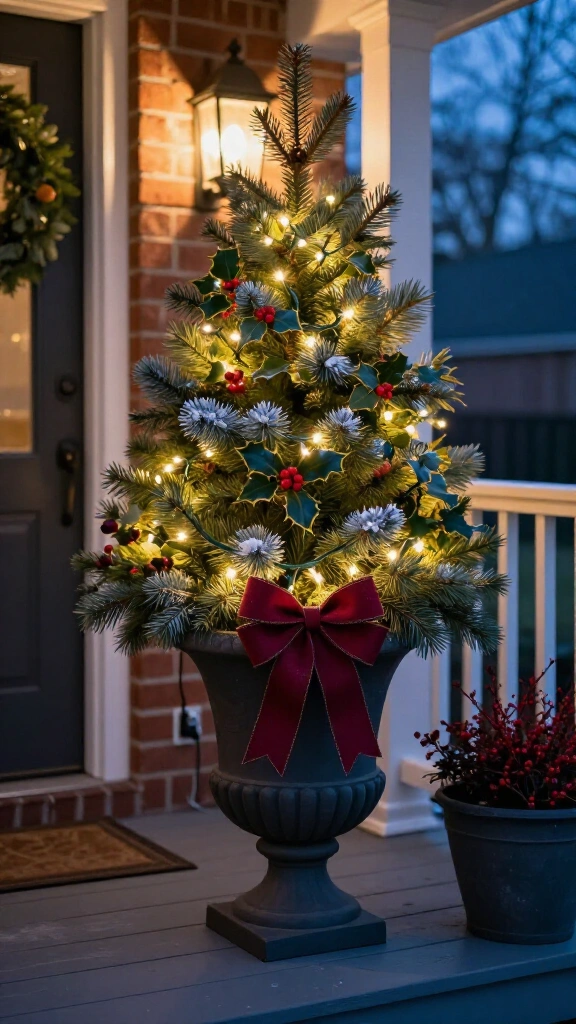
End with the biggest statement. Fill a large pot with mixed evergreens, then weave in outdoor-rated warm white string lights and a weatherproof bow. Plug the lights into a timer so you never fumble in the dark.
This one works with the other ideas in our guide to winter planters for front porches. Layer it onto a few of the earlier looks, and your entry glows from every angle.
Keep your winter planters going
You don’t need a green thumb to pull off a freeze-proof porch. You need hardy plants and frost-proof pots, plus a little layering. Start with one or two of these ideas and build from there.
Your freeze-proofing checklist
- Choose a pot made of fiberglass, resin, thick concrete, or wood.
- Drill drainage holes and lift pots on feet so water escapes.
- Water on mild days when the soil isn’t frozen, because evergreens still need moisture.
- Spread a layer of bark or pine needles over the soil to insulate the roots.
- Group pots together so they shield each other from wind.
For more advice on container gardening in cold weather, the University of Minnesota Extension offers research-based guidance for northern climates. Almost every state also has local extension offices that give free advice tailored to your region.
So which look will you try first? Grab a pot, grab some greenery, and give your porch a winter glow-up that survives every freeze.