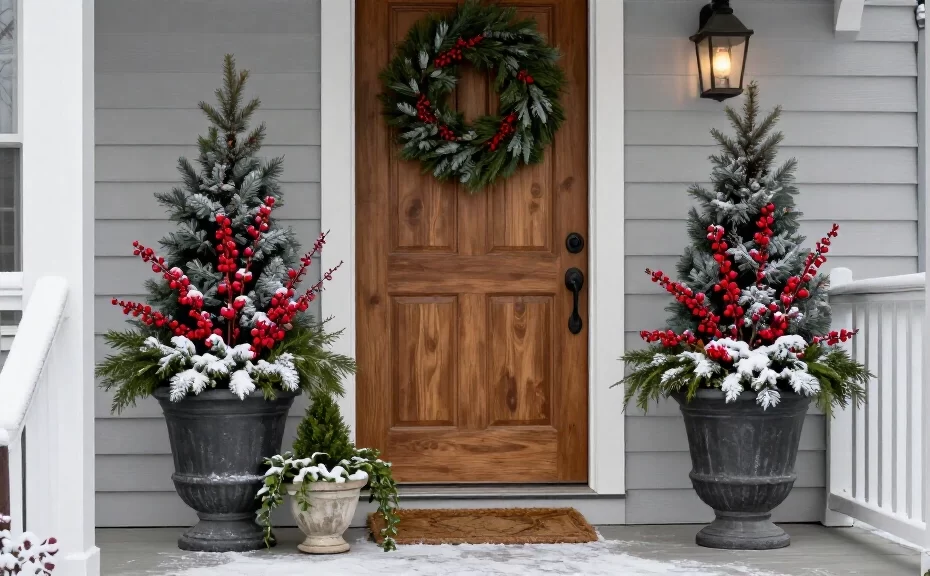
A gray winter porch can feel a little gloomy, but your planters do not need to join in. Tough evergreens, colorful branches, hardy berries, and sensible containers can fill winter planters for front porches with color from the first frost through the last icy morning.
Choose plants that suit your local climate, then give them a roomy pot, good drainage, and shelter from harsh wind when you can. Check the USDA Plant Hardiness Zone Map before shopping. A pretty plant that cannot handle your zone will not last long on the porch.
1. Classic cedar, pine, and red twig dogwood
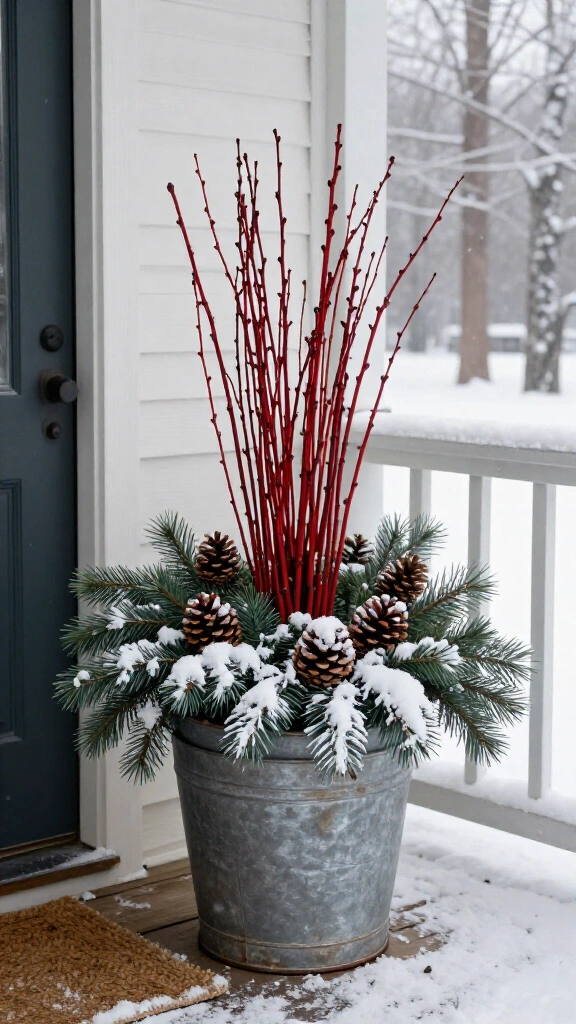
Fill a winter porch planter with cedar boughs, white pine, and upright red twig dogwood stems. The greenery adds bulk, and the crimson branches stand out against snow like little fireworks. Tuck in pinecones for texture, and the whole arrangement looks far pricier than the effort it takes.
2. Dwarf Alberta spruce in a tall black pot
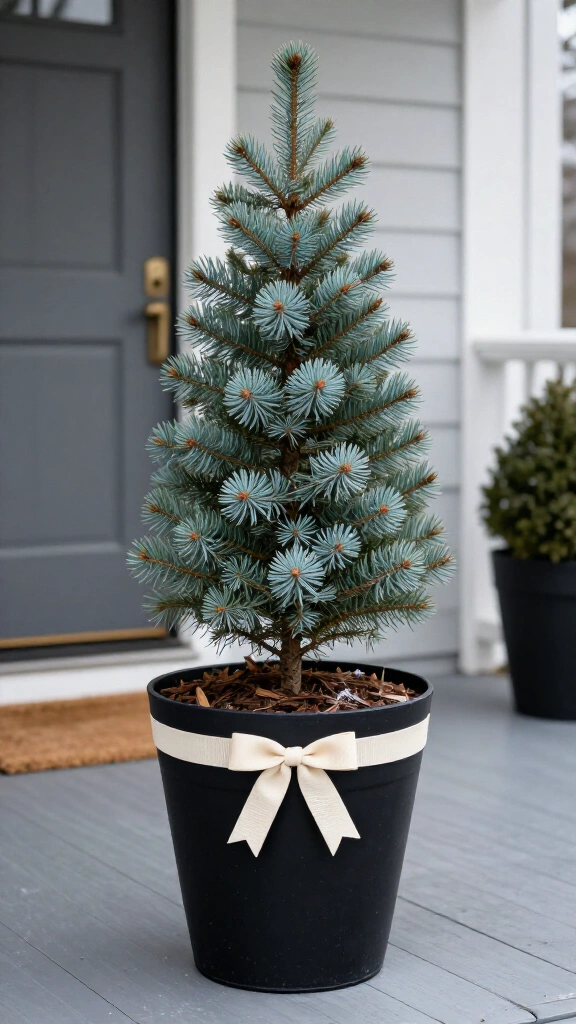
A dwarf Alberta spruce gives a front porch a neat cone shape all winter. Plant one in a tall matte black pot, cover the soil with fresh mulch, and tie a simple ribbon around the container. This choice suits homeowners who like clean, tailored decor after the holidays.
3. Birch branches and winterberry stems
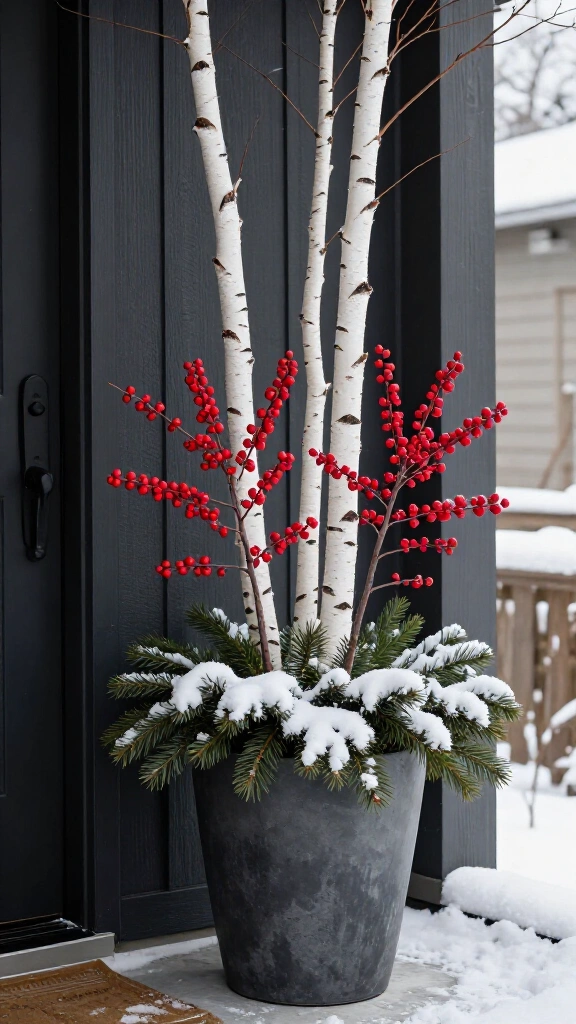
White birch branches bring height and brightness against a dark exterior, while winterberry stems add red color. Use cut stems for a seasonal arrangement, or pick faux berries if birds turn your porch into a buffet. A charcoal, white, or weathered concrete planter keeps the look modern.
4. Boxwood and magnolia leaf planter
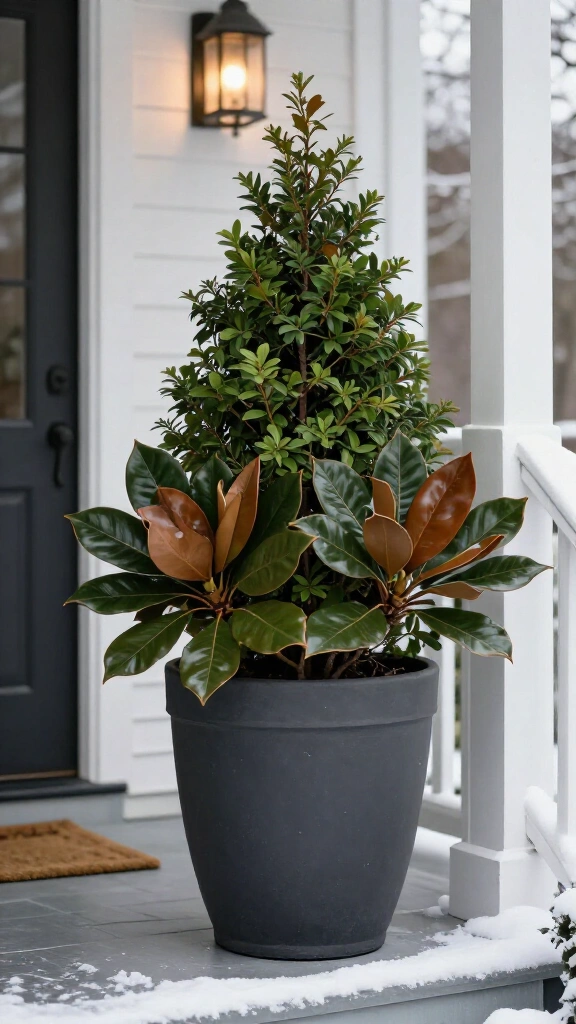
Glossy magnolia leaves bring warm bronze undersides, while boxwood adds dense green texture that reads well from the sidewalk. Layer magnolia around the rim, then gather boxwood stems in the middle for a full, balanced arrangement. This pairing can make almost any porch look like someone hired a stylist.
5. Blue spruce tips with silver eucalyptus
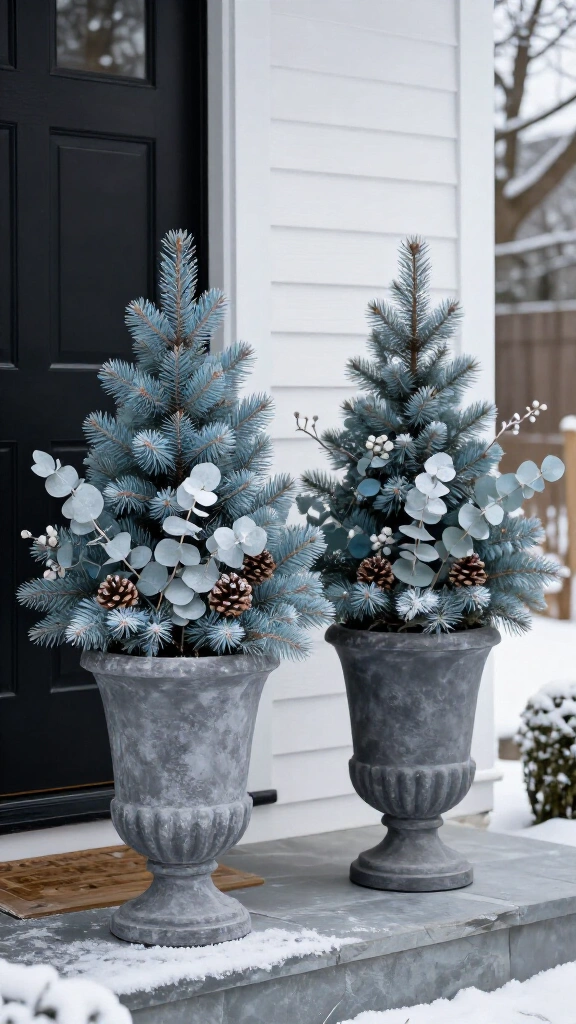
Blue spruce tips bring cool color, prickly texture, and winter toughness to seasonal containers. Pair them with silver dollar eucalyptus for a frosty blue gray mix that suits white siding, slate steps, and black doors. Use fresh eucalyptus in sheltered planters, or use realistic faux stems where deep freezes hit hard.
6. Winter pansies and ornamental kale
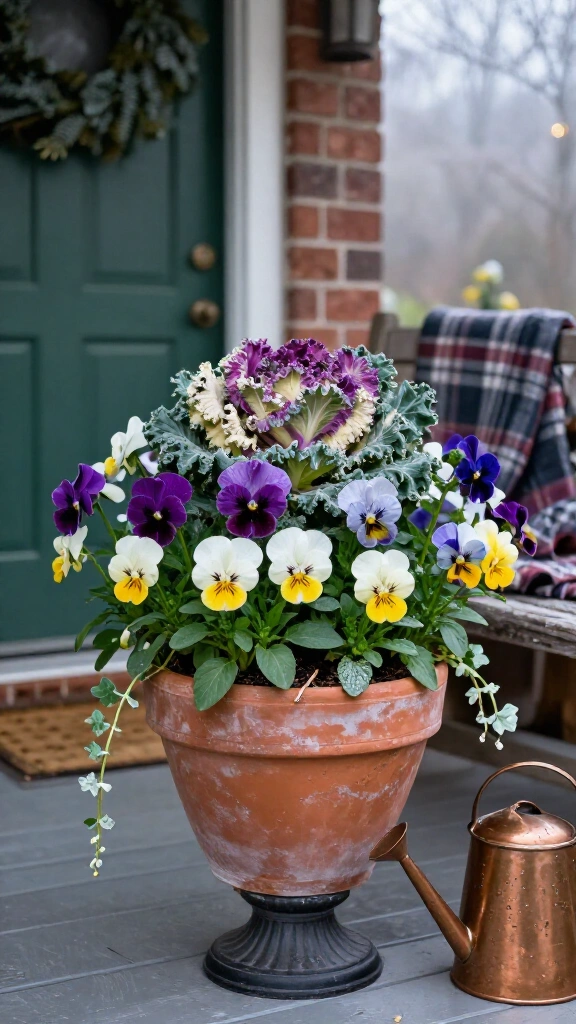
Gardeners in milder regions can keep front porch planters colorful with winter pansies and ornamental kale. Pansies bring their cheerful little faces during cool spells, while kale adds ruffled purple, cream, and green leaves. Water when the soil feels dry, and protect pots during unusually sharp freezes for stronger plants.
7. Juniper, white branches, and pinecones
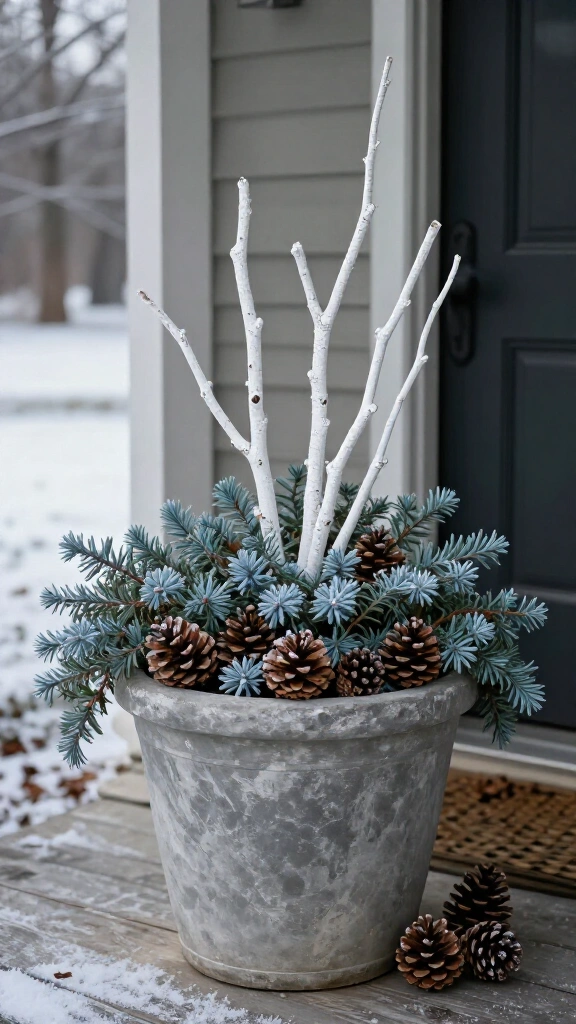
Juniper spills gently over a planter edge and holds onto its blue green color after Christmas. Add branches that you paint white and a handful of pinecones for contrast, but use only a few branches so the arrangement does not look like a craft store exploded. This planter needs texture, not clutter.
8. Hardy hellebores in a sheltered entryway
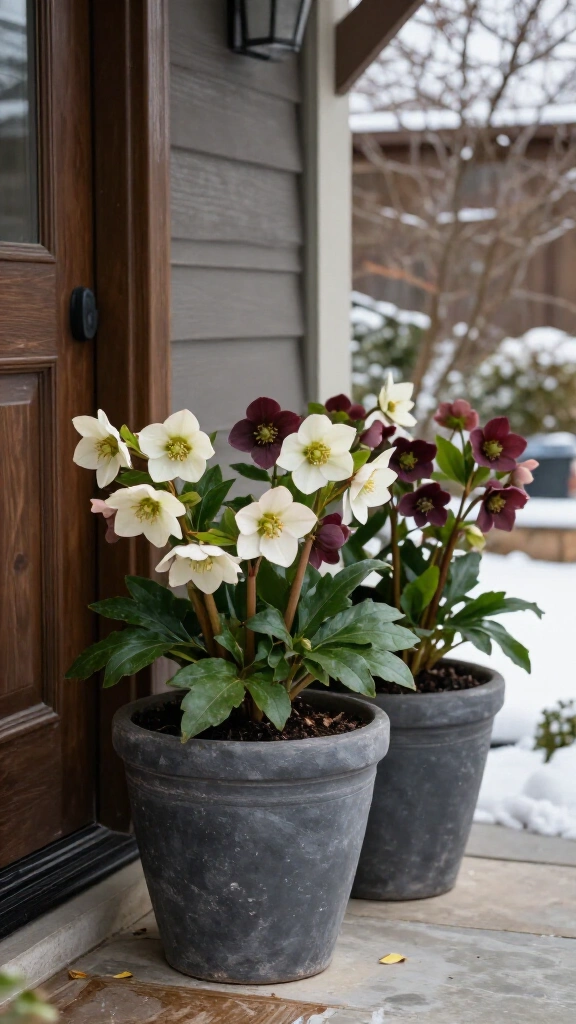
Gardeners call hellebores Christmas roses or Lenten roses, and these plants reward patience with graceful blooms during cool months. Put them near a sheltered doorway, where wind and intense winter sun will not batter them. The Royal Horticultural Society’s hellebore growing guide gives useful care details before you buy.
9. Norfolk pine and cozy copper accents
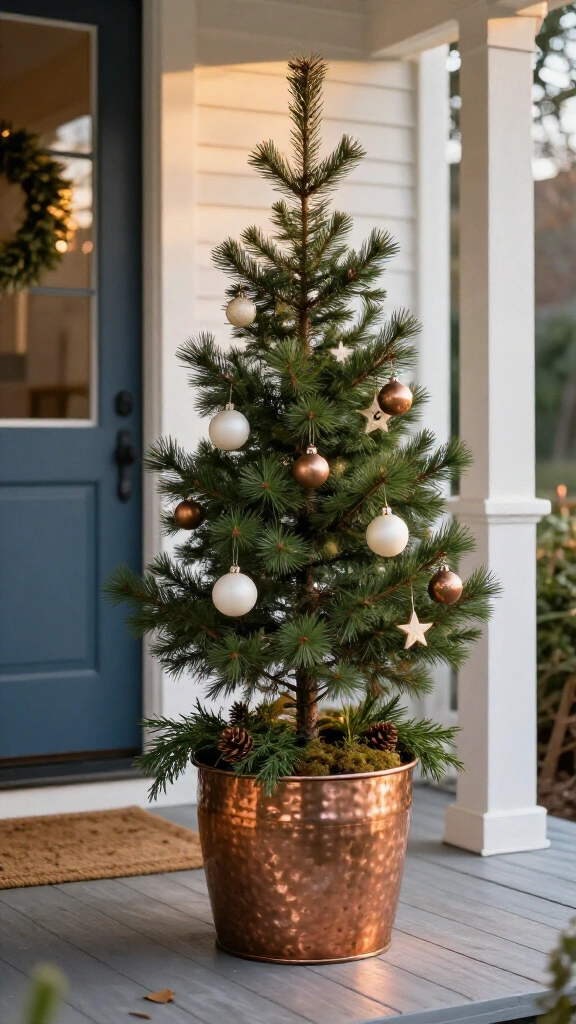
Use a Norfolk Island pine for a softer, playful version of the usual mini porch tree. Set it in a copper toned pot, add a few outdoor safe ornaments, and bring it inside whenever cold temperatures could damage it. This option works best in warmer climates or on porches where frost does not linger.
10. Evergreen topiary with a plaid ribbon
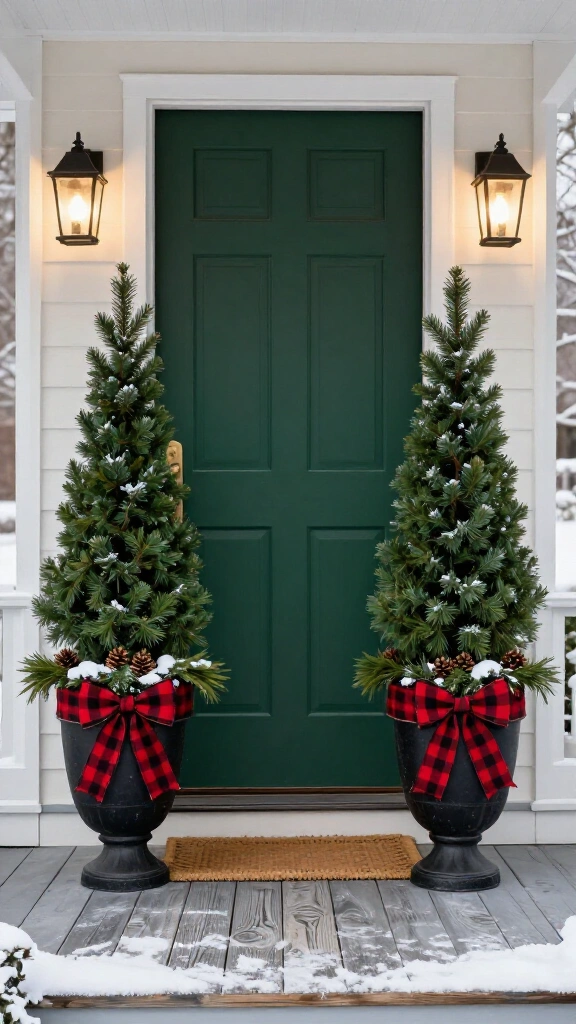
A simple evergreen topiary brings symmetry to an entry and makes the area look more considered. Place matching pots on either side of the front door, wrap each container with weather resistant plaid ribbon, and keep the rest simple. Strong shapes often do more than glitter.
11. Fraser fir, cedar, and giant seed pods
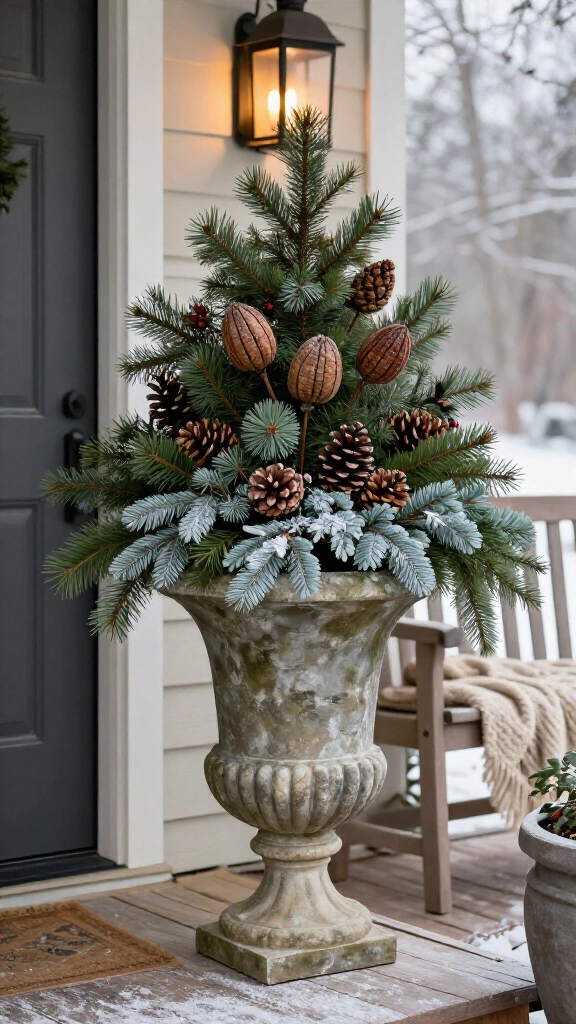
Fraser fir branches bring rich green color and that familiar holiday scent, while cedar softens the edges with feathery foliage. Add oversized seed pods or sugar pinecones for a natural focal point that lasts past December. Want more outdoor ideas with real neighborhood appeal? Browse these winter planter and front porch ideas for new combinations.
12. Purple kale with dusty miller
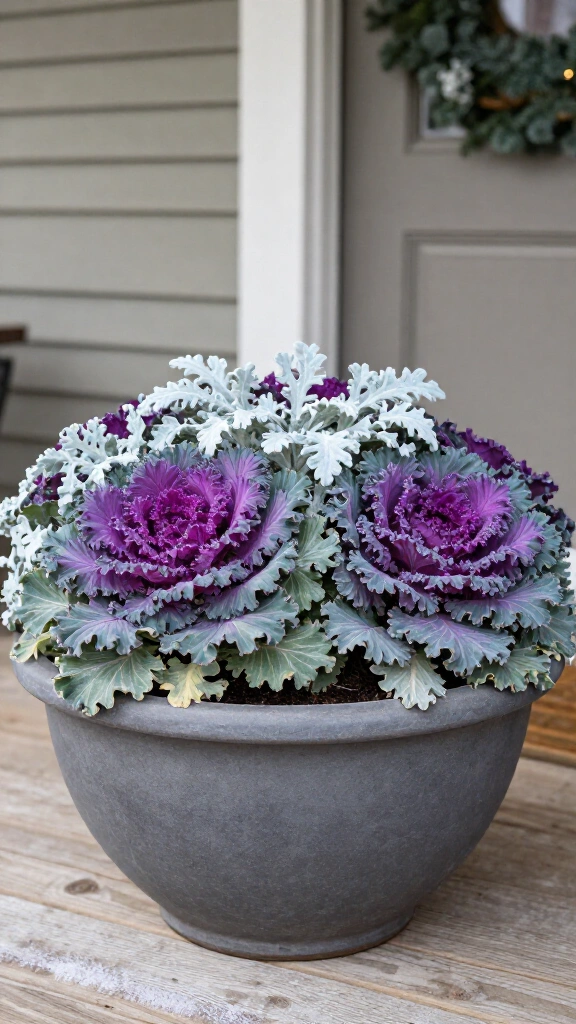
Purple ornamental kale brings bold color when winter puts flowers on pause. Pair it with silvery dusty miller in a broad bowl planter for a low, full display that feels seasonal without going overboard. Pick this combination for temperate areas, and cover the planter when severe cold threatens the roots.
13. Red dogwood, gold branches, and evergreen filler
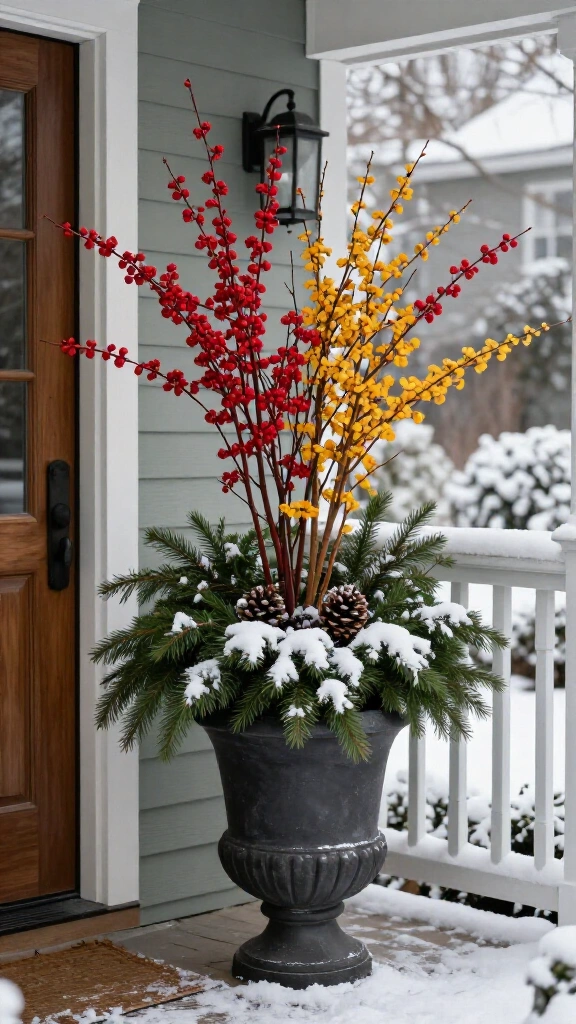
Mix red dogwood branches with yellow twig dogwood for a high contrast arrangement that still feels natural. Use cedar, pine, or fir around the base to ground the colorful stems and cover the potting mix. Snow makes those branch colors look even louder, which helps when winter turns everything else gray.
14. Mini cypress trees with string lights
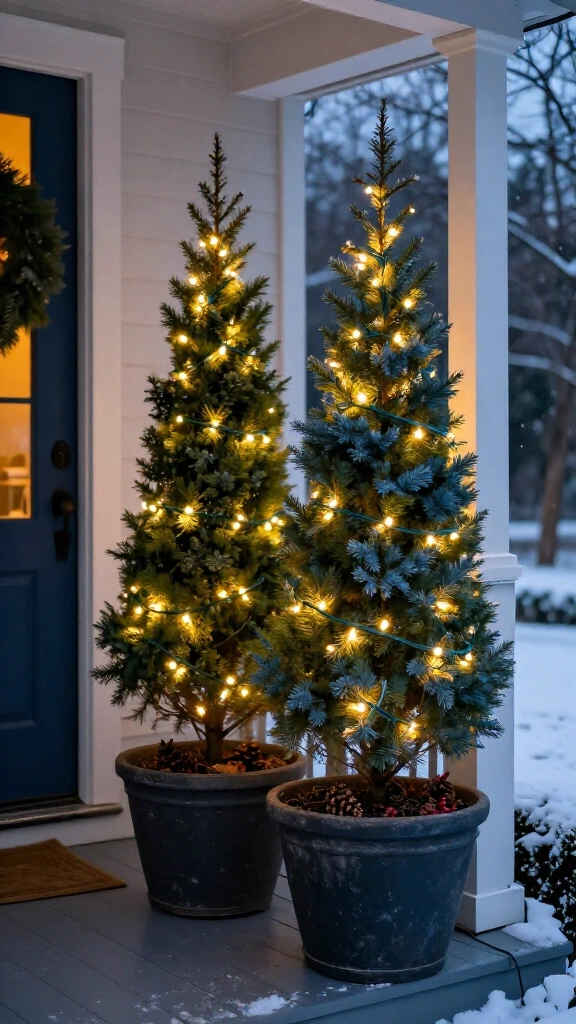
Mini cypress trees make pleasant porch companions where the climate suits them. Wrap the trees with outdoor rated warm white lights, then set a timer so you do not have to walk outside every evening like a frozen electrician. Keep cords off wet ground, keep them dry, and follow the manufacturer’s safety instructions.
15. White cyclamen in a sheltered porch planter
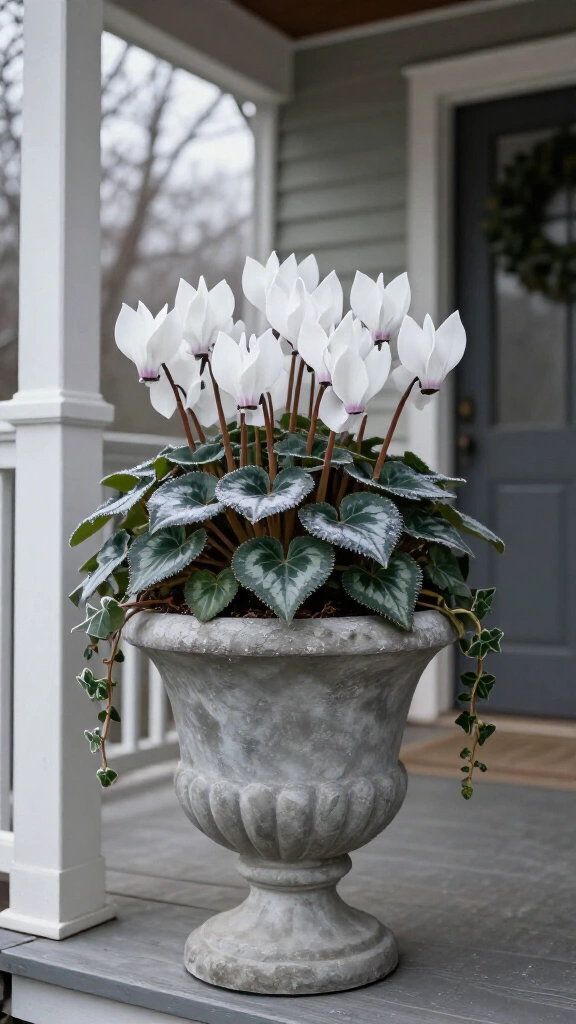
White cyclamen gives a sheltered porch a soft, snowy look with swept back petals and patterned leaves. Keep the planter cool and bright, and shield it from hard freezes. Cyclamen likes chilly weather, but icy roots can kill it. Add trailing ivy for an arrangement that feels more like a garden than a holiday display.
16. Mixed evergreens with dried hydrangea heads
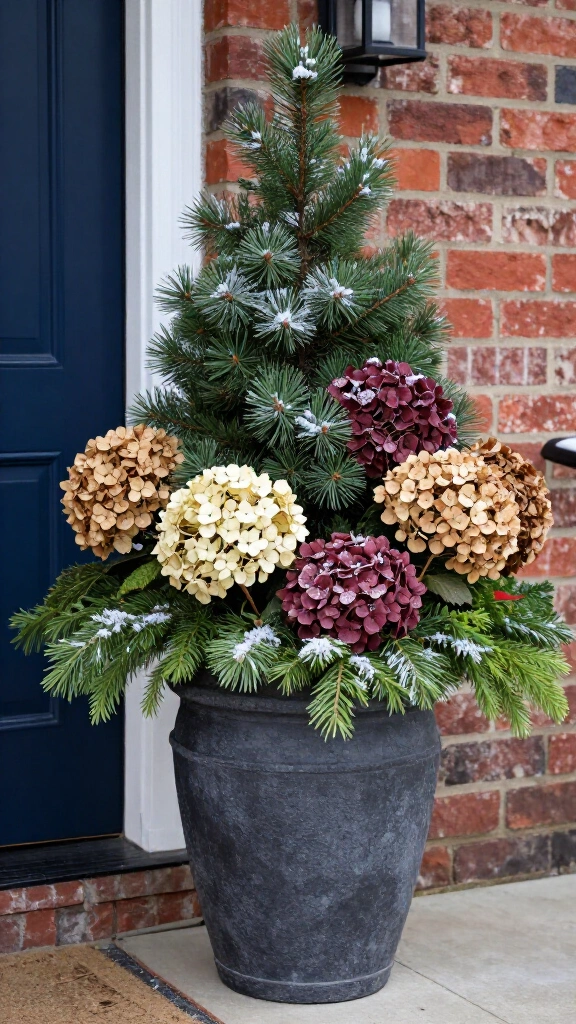
Dried hydrangea blooms bring soft, cloudlike texture to sturdy evergreen planters. Choose blooms in faded green, cream, burgundy, or tan, then tuck them between pine and cedar branches for contrast. This arrangement looks especially good beside brick, stone, or a deep colored front door. It feels dramatic without looking fussy.
17. Skimmia, ivy, and heuchera for mild winters
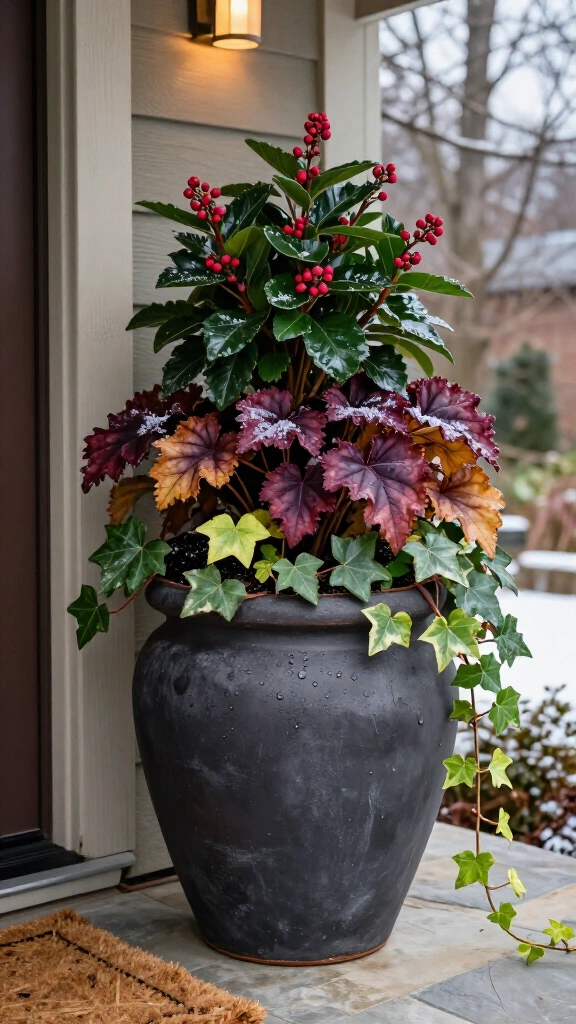
In moderate climates, combine skimmia, trailing ivy, and heuchera in a living container that keeps going through winter. Skimmia brings evergreen leaves and colorful buds, while heuchera adds foliage in plum, caramel, or lime. Set the planter near your home for a little extra shelter from drying wind.
18. Faux evergreen planter with real seasonal details
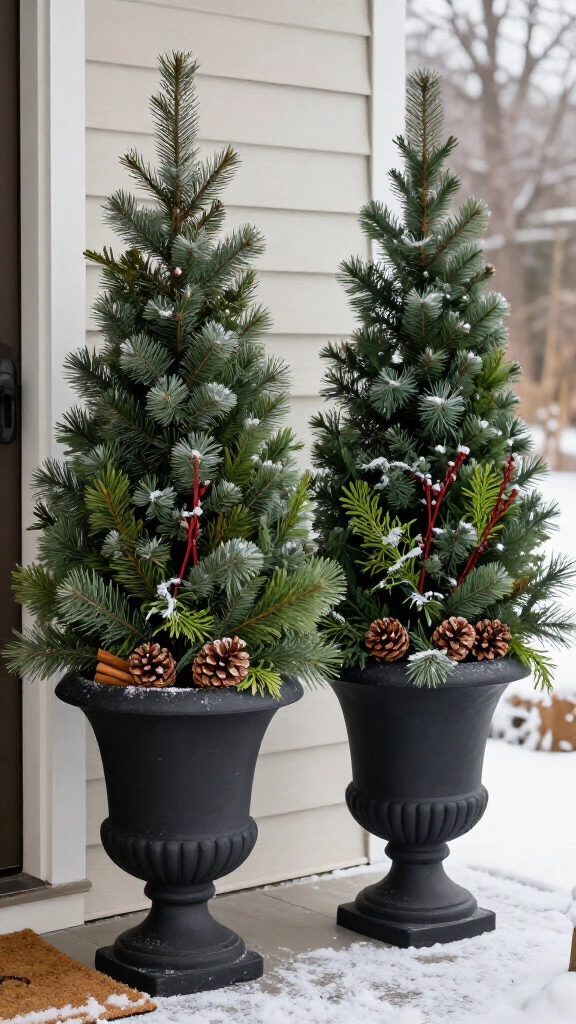
Faux evergreens spare busy households, rental properties, and exposed porches from winter watering. Choose high quality UV resistant branches, then add real pinecones, dogwood stems, or clipped cedar so the arrangement looks believable up close. A beautiful porch planter does not need to battle frozen soil.
Keep your winter porch planters looking fresh
The best winter container gardens balance structure, color, and durability. Use evergreen branches or living conifers for the base, add berry stems or colorful twigs for contrast, and choose pots that survive freeze thaw cycles without cracking. Drainage matters as much as plant choice, so raise containers slightly and keep water from pooling underneath.
Replace cut greenery when it fades, brush off heavy snow before it bends branches, and turn containers if one side gets more wind or sun. You might prefer a neat topiary, a loose woodland arrangement, or a porch full of red dogwood. Either way, your entry can feel welcoming through every freeze. Winter brings the chill, but your front porch can still bring charm.