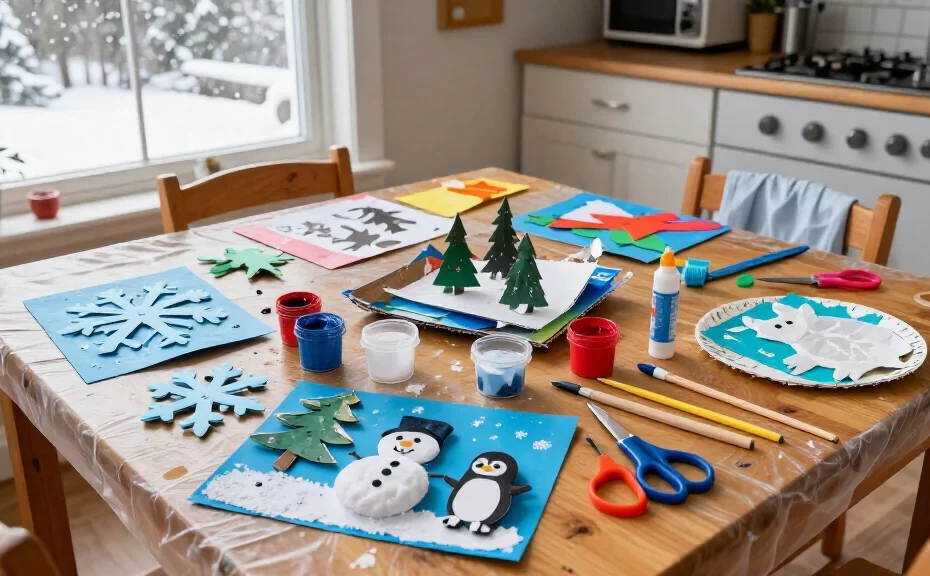
On a snowy day, your kitchen table can become an art studio, and the recycling bin might hold your next batch of supplies. These 24 winter art for kids projects use familiar materials and playful techniques to keep little hands busy when the weather calls for staying inside.
Kids of different ages can enjoy most of these ideas. Keep a grown-up nearby to help with scissors, hot glue, and small materials when needed. Find an old shirt for a smock, cover the table, and make some room for art.
1. Watercolor snowflake resist
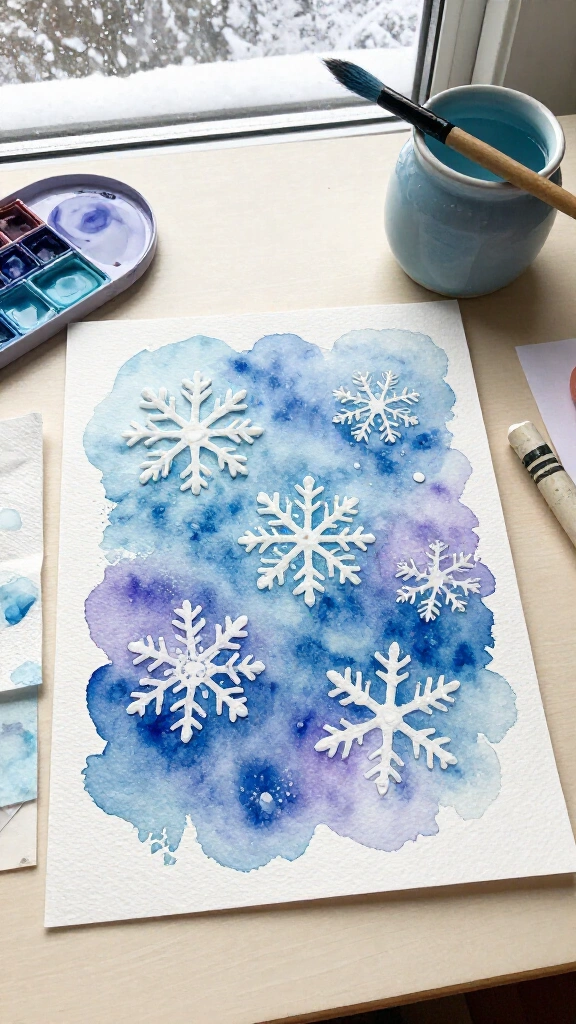
Draw snowflakes across white paper with a white crayon. Press firmly to make thick lines, then brush diluted watercolor over the page and watch the shapes appear. Thick paper handles the water best. Kids can also overlap cool colors to make a frosty sky.
2. Cotton ball snowy trees
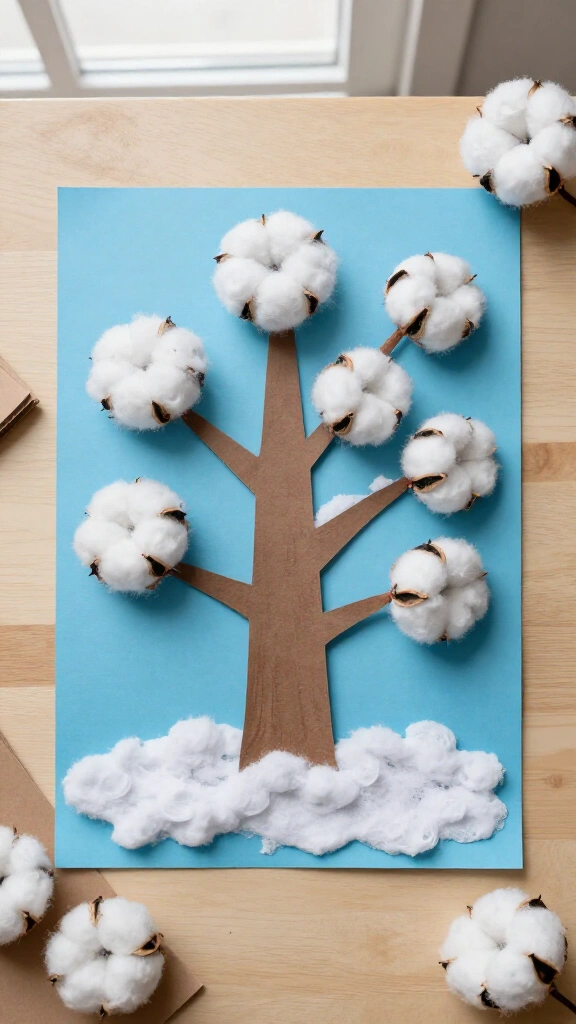
Cut simple tree trunks and branches from brown paper, then glue them onto a blue background. Stretch cotton balls into fluffy tufts and glue them to the branches to make a fresh snowfall. Give younger children larger cotton pieces and supervise them closely; small craft supplies can pose a choking hazard.
3. Paper plate polar bears
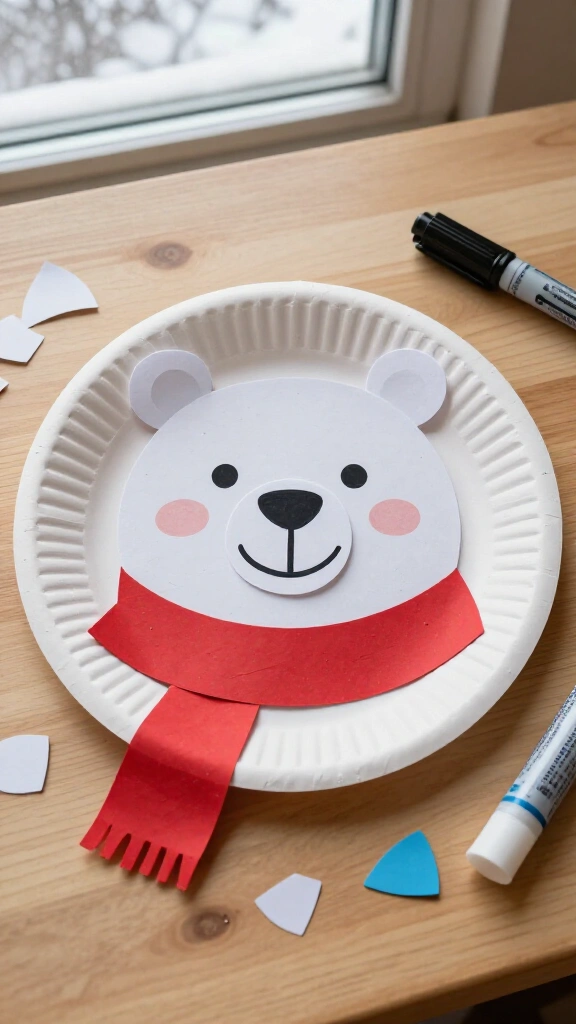
Give a white paper plate a polar bear face with paper ears, a round muzzle, and facial details drawn with a marker. Kids can make a scarf from scrap paper or give their bear an expression that says, “More snow, please.” Use glue sticks if you want less mess.
4. Salt-painted snowflakes
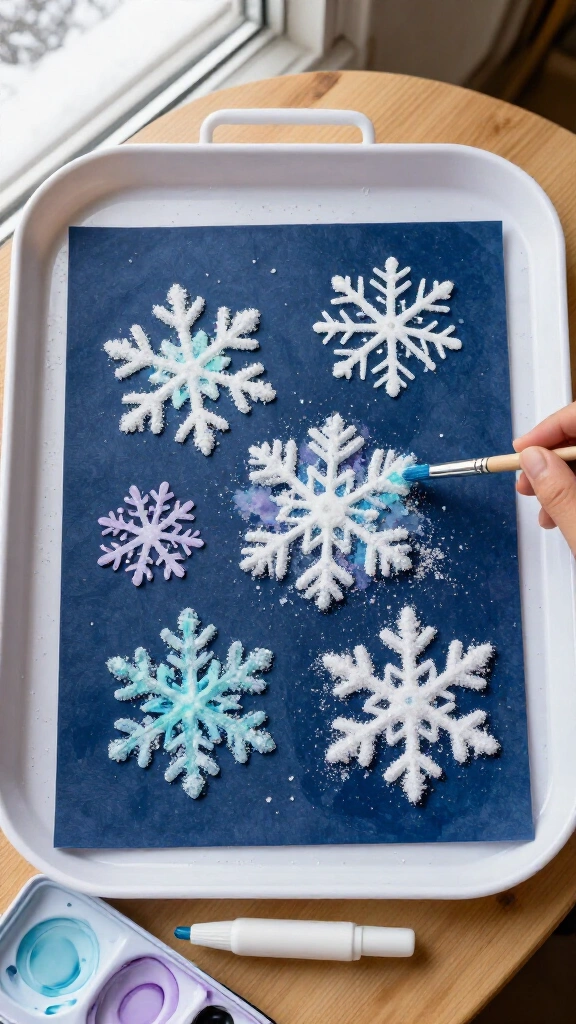
Draw snowflake shapes on sturdy paper with white school glue. Sprinkle salt over the lines and shake off the excess. Dip a paintbrush in watercolor, touch it to the salt, and watch the color travel along the crystals. Keep the project on a tray to catch spills, and remind kids to keep craft salt and paint out of their mouths.
5. Torn paper winter landscapes
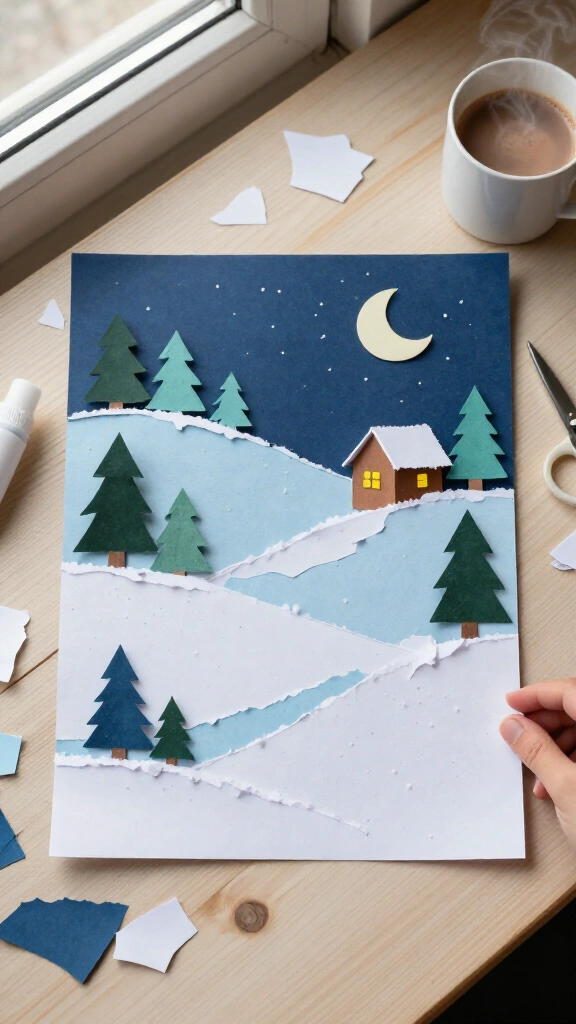
Tear white and pale blue paper into long, uneven strips, then layer them across a sheet to make snowy hills. Add paper evergreens, a tiny cabin, or a moon overhead. Tearing gives little fingers practice, and the uneven edges make convincing snowdrifts without a ruler.
6. Bubble wrap snow prints
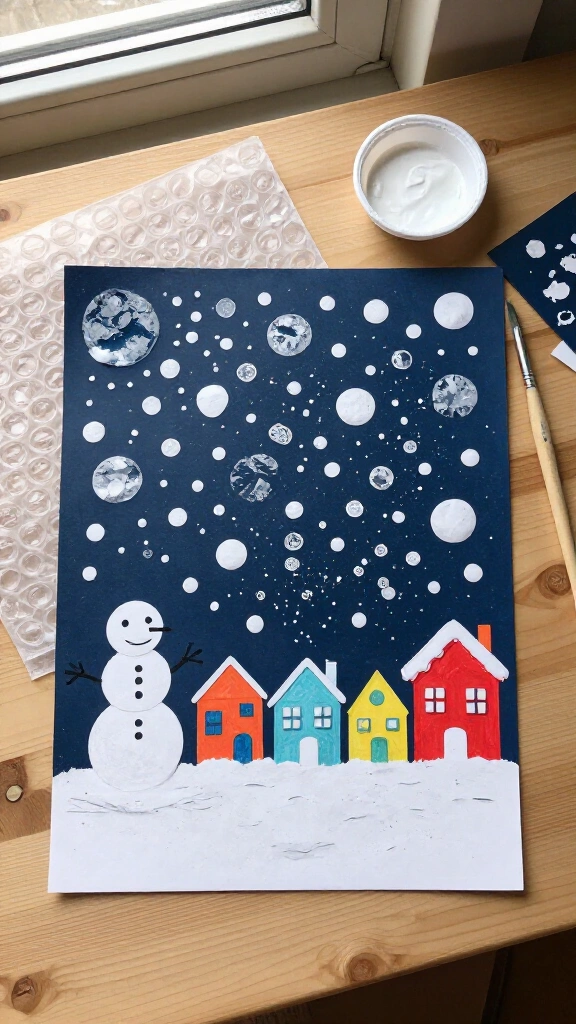
Brush a thin layer of white washable paint onto bubble wrap, then press it onto dark paper to make a flurry of dots. Once the print dries, kids can add a snowman or a row of paper houses. Test the paint on scrap paper first; too much paint can blur the dots.
7. Coffee filter snowflakes
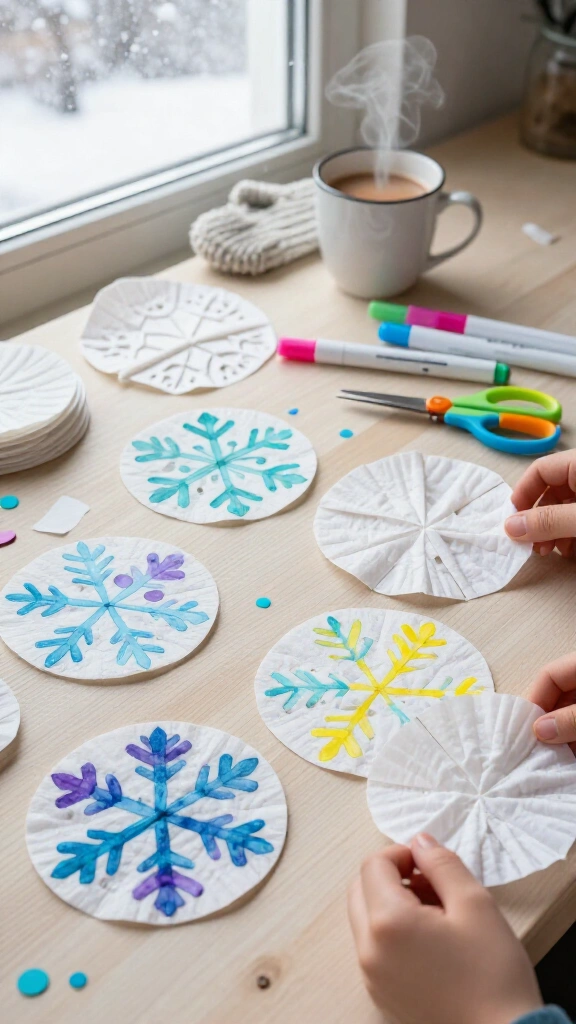
Flatten a coffee filter, fold it into a small wedge, and snip shapes along the folded edges. Slowly unfold it to reveal the snowflake, then decorate it with washable markers if you like. An adult should help young artists with scissors. Each snowflake can have its own pattern.
8. Handprint evergreen forest
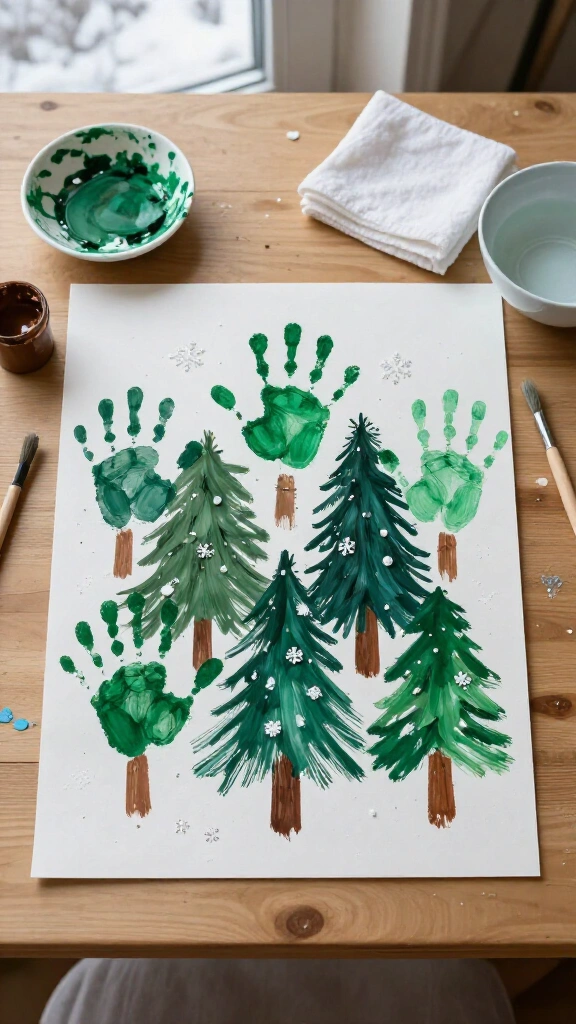
Paint a child’s palm and fingers green, then press the hand onto paper with the fingers pointing downward. Add a brown trunk and repeat to make a forest of handprint trees. Use washable, skin-safe paint, check the label for age guidance, and wash hands afterward.
9. Cardboard tube snowy owls
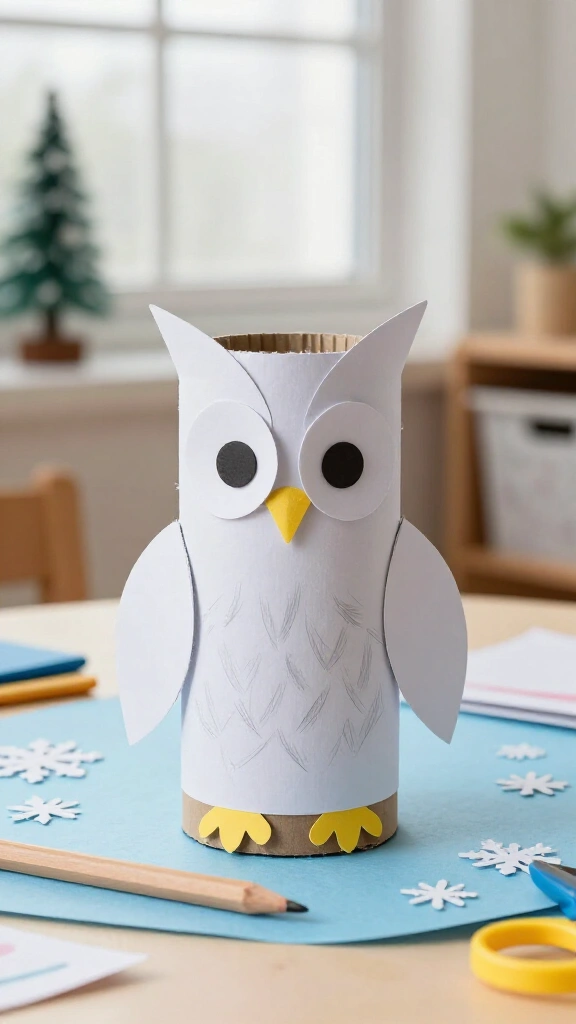
Cover a cardboard tube with white paper and fold the top edges inward to make two pointed ear tufts. Add large paper eyes, a beak, wings, and pencil marks for feathers. While kids work, invite them to name their owl and imagine where it lives. Professor Fluff has a nice ring to it.
10. Northern lights chalk art
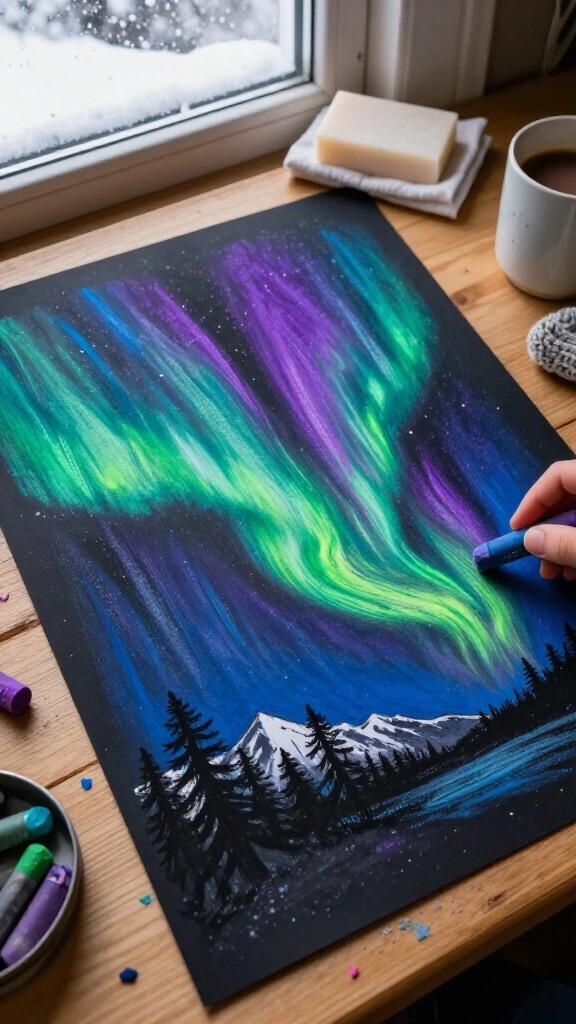
Draw sweeping bands of green, purple, and blue chalk pastel across black paper, then gently blend them upward with a fingertip. Add a silhouette of snowy mountains or pine trees along the bottom. Work over scrap paper, avoid blowing loose dust, and wash hands after the activity.
11. Painted pinecone winter trees
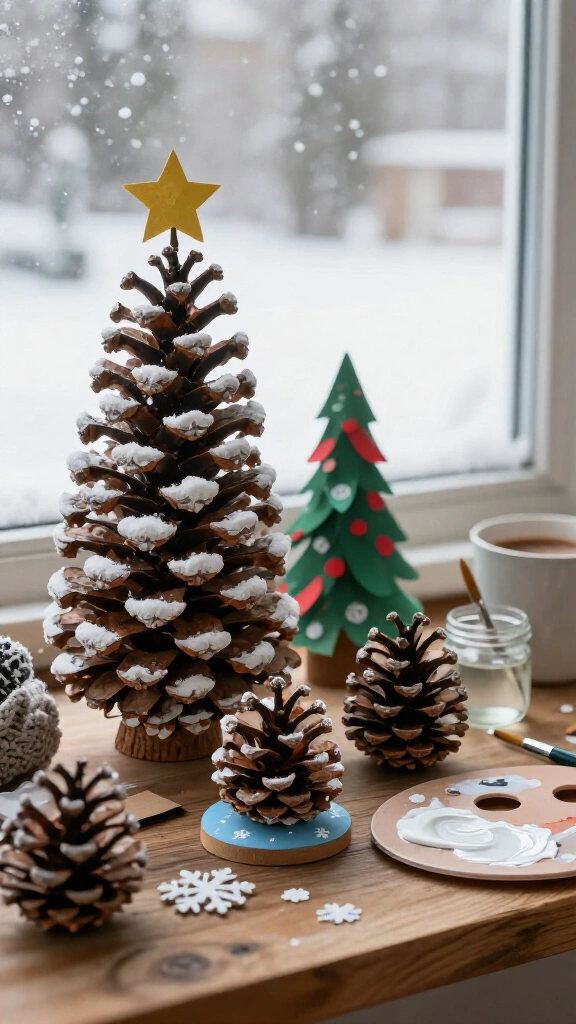
Stand a clean, dry pinecone upright and dab its tips with white paint to mimic snow. Kids can add larger paper decorations or set the tree on a cardboard base. Check pinecones you find outdoors for dirt or insects first, and skip tiny decorations for children who still put objects in their mouths.
12. Snow globe collage
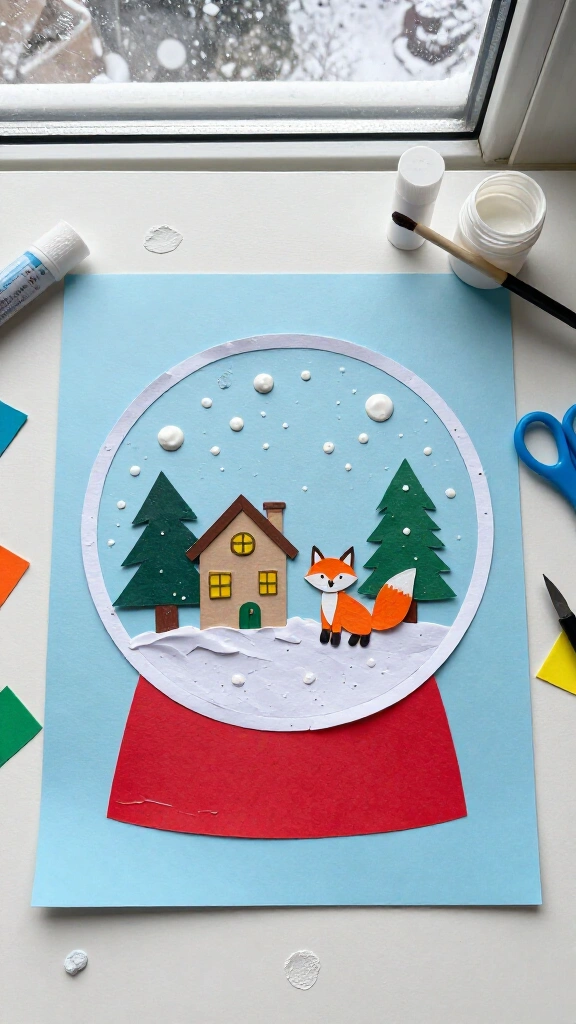
Cut a large circle from paper and glue it above a rectangular base to make a snow globe picture. Fill the circle with a paper animal, a house, or a family portrait, then add white paint dots for snow. This mess-friendly winter craft gives kids a snow globe scene without loose glitter or water.
13. Mitten pattern prints
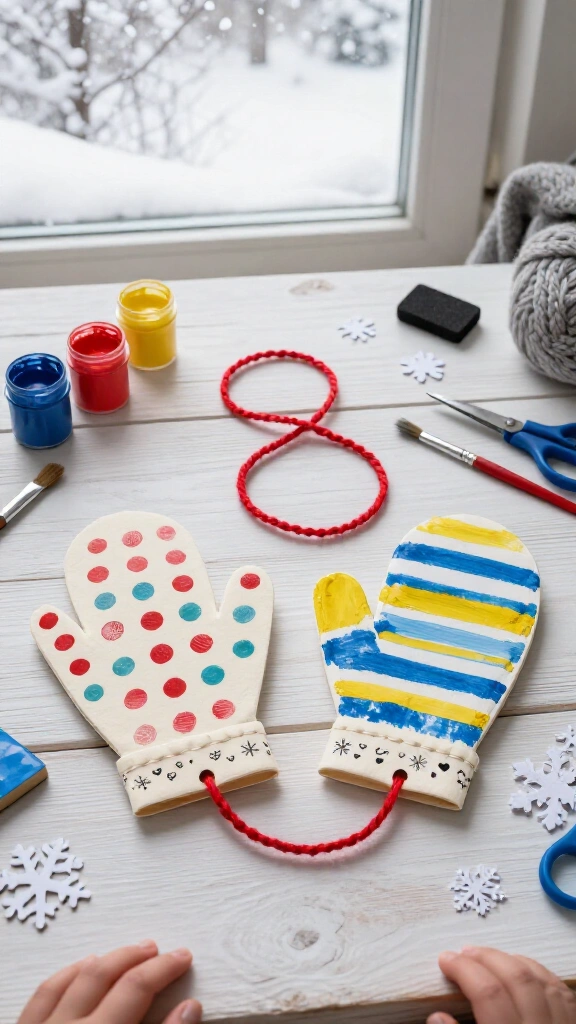
Cut a mitten shape from sturdy paper and let kids decorate it with fingerprints, painted stripes, or simple stamp patterns. They can make a matching pair or give each mitten a different design. Punch holes at the cuffs and connect the mittens with yarn to hang them up. Supervise young children around cords.
14. Ice cube painting
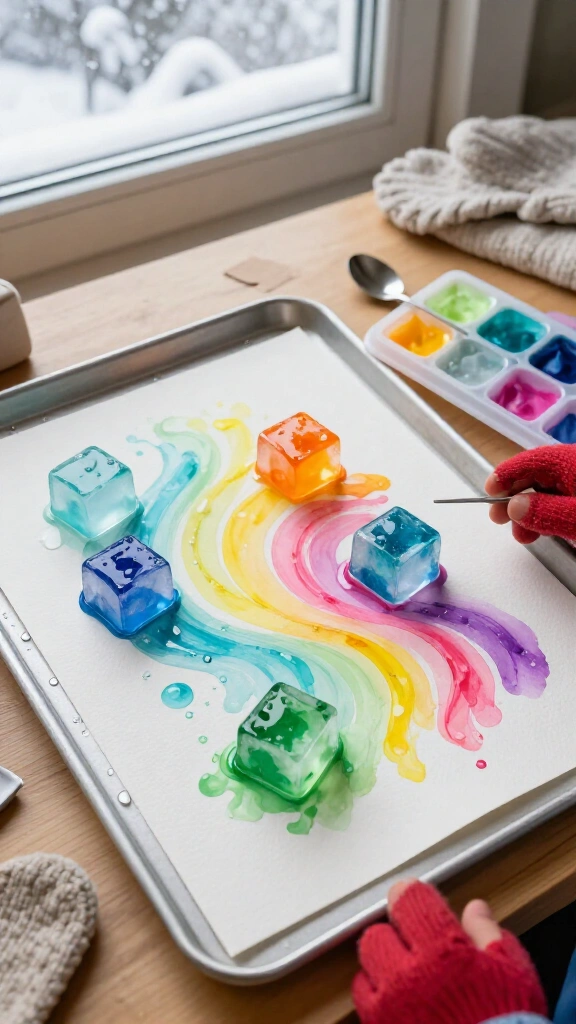
Tint water with a little washable paint and freeze it in an ice cube tray. Then slide the colorful cubes across thick paper. Put the paper on a rimmed tray to catch meltwater, and offer mittens or a spoon for chilly hands. These cubes are art materials, not food, so label them clearly and supervise throughout.
15. Paper birch tree collage
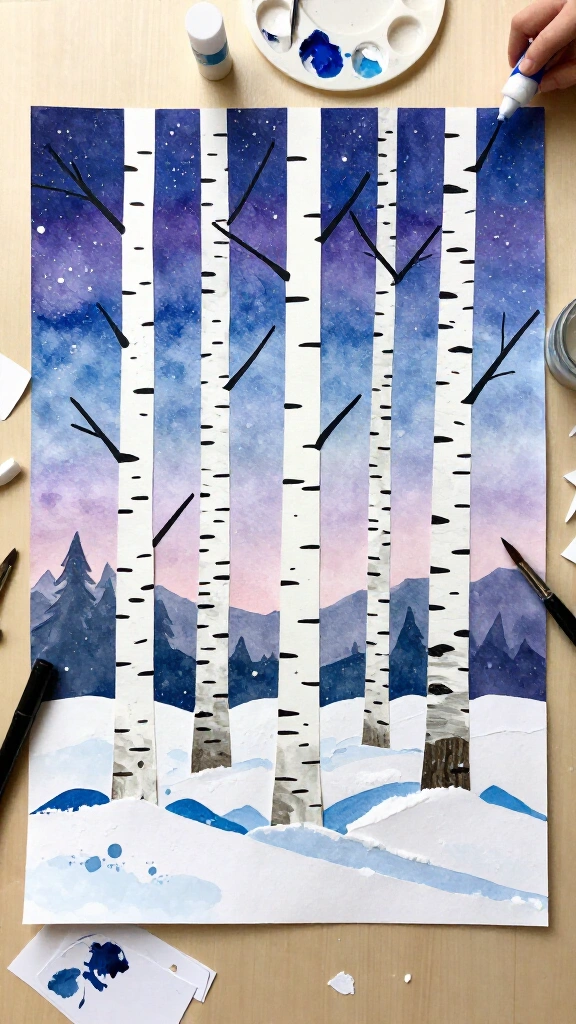
Cut white paper into strips for birch trunks and draw short black marks across each one. Glue the trunks over a painted winter sky, then add branches and snowy ground. Older kids can overlap trees to explore depth, while younger artists can focus on arranging the shapes.
16. Snowman shape art
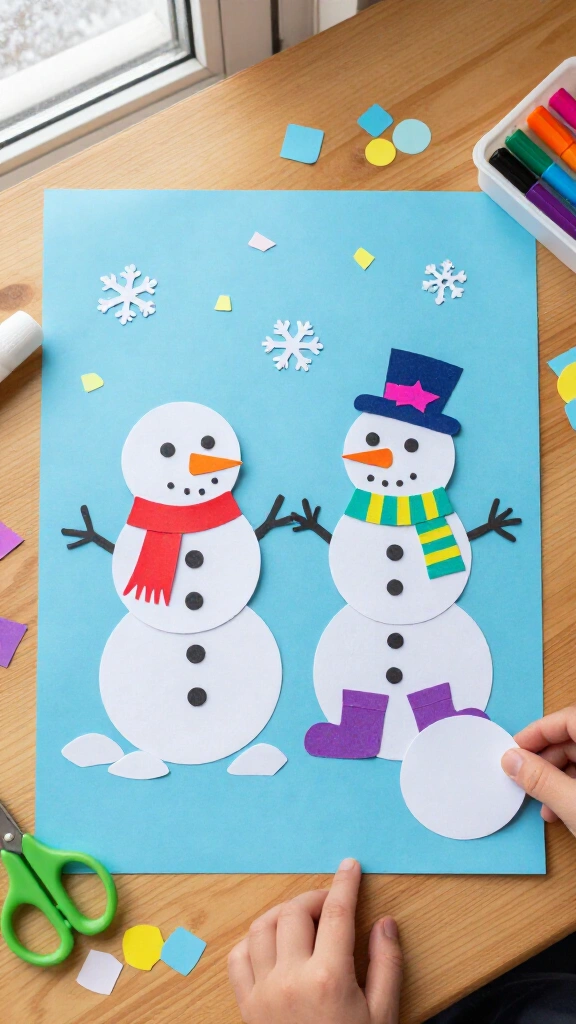
Offer paper circles in several sizes and let kids stack them into snowmen on a colorful background. Add triangle noses, rectangle scarves, and any other shapes that spark an idea. A snowman can wear purple boots, too. As kids work, they can talk about the sizes and shapes they choose.
17. Foil-stamped frost
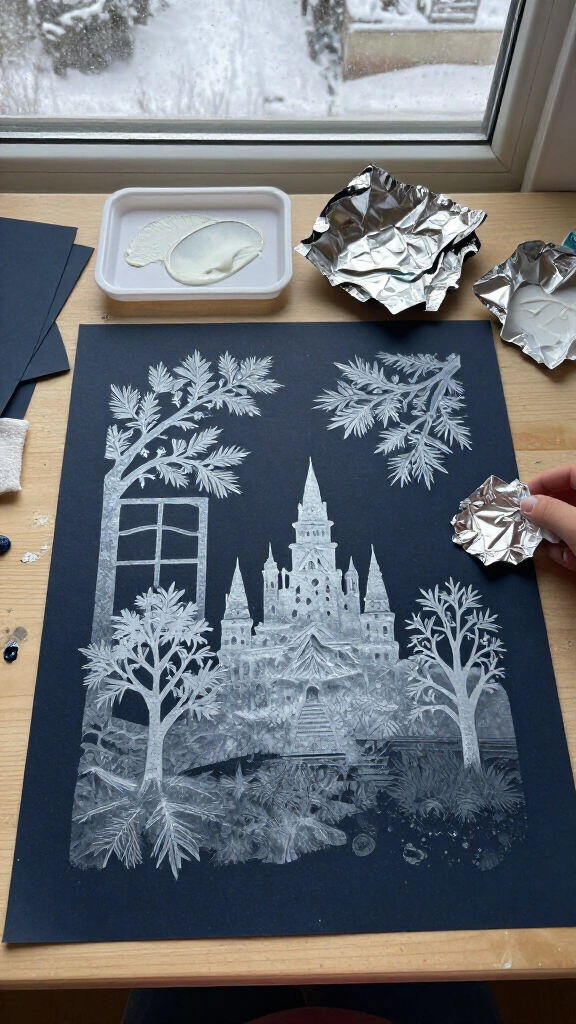
Loosely crumple a piece of aluminum foil, dip it into a shallow layer of white or silver paint, and stamp it onto dark paper. The wrinkles make frost-like textures around windows, trees, or an imaginary ice palace. Keep foil pieces large enough for easy handling and supervise children who put materials in their mouths.
18. Winter animal tracks
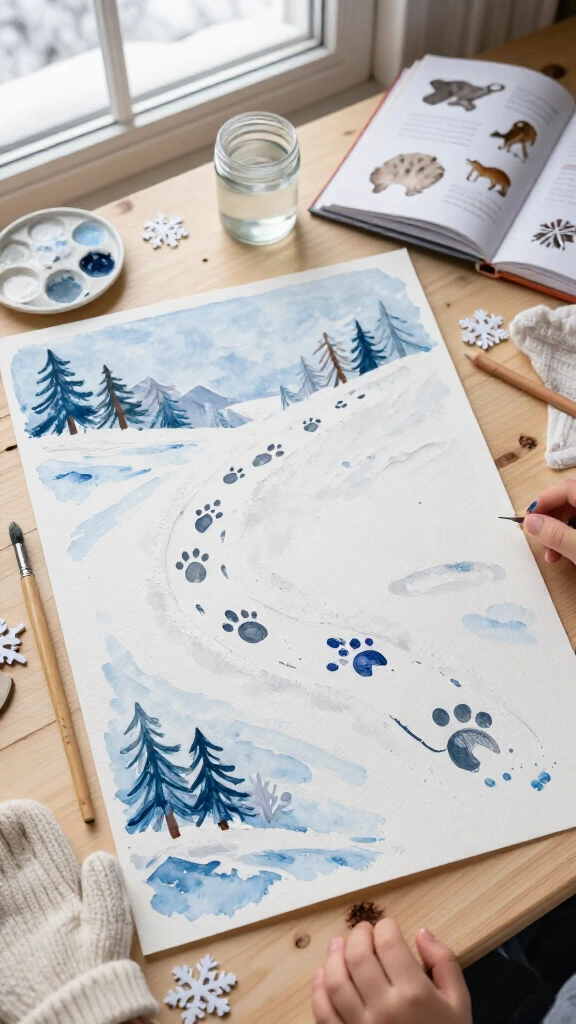
Paint a snowy paper background, then use fingertips or a small brush to add trails of animal tracks. Kids can invent a mystery creature or compare their marks with pictures of real tracks from a library book. Ask where the animal might travel and why, and let the answers turn the picture into a story.
19. Recycled cardboard skating rink
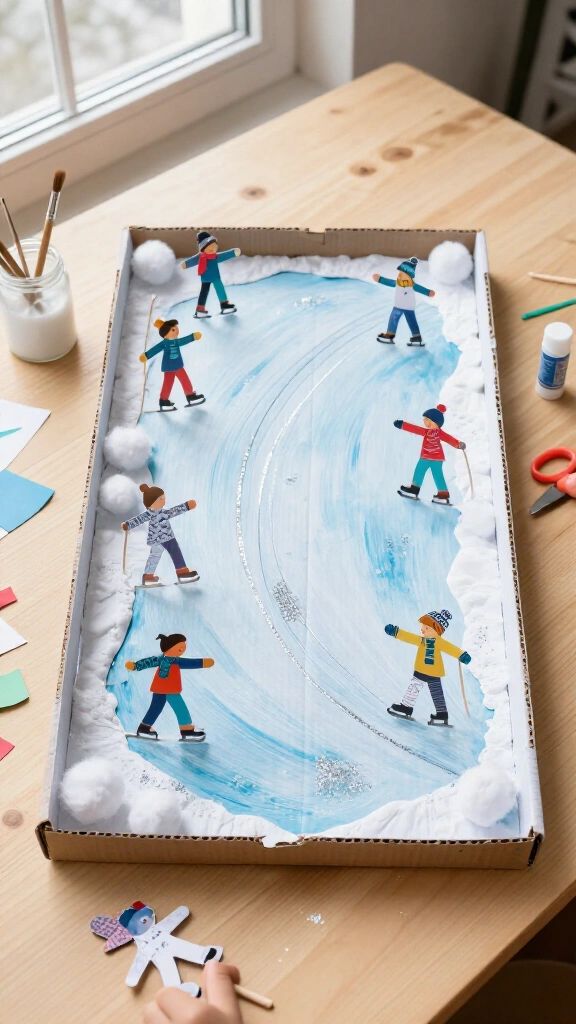
Paint a flattened cardboard box white and pale blue to create a skating rink. Cut paper skaters and glue them around the scene, or attach them to craft sticks so kids can move them. For more projects with recycled and everyday supplies, explore these cozy winter art ideas for kids.
20. Tissue paper icicles
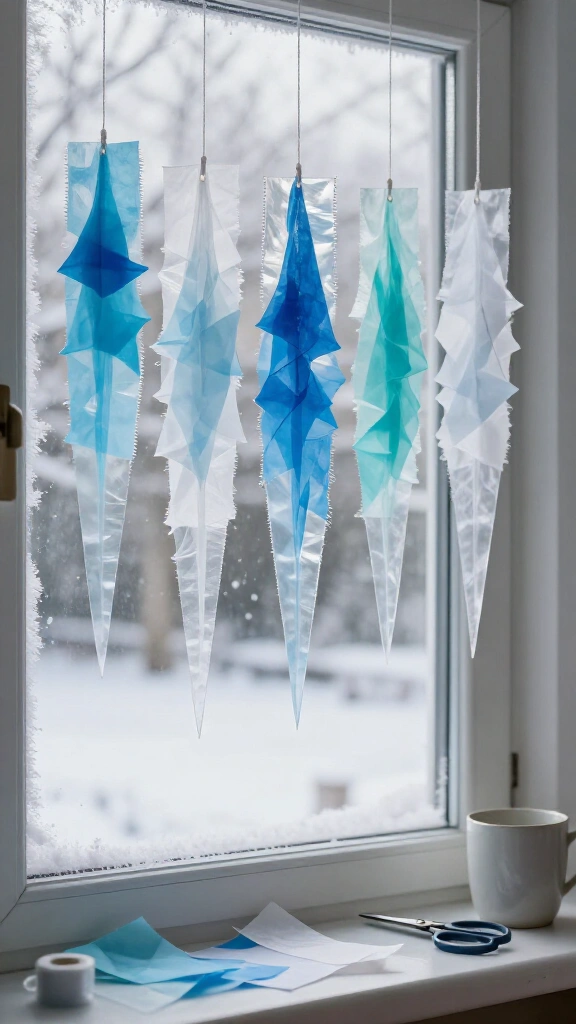
Cut long icicle shapes from clear contact paper, peel away the backing, and let kids press on pieces of blue and white tissue paper. Seal each design with another layer of contact paper and trim the edges. Hang the finished icicles in a window where daylight can shine through the colors.
21. Pine tree fork painting
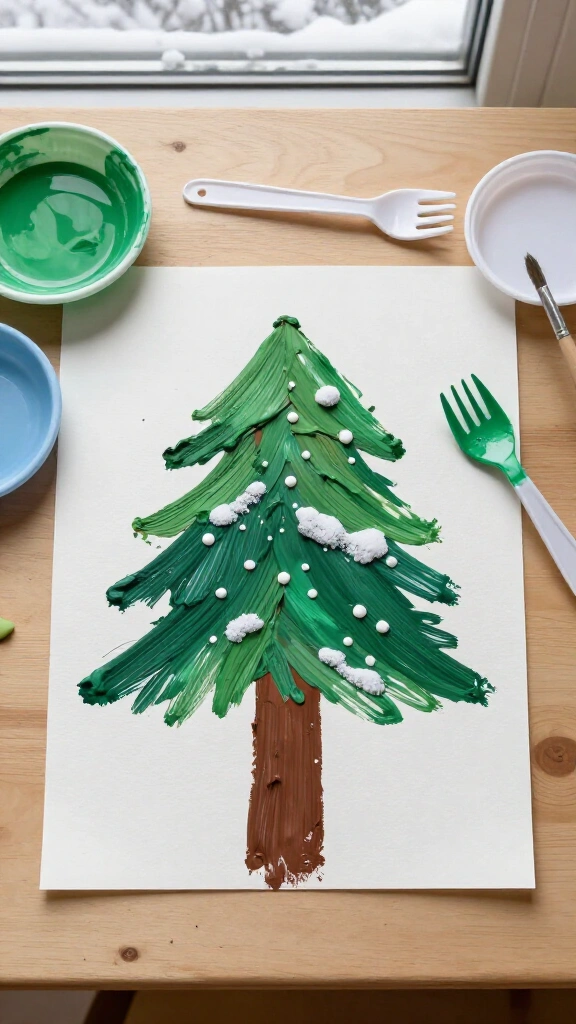
Draw a simple tree trunk, then dip the back of a fork into green washable paint and press it repeatedly to form branches. Once the green paint dries, add white dots for snow. You can use a reusable plastic or metal fork. Choose a child-friendly utensil and supervise its use.
22. Snowy night splatter art
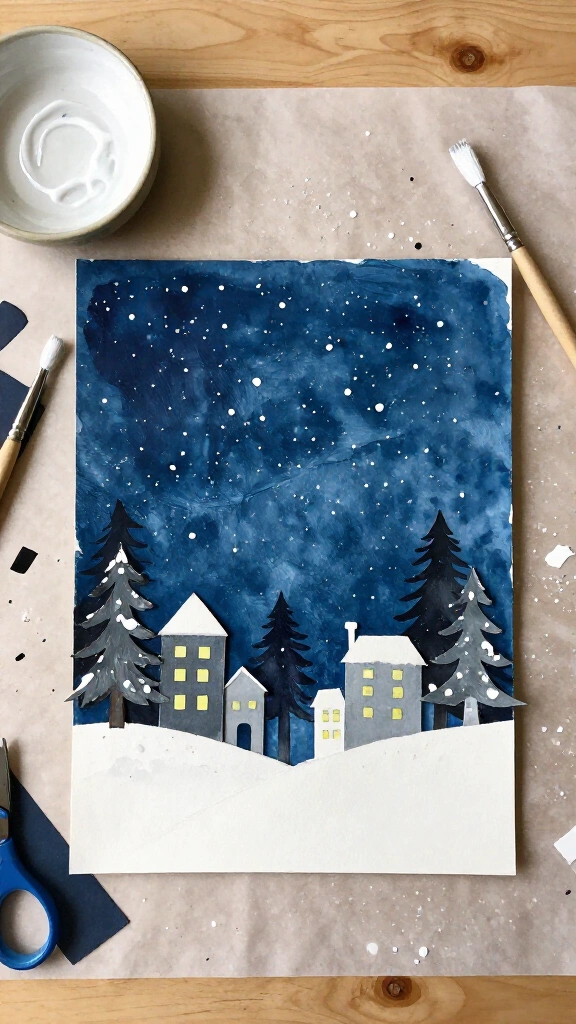
Paint a deep blue background and let it dry, then tap a paintbrush gently over the page to scatter white “snow.” Add paper buildings or trees along the bottom for contrast. Cover the work surface first; splatters have a way of finding the one spot you missed.
23. Winter leaf prints
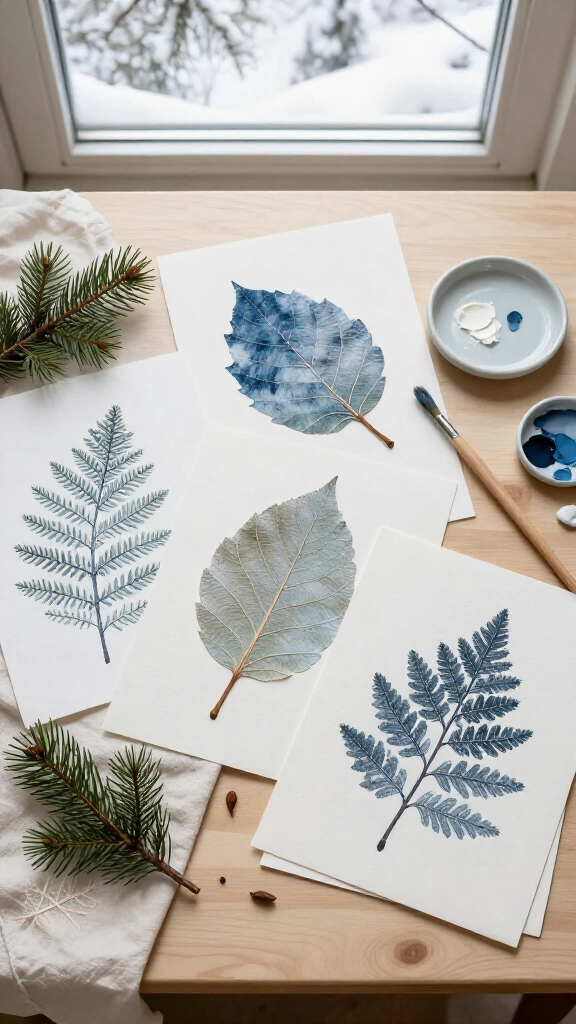
Brush paint onto the textured side of a sturdy leaf, press it onto paper, and lift it carefully to reveal its veins. Try icy blues and whites for a winter look, or print evergreens if you have suitable clippings. For more nature-based ideas, visit these leaf crafts for preschoolers.
24. Collaborative winter mural
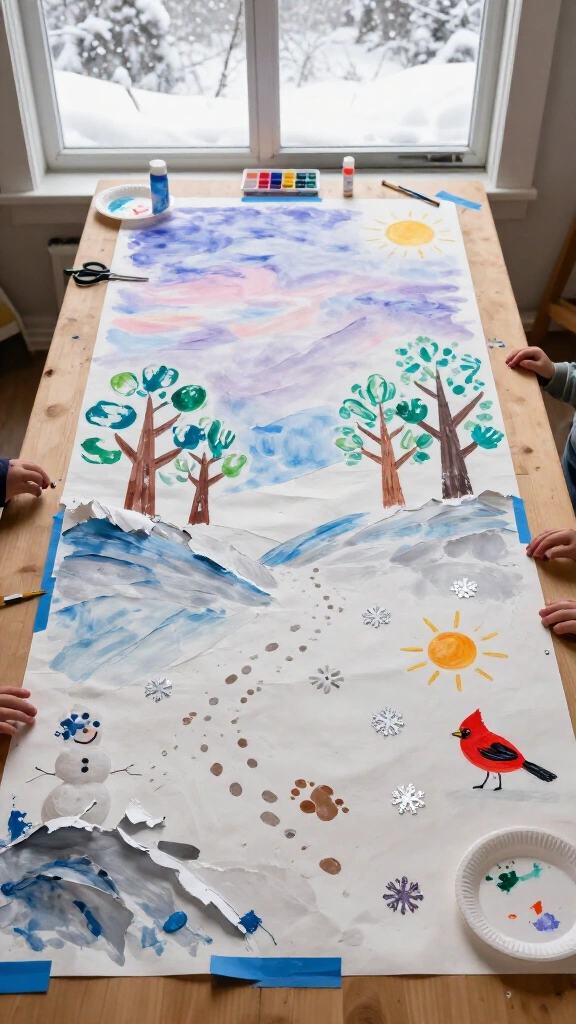
Tape a long sheet of paper to a table and invite everyone to add a piece of one giant winter scene. Combine painted skies, torn-paper hills, animal tracks, and handprint trees from earlier projects. Leave room for every artist’s ideas so everyone can contribute without having to color inside someone else’s lines.
Make winter art time safe and fun
Choose materials that suit each child’s age, read product labels, and keep a grown-up close when kids use scissors or small pieces. The U.S. Consumer Product Safety Commission’s toy safety guidance offers reminders about age recommendations and small parts. After painting and crafting, follow the CDC’s handwashing guidance and wash hands with soap and water.
Kids can explore color and texture with these projects, whether they paint watercolor snowflakes or make a mural with the whole family. Pick the supplies you already have, make room for a little mess, and see what everyone creates on the next snowy afternoon.